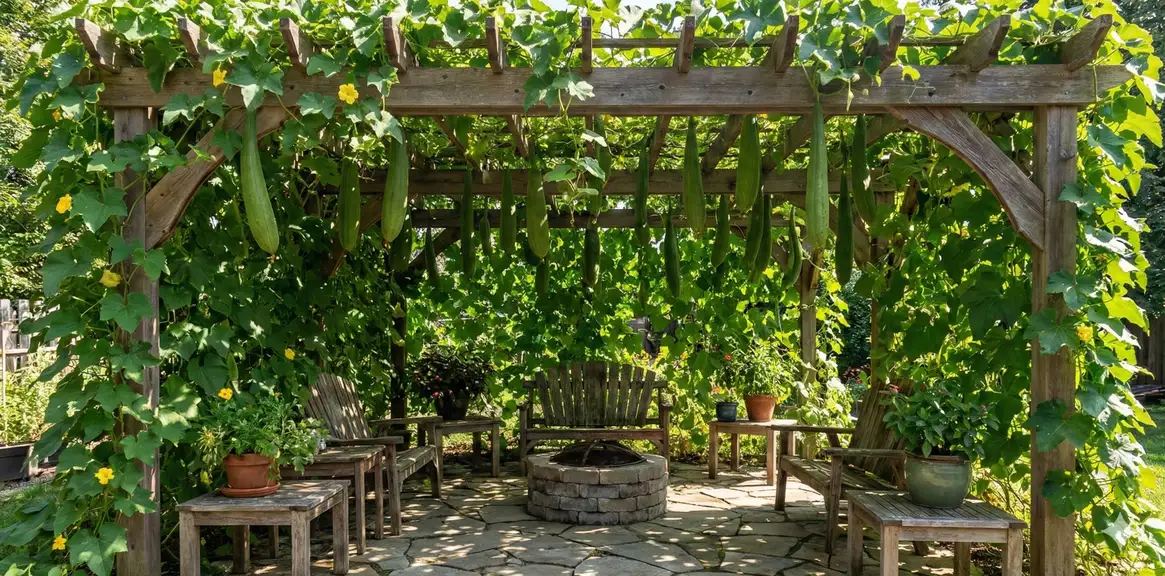
Transform your outdoor space with living loofah shade structures that provide natural cooling while growing your own sustainable sponges. Loofah vines (Luffa aegyptiaca) are vigorous climbers with broad leaves that create dense, attractive shade coverage perfect for pergolas, arbors, and garden structures. Learn more about growing vigorous vines in our complete guide.
Unlike traditional shade cloth or permanent roofing, loofah vines offer a dynamic, eco-friendly solution that changes with the seasons. In summer, they provide cooling shade; in fall, they produce harvestable sponges; and in winter, the structure remains open to welcome sunlight when you need it most. This approach to functional garden design integrates beauty with productivity.
Benefits of Loofah Shade Structures
Creating natural garden shade with loofah vines offers multiple advantages over conventional shade solutions, combining practicality with sustainability and beauty. These living structures are perfect for shade in warm gardens where temperatures can be extreme.
Loofah vine canopies reduce temperatures underneath by 10-15°F compared to full sun exposure. The living leaves transpire moisture, creating evaporative cooling that makes outdoor spaces more comfortable.
- Blocks UV rays while allowing air circulation
- Prevents stagnant heat that builds under solid roofing
- Can reduce indoor cooling costs when positioned near windows
- Creates pleasant dappled shade for outdoor living
Unlike purely ornamental vines, loofah plants serve double duty. While providing shade all summer, they're simultaneously producing natural sponges you can harvest in fall.
- A single well-trained vine can yield 20-30 mature sponges
- Cheerful yellow flowers attract pollinators
- Bees, butterflies, and hummingbirds visit regularly
- Adds life and movement to outdoor living spaces
- Rapid growth: Vines can grow 1-2 feet per week during peak season
- Large leaf coverage: Individual leaves span 6-10 inches across
- Dense foliage: Creates 60-80% shade density when mature
- Self-clinging tendrils: Naturally grabs supports without constant tying
- Seasonal cycle: Dies back in winter, allowing sunlight when needed
- Bonus harvest: Produces useful natural sponges
- Attractive appearance: Tropical-looking foliage with bright yellow blooms
Best Structures for Loofah Vine Shade
Choosing the right support structure determines how effectively your loofah vines provide shade. Consider both the structural requirements and the desired shade coverage when planning your living shade installation. For more support ideas, see our guide on trellis structures for vines.
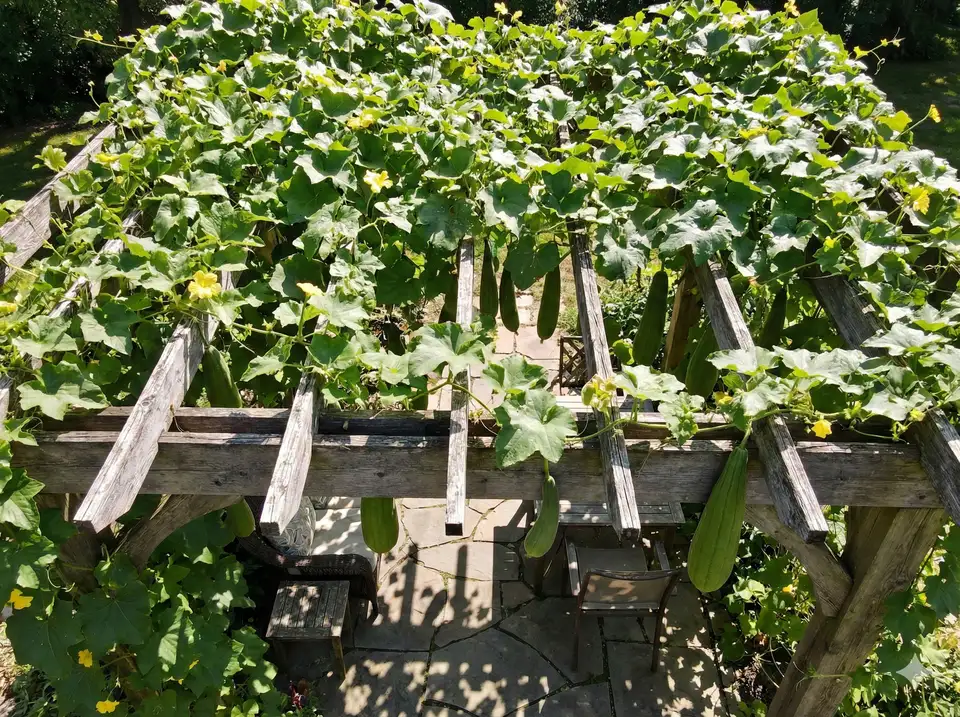
Pergolas provide the ideal framework for loofah shade. The horizontal beams allow vines to spread naturally across the top, creating a living roof over seating areas, outdoor kitchens, or walkways.
- Use 4x4 or 6x6 posts for strength (loofahs get heavy)
- Space crossbeams 12-18 inches apart for vine support
- Minimum height of 8 feet for comfortable headroom
- Plant 2-3 vines per corner post (8-10 feet spacing)
- Cedar or treated lumber lasts longest in moisture
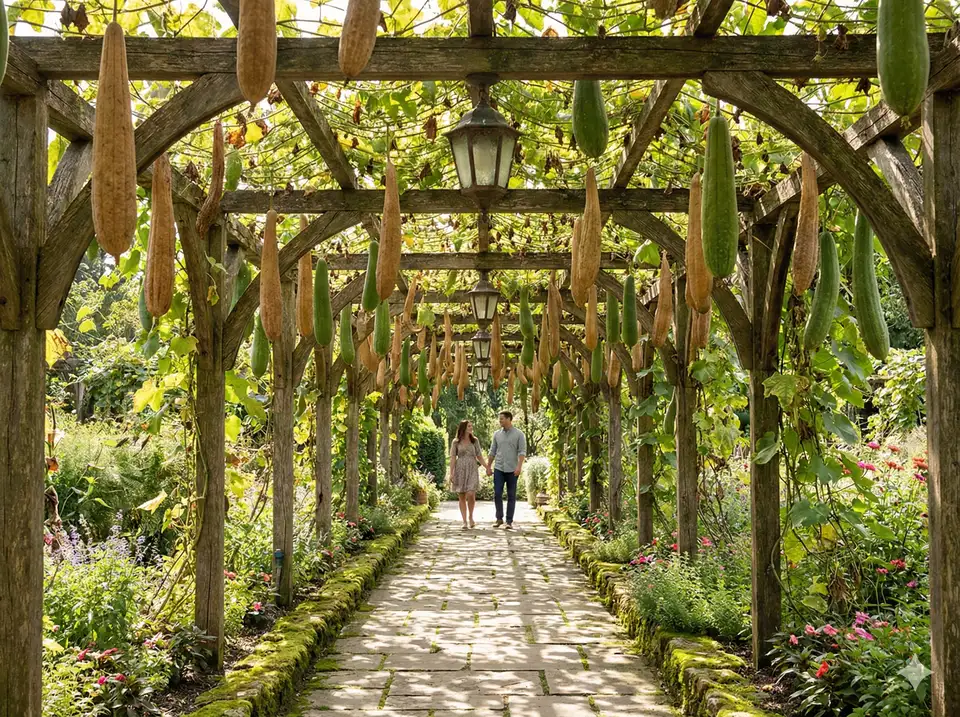
Arbors create beautiful shaded entrances and garden transitions. The vertical sides and arched or flat top guide vines upward and over, forming a shaded tunnel effect.
- Width of 4-6 feet allows comfortable passage
- Arch height of 7-8 feet accommodates vine drape
- Add lattice panels on sides for faster coverage
- Plant one vine on each side of the arbor
- Metal arches work well but heat up in sun
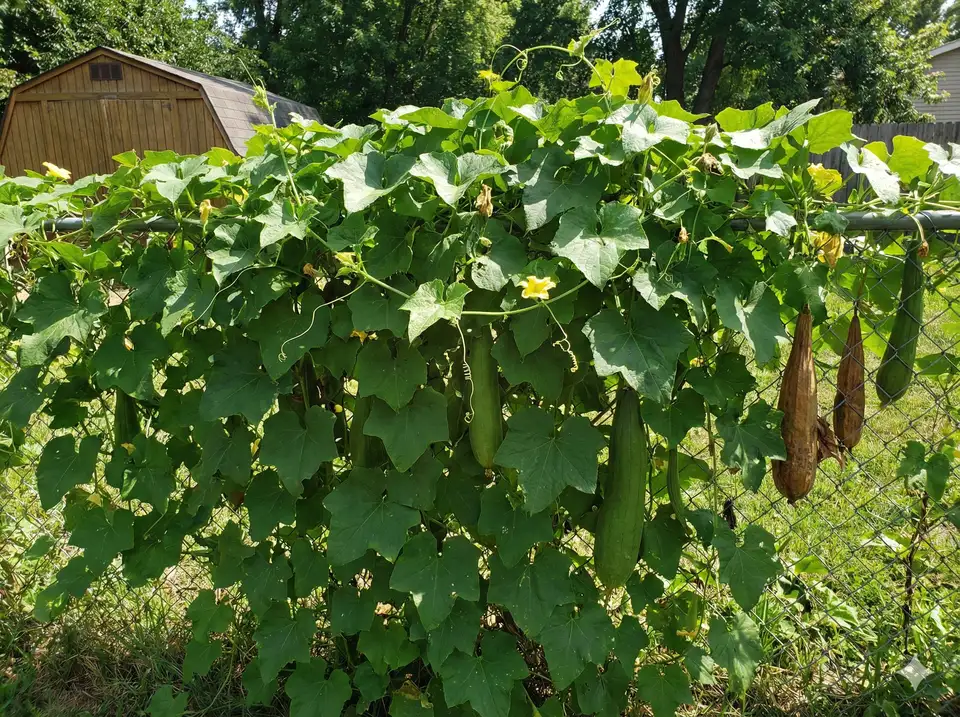
Vertical trellis screens covered with loofah vines create shade walls that block low-angle morning or afternoon sun while providing privacy from neighbors.
- Install along fence lines or property edges
- Use cattle panels, welded wire, or wooden lattice
- Height of 6-8 feet maximizes shade and privacy
- Space vines 3-4 feet apart along the base
- Angle screens 15-20° for better leaf orientation
Custom overhead cable or wire systems offer flexible shade coverage over decks, play areas, or vegetable gardens that benefit from filtered light.
- String heavy-duty wire or cable between posts
- Create grid pattern with 12-18 inch spacing
- Use turnbuckles for proper wire tension
- Can be temporary and removable for winter
- Allows precise shade placement for specific areas
- Build sturdy: Mature loofah vines with fruit can weigh 100+ pounds
- Use rot-resistant materials: Cedar, redwood, or treated lumber last longest
- Anchor posts in concrete: Essential for permanent structures
- Paint or stain before planting: Easier maintenance access
- Allow 8+ feet of vertical space: Best shade coverage height
- Orient structures wisely: Shade where you need it most during peak sun hours

Recommended Shade Structure Supplies

PIUH Complete Goat Milk Soap Making Kit
All-in-one soap making kit with goat milk base, molds, dried flowers, and essential tools. Ideal starter kit for beginners wanting to create loofah soap bars.
Check Price on Amazon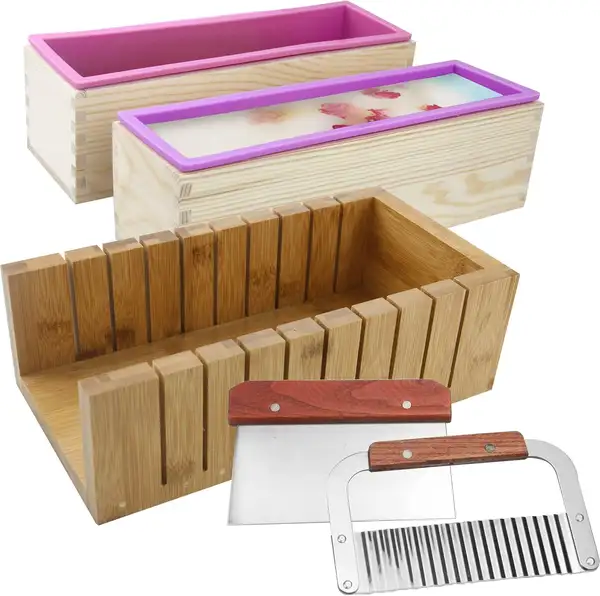
Professional Silicone Soap Molds with Cutters (2-Pack)
Create perfectly shaped loofah soap bars with these professional-grade silicone molds. Includes wavy and straight cutters for customized soap designs.
Check Price on AmazonAs an Amazon Associate, we earn from qualifying purchases.
Planting Loofah for Natural Garden Shade
Timing and placement are crucial for establishing loofah vines that provide maximum shade coverage during summer's hottest months.
When to Plant for Summer Shade
Start loofah seeds indoors 4-6 weeks before your last frost date. This head start ensures vines are well-established and growing vigorously by early summer. Transplant outdoors when soil temperatures consistently reach 70°F and all frost danger has passed.
In warm climates (zones 8-11), you can direct sow in early spring. In cooler zones (5-7), indoor starting is essential to give vines enough time to mature. Loofah requires 120-150 days of warm weather, so early planting maximizes both shade coverage and eventual sponge harvest.
Planting Location and Soil Preparation
Plant loofah vines at the base of your shade structure in full sun locations. The plants need 6-8 hours of direct sunlight to grow vigorously and produce dense foliage. While the goal is creating shade underneath, the vines themselves must receive ample light.
Prepare planting holes with these amendments:
- Dig holes 12 inches deep and 18 inches wide
- Mix in 2-3 inches of compost for fertility
- Add aged manure for nitrogen boost
- Ensure well-draining soil (loofahs hate wet feet)
- pH between 6.0-6.8 is ideal
- Space plants 3-4 feet apart for shade structures
Install a soaker hose or drip irrigation before vines fill in. Once the canopy is established, it's difficult to water effectively from above without encouraging foliar diseases.
Training Vines for Optimal Shade Coverage
Proper training techniques help loofah vines climb efficiently and spread evenly across your shade structure, maximizing coverage while preventing tangled, unproductive growth.
Initial Training and Support
Young loofah vines need guidance to reach their permanent support structure. Use temporary bamboo stakes, string, or tomato cages to direct seedlings toward pergola posts, arbor sides, or trellis bases. Angle stakes to create a path from the planting site to the main structure.
Once vines reach the primary support, their natural tendrils will grab and climb. Gently wrap the main stem around posts or beams in the direction of growth - loofah vines naturally spiral counterclockwise (when viewed from above).
- Week 1-3: Guide seedling to vertical support with stake
- Week 4-6: Encourage upward growth by removing lower side shoots
- Week 7-9: Train 2-3 main vines per plant up different posts/sections
- Week 10-12: Once vines reach top, allow horizontal spreading
- Week 13+: Prune to direct growth over desired shade areas
- Ongoing: Secure heavy fruiting branches with soft ties
Pruning for Better Shade Distribution
Strategic pruning shapes vines to spread evenly across structures rather than creating dense clumps in some areas and gaps in others. Once main vines reach the top of your structure, pinch out the growing tip to encourage lateral (sideways) growth along horizontal beams.
Remove excessive side shoots that grow downward or away from the structure. These non-productive shoots waste energy without contributing to shade coverage. Focus the plant's energy on vines growing across the top canopy where they provide maximum shade.
Throughout the season, thin overcrowded areas and redirect vines to fill gaps. Use soft plant ties or velcro straps - never wire or string that can cut into expanding stems.
Companion Plants for Loofah Shade Areas
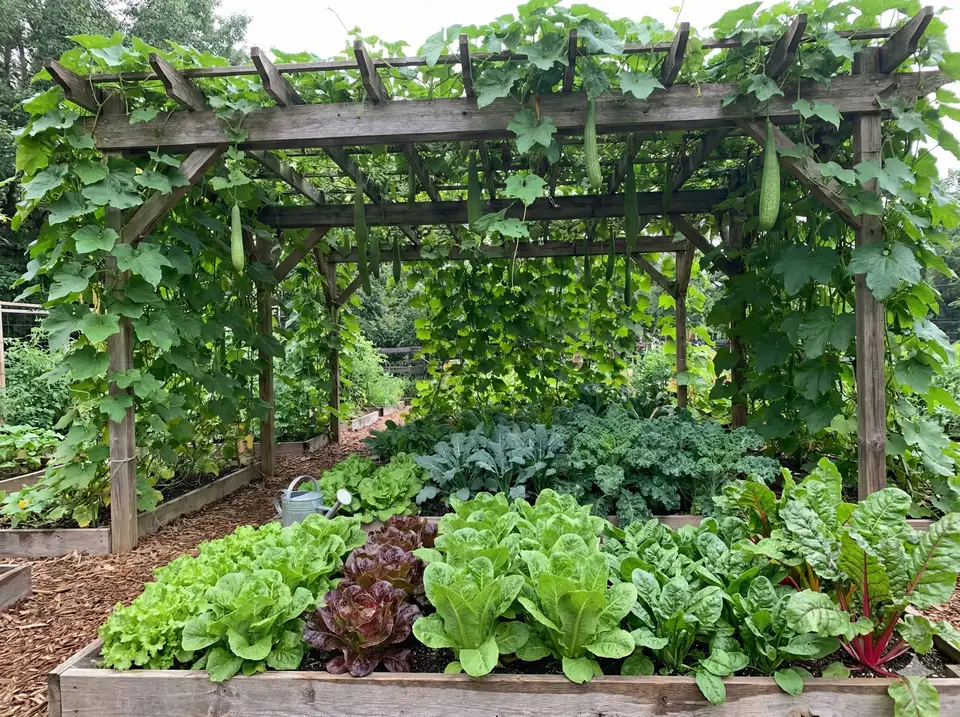
The dappled shade beneath loofah vines creates an ideal microclimate for shade-loving plants that struggle in full summer sun. Maximize your garden's productivity by practicing understory planting beneath your living shade canopy.
Vegetables That Thrive in Loofah Shade
Cool-season crops bolt and turn bitter in intense summer heat, but beneath loofah shade, they remain productive weeks longer. The filtered light and cooler temperatures extend the harvest season for these sun-sensitive vegetables:
- Lettuce and salad greens: Remain crisp and mild instead of bolting
- Spinach: Grows tender leaves without flowering prematurely
- Arugula: Stays sweet longer, less peppery bite
- Cilantro and parsley: Won't bolt to seed in summer heat
- Radishes: Develop slowly, stay crisp and mild
- Beets and carrots: Tolerate partial shade while roots develop
- Peas: Can produce into summer under shade protection
Ornamental Shade Companions
Create beautiful layered gardens beneath loofah pergolas with shade-tolerant flowers and foliage plants. These companions add color and texture to your shaded outdoor room:
- Impatiens: Continuous blooms in pink, red, white, or purple
- Begonias: Colorful flowers and attractive foliage
- Hostas: Bold textural leaves in various patterns
- Ferns: Lush, tropical appearance in dappled light
- Caladiums: Striking colored foliage
- Coleus: Vibrant leaf patterns in shade
Herbs for Shaded Areas
While most herbs prefer full sun, several appreciate afternoon shade protection, especially in hot climates. Plant these under loofah canopies for fresh herbs all summer:
- Mint (actually prefers some shade)
- Chives (tolerates partial shade well)
- Lemon balm (grows lush in filtered light)
- Parsley (benefits from midday shade)
- Cilantro (crucial for preventing bolting)
Maintaining Your Living Shade Structure
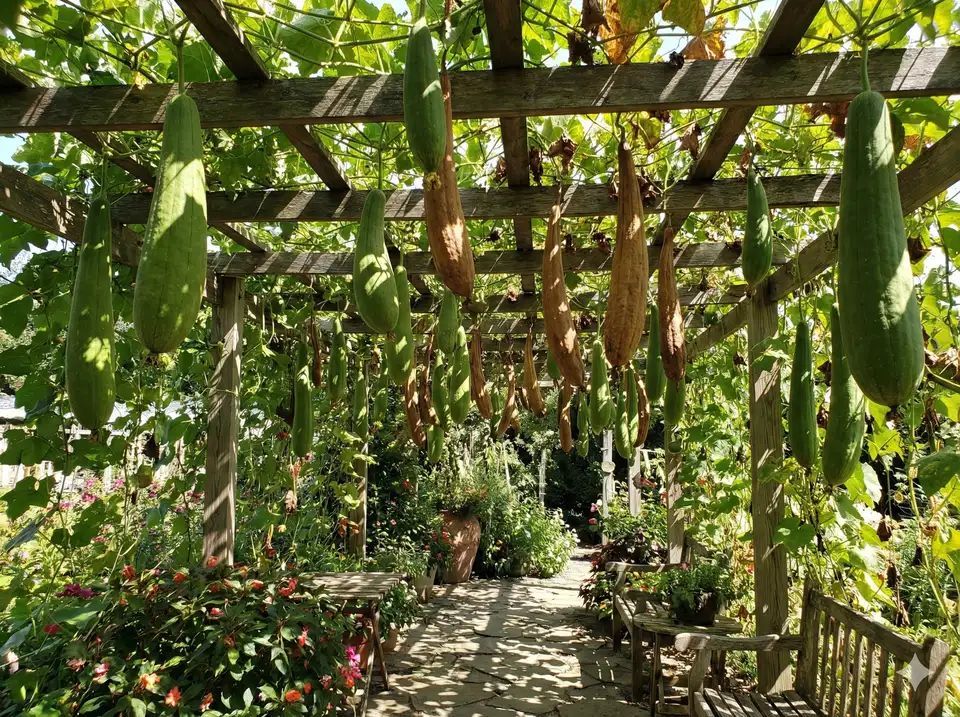
Regular maintenance keeps loofah shade vines healthy, productive, and providing optimal coverage throughout the growing season.
Watering Requirements
Loofah vines need consistent moisture to maintain lush foliage and produce quality sponges. Water deeply 2-3 times per week, providing 1-2 inches of water total. Shallow, frequent watering encourages weak surface roots, while deep watering promotes strong root systems.
Drip irrigation or soaker hoses work best, delivering water directly to roots without wetting foliage. Wet leaves invite powdery mildew and other fungal diseases. Water in early morning so any splashed foliage dries quickly.
Fertilizing for Vigorous Growth
Feed loofah vines every 2-3 weeks with balanced liquid fertilizer (10-10-10 or similar) during active growth. Once flowering begins, switch to a lower nitrogen formula (5-10-10) to encourage fruiting rather than excessive leaf production.
Side-dress with compost monthly to provide steady nutrition and improve soil structure. Organic fertilizers like fish emulsion or kelp extract support vigorous growth while building long-term soil health.
Pest and Disease Management
Monitor regularly for common cucumber family pests:
- Cucumber beetles: Handpick or use row covers on young plants
- Squash bugs: Check undersides of leaves, remove egg clusters
- Aphids: Spray with water or insecticidal soap
- Powdery mildew: Ensure good air circulation, avoid overhead watering
Healthy, well-fed vines resist most problems. Proper spacing, good air circulation, and avoiding wetting foliage prevent most diseases.
Frequently Asked Questions
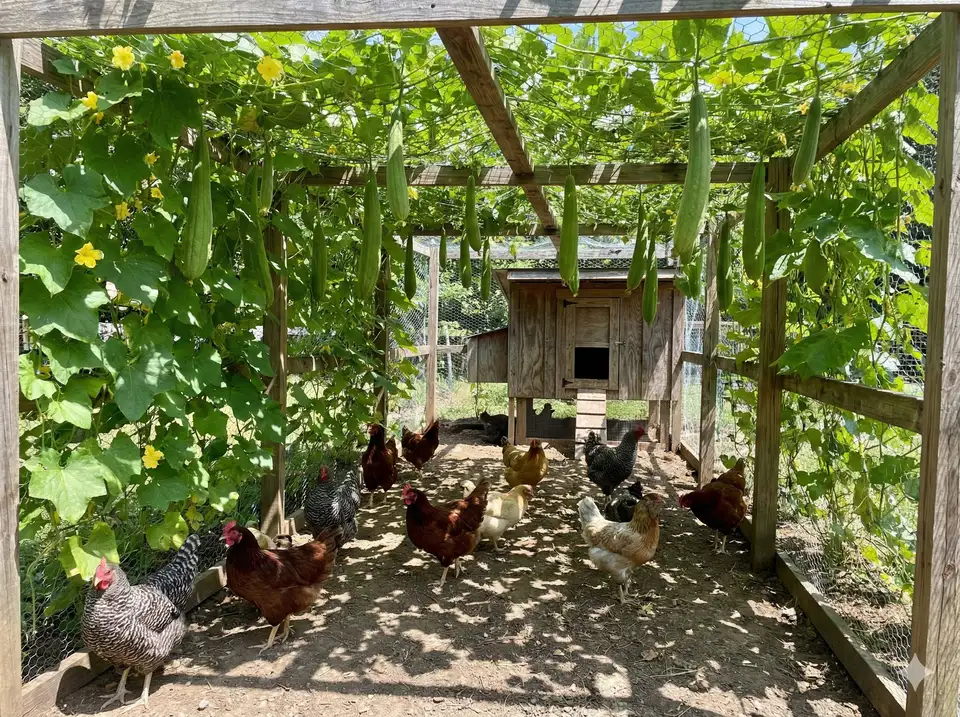
Loofah vines can provide excellent shade coverage when properly trained. A mature loofah vine with large leaves can create 60-80% shade density, making them ideal for pergolas, arbors, and shade screens. The broad leaves overlap to form a dense canopy that blocks harsh sunlight while allowing filtered light through, creating dappled shade perfect for patios and outdoor seating areas.
Pergolas are ideal for loofah shade structures because they provide overhead support and create usable space underneath. The horizontal beams allow vines to spread naturally, creating a living roof. Other excellent options include arbors over pathways, shade screens along fences, and overhead trellis systems. Structures should be sturdy (loofahs can get heavy), at least 6-8 feet tall, and made from weather-resistant materials like cedar or metal.
Plant loofah seeds 4-6 weeks before your last frost date indoors, then transplant outdoors when soil temperatures reach 70°F consistently. For summer shade, you want vines established by early to mid-summer. In warm climates (zones 8-11), direct sow in early spring. In cooler climates (zones 5-7), start indoors in March-April for transplanting in May-June. This timing ensures full canopy coverage during peak summer heat.
Guide young vines to the pergola posts using bamboo stakes or string as temporary supports. Once vines reach the horizontal beams, gently wrap tendrils around supports - they'll naturally grab and climb. Prune side shoots to direct energy into main vines climbing upward. Once vines reach the top, allow them to spread horizontally across beams. Use soft plant ties to secure heavy fruiting vines. Train 2-3 main vines per post for best coverage without overcrowding.
The dappled shade from loofah vines is perfect for lettuce, spinach, arugula, and other leafy greens that bolt in full sun. Shade-tolerant herbs like cilantro, parsley, and mint thrive underneath. Impatiens, begonias, and hostas make beautiful ornamental companions. Root vegetables like radishes and beets can tolerate the filtered light. The living shade also creates a cooler microclimate, extending the growing season for cool-weather crops into summer months.