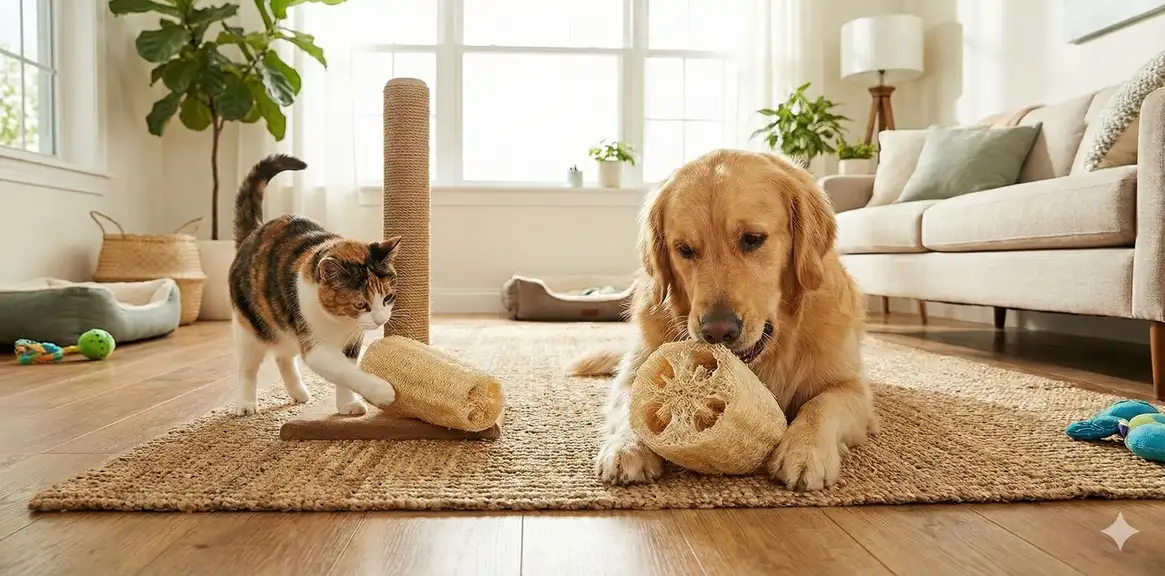
Looking for safe, natural alternative to plastic toys? Loofah sponges offer a sustainable, biodegradable solution that pets love. These versatile natural fibers can be transformed into chew toys for dogs, interactive toys for cats, and enrichment activities for rabbits, hamsters, and other small animals. Best of all, if you're interested in growing your own to grow safe pet supplies, you have an endless supply of DIY pet toy material at your fingertips.
This comprehensive guide covers everything you need to know about making loofah pet toys, from safety considerations to specific toy designs for different animals. Whether you have a power-chewing dog, a curious cat, or a nibbling rabbit, you'll discover how to create engaging, natural toys that are better for your pets and the planet. For more loofah craft ideas, check out our complete crafts guide.
Recommended Pet Toy Supplies
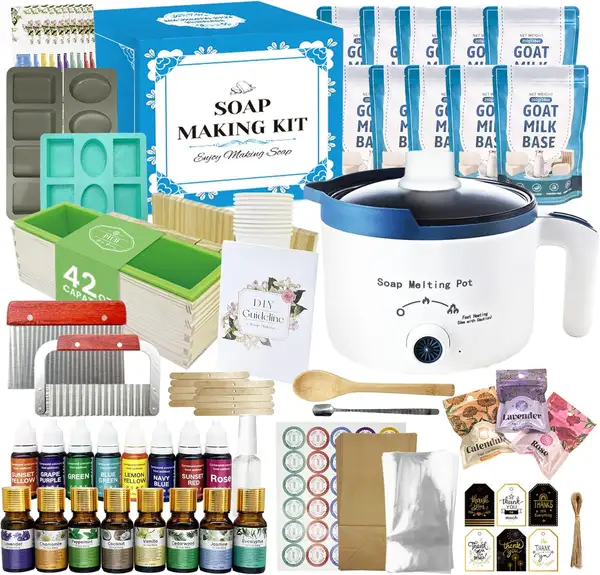
PIUH Complete Goat Milk Soap Making Kit
All-in-one soap making kit with goat milk base, molds, dried flowers, and essential tools. Ideal starter kit for beginners wanting to create loofah soap bars.
Check Price on Amazon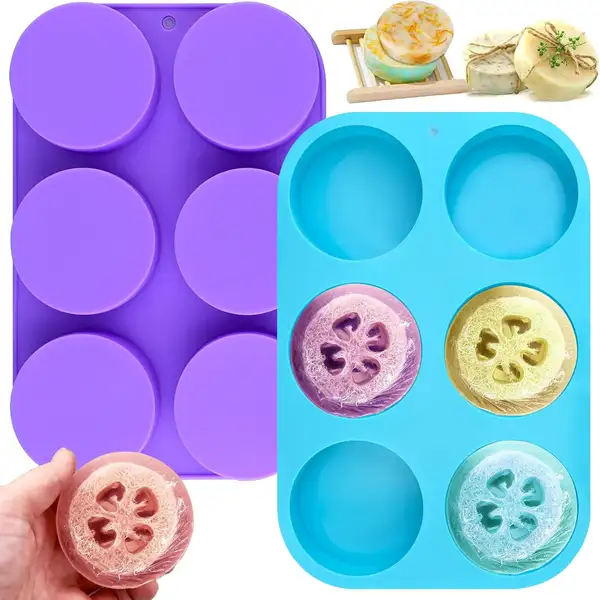
Sakolla Round Silicone Soap Molds for Loofah Slices (2-Pack)
Round silicone molds specifically designed for loofah soap making. Perfect for creating circular loofah soap bars that fit loofah slices perfectly.
Check Price on AmazonAs an Amazon Associate, we earn from qualifying purchases.
Safety Considerations for Loofah Pet Toys
Before creating any loofah pet toys, it's crucial to understand the safety requirements. While natural loofah is generally safe for pets, proper safe loofah preparation and supervision are essential.
- Use only natural, untreated loofah: Avoid loofahs with dyes, chemicals, soaps, or synthetic materials
- Always supervise playtime: Never leave pets unattended with loofah toys, especially aggressive chewers
- Size appropriately: Choose loofah pieces large enough that they cannot be swallowed whole by your pet
- Inspect regularly: Check toys daily for wear, loose pieces, or damage
- Replace when worn: Discard toys when they become small enough to be a choking hazard or show significant deterioration
- Monitor for digestive issues: If your pet ingests large amounts of loofah, contact your veterinarian
- Clean thoroughly: Wash new loofah thoroughly before first use to remove any debris
- Dry completely: Store in a dry place to prevent mold or mildew growth
Natural loofah is biodegradable and generally passes through the digestive system if small amounts are ingested. However, large pieces can cause blockages, so proper supervision is critical.
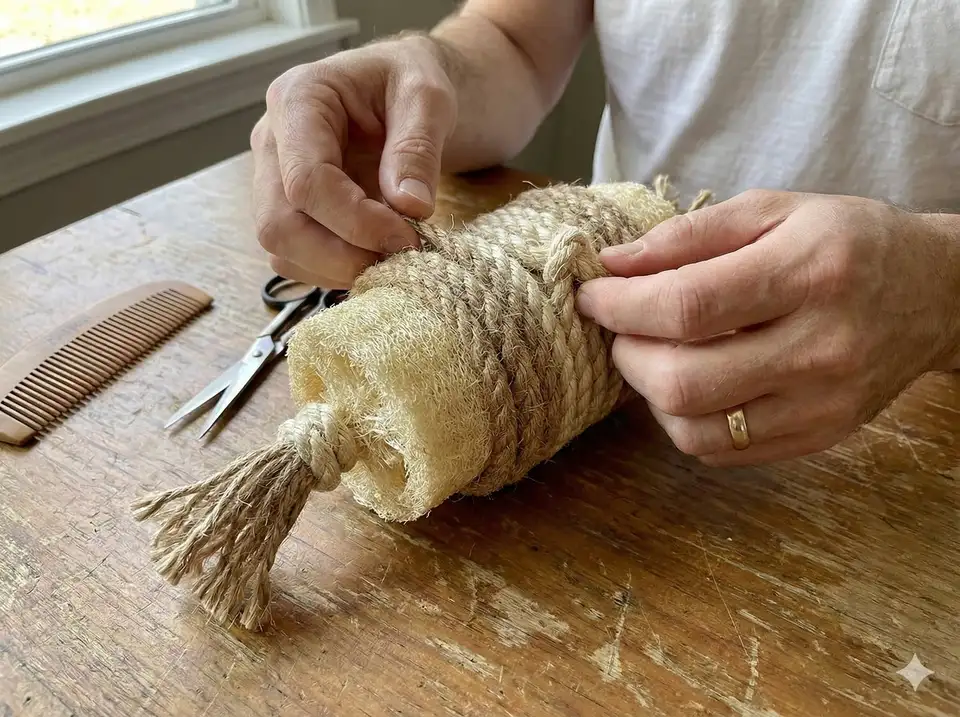
DIY Loofah Dog Toys
Dogs enjoy the texture of loofah for chewing, and it provides natural teeth cleaning benefits. Loofah toys are particularly popular with moderate chewers and make excellent alternatives to rawhide or synthetic chew toys.
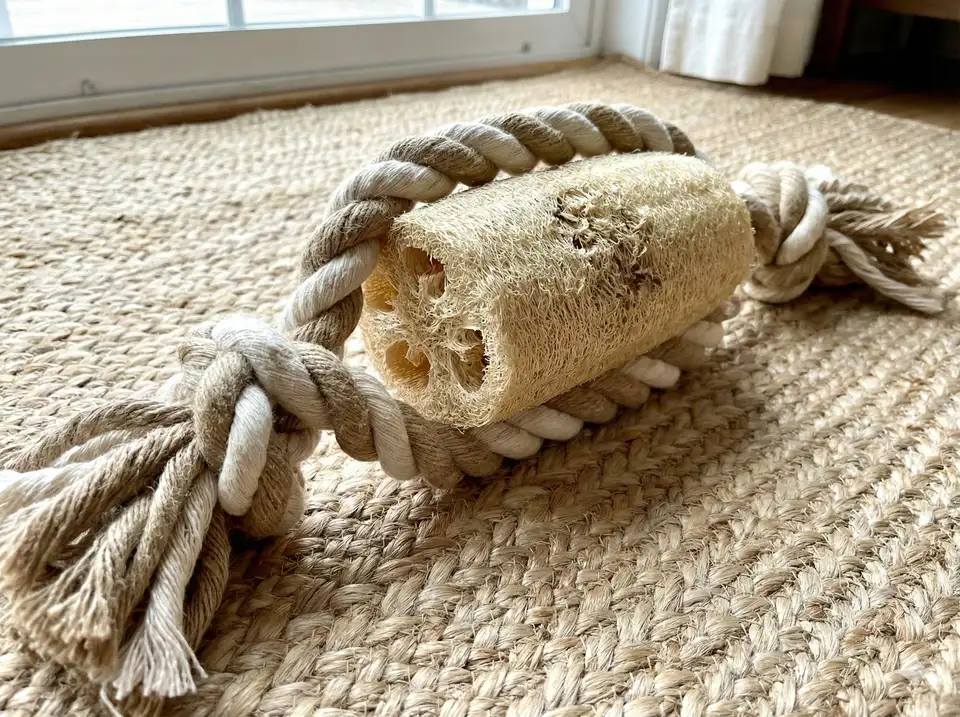
Materials needed:
- One whole loofah sponge (6-8 inches)
- Natural cotton rope or twine (optional)
- Scissors
Instructions:
- Rinse the loofah thoroughly in warm water and let dry completely
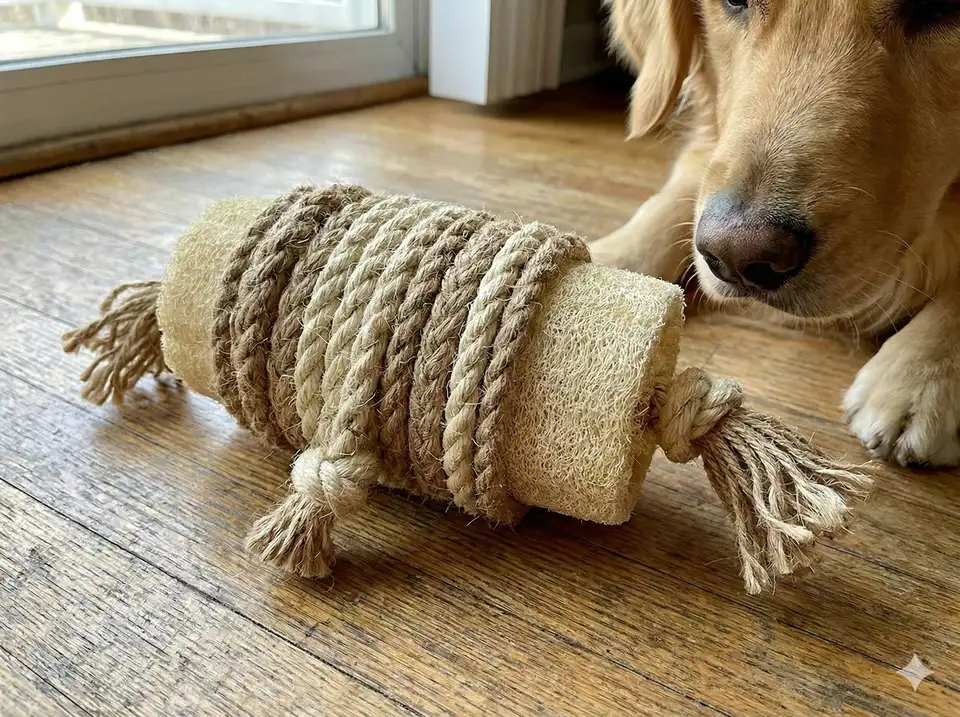
- Cut the loofah into 3-4 inch sections for small dogs, or leave whole for larger dogs
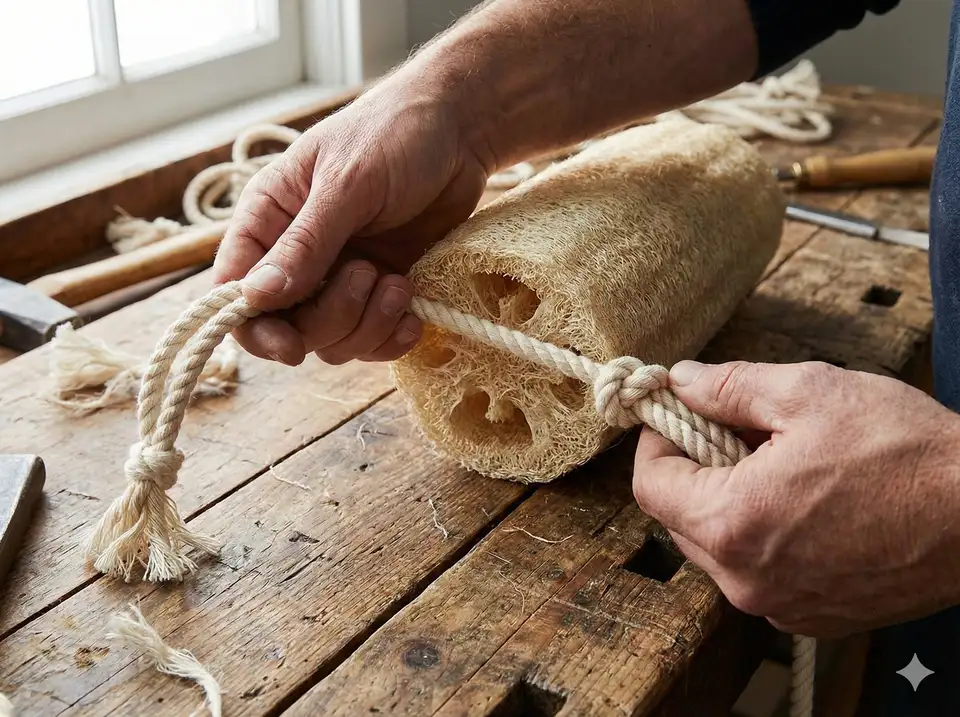
- Optional: Thread cotton rope through the center and tie knots on both ends for a tug toy
- Present to your dog under supervision
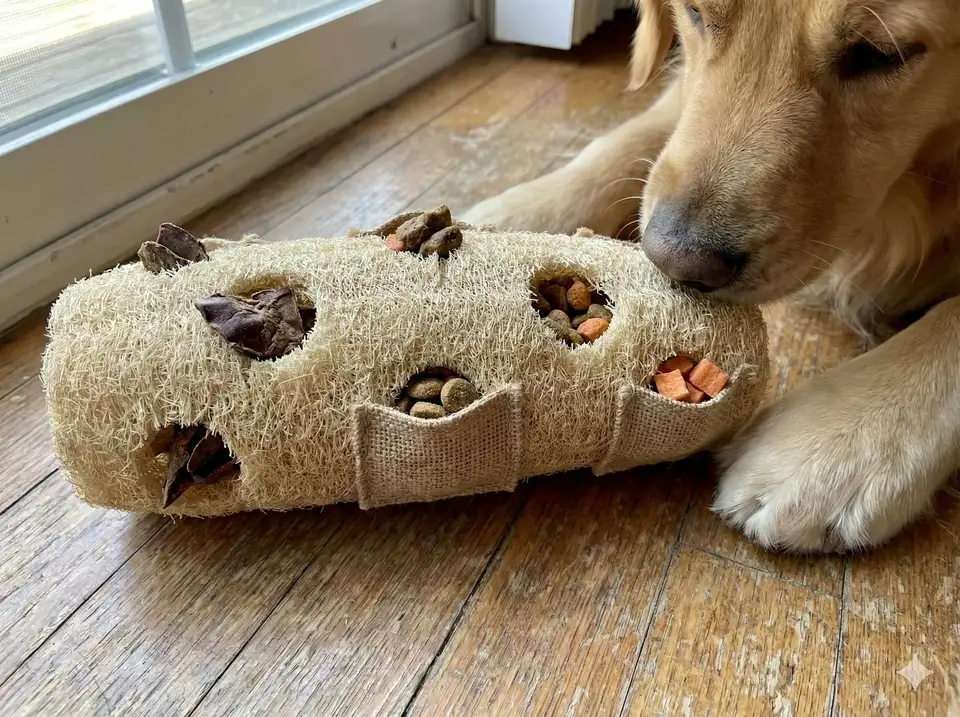
Materials needed:
- One whole loofah with hollow center
- Dog-safe treats or kibble
- Peanut butter or pumpkin puree (optional)
Instructions:
- Clean and dry loofah completely
- Stuff small treats or kibble into the loofah's natural cavities
- Optional: Spread a thin layer of peanut butter inside for extra engagement
- Give to your dog and watch them work to extract the treats
Materials needed:
- One 4-6 inch loofah section
- Colorful natural fabric ribbon
- Needle and thread
Instructions:
- Select a firm, dense loofah section
- Sew fabric ribbon streamers to one end (makes it easier to spot)
- Use for gentle fetch games - loofah is lightweight and floats
- Great for water-loving dogs during pool or lake play
Best Practices for Dogs
Loofah toys work best for dogs who are light to moderate chewers. Aggressive chewers may destroy loofah toys quickly, which isn't necessarily dangerous but may not be cost-effective. For power chewers, consider combining loofah with more durable materials or using it as a supervised enrichment activity rather than a standalone toy.
The natural texture of loofah helps clean teeth and massage gums as dogs chew. Many dog owners report that loofah toys help reduce plaque buildup, though they should never replace proper dental care and regular tooth brushing.
Loofah Toys for Cats
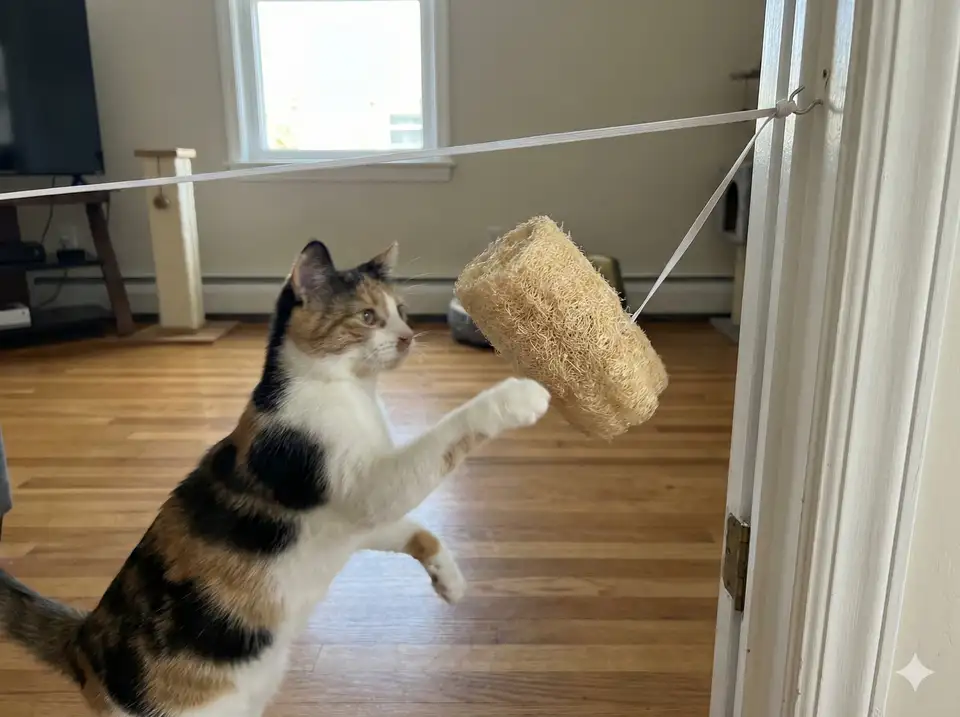
Cats love the texture and lightweight nature of loofah, making it perfect for batting, carrying, and light chewing. The natural material also provides a safe outlet for cats' natural scratching and chewing instincts.
Materials needed:
- One 6-8 inch loofah section
- Dried catnip
- Natural fabric (cotton or felt)
- Non-toxic glue or needle and thread
Instructions:
- Stuff dried catnip into the hollow center of the loofah
- Seal both ends with fabric circles, either glued or sewn in place
- Optional: Add fabric ears, tail, or eyes to create a mouse or fish shape
- Let your cat enjoy bunny-kicking and wrestling with their new toy
Materials needed:
- Loofah pieces (various sizes)
- Scissors
- Optional: Small bell or crinkle paper
Instructions:
- Cut loofah into 1-2 inch sections for small "puck" shapes
- Round the edges slightly with scissors for easier rolling
- Optional: Insert a small bell into the center cavity for sound
- Create multiple balls for variety
Materials needed:
- Wooden dowel or stick (12-18 inches)
- Cotton string or elastic cord
- Small loofah pieces (1-2 inches)
- Feathers (optional)
Instructions:
- Attach 18-24 inches of string to the end of the dowel
- Thread loofah pieces onto the string
- Add feathers or fabric strips for extra appeal
- Use for interactive play sessions
Why Cats Love Loofah
The texture of loofah appeals to cats' natural instincts. It's similar to tree bark or rough plant material they might encounter outdoors, providing sensory enrichment. The lightweight nature makes loofah toys easy for cats to carry, bat around, and "hunt." Additionally, loofah is safe if cats chew or ingest small amounts during play.
Loofah Toys for Small Animals
Rabbits, guinea pigs, hamsters, and other small animals benefit greatly from loofah toys. These pets need safe materials to chew on for dental health, and loofah provides perfect enrichment. This also applies to loofah for farm animals in homestead settings.
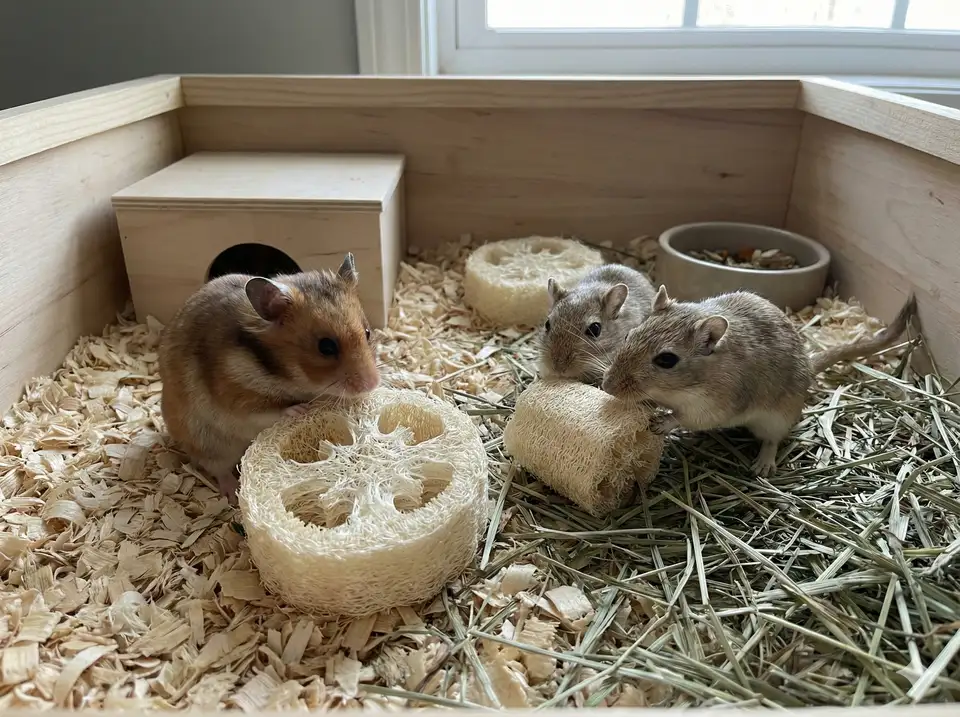
- Dental health: Natural chewing helps wear down continuously growing teeth
- Digestive safety: Small amounts of natural loofah fiber are safe if ingested
- Mental stimulation: Provides enrichment and prevents boredom
- Natural instincts: Satisfies gnawing and foraging behaviors
- Affordable: Inexpensive alternative to commercial chew toys
- Versatile: Can be used alone or combined with other safe materials
Materials needed:
- Natural loofah
- Scissors or knife
Instructions:
- Cut loofah into 1/2 to 1 inch thick slices
- Rinse and dry thoroughly
- Place in your pet's habitat for free choice chewing
- Replace when worn down to small pieces
Materials needed:
- Loofah sections (various sizes)
- Natural jute twine
- Untreated wooden blocks (optional)
- Pet-safe vegetables like carrots or apple slices
Instructions:
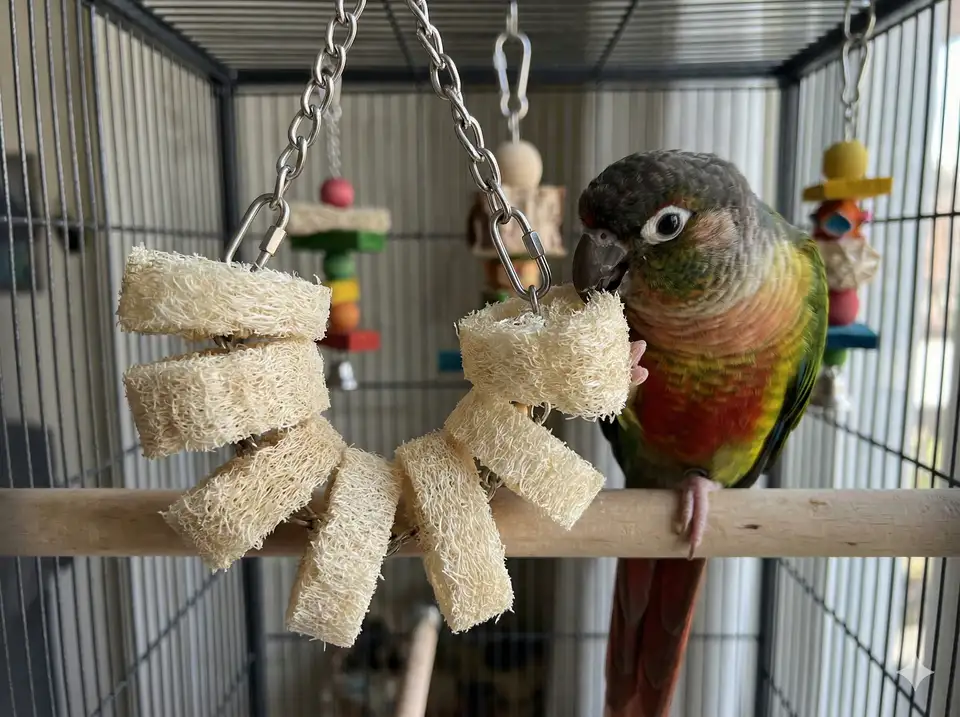
- Thread twine through loofah pieces, alternating with wooden blocks
- Hang from the top of the cage at a height your pet can reach
- Add fresh vegetables for foraging enrichment
- Creates exercise and mental stimulation
Materials needed:
- Large loofah (8-10 inches)
- Scissors
Instructions:
- Cut a doorway opening on one side of the loofah
- Hollow out the interior slightly for more space
- Place in habitat as a hide and chew toy combination
- Small animals will use it for hiding and gradually chew it down
Small Animal Safety Notes
For small animals, loofah is particularly safe because their chewing is usually methodical and they take small bites. However, always ensure pieces are appropriately sized - nothing small enough to cause choking. Monitor how quickly your pet chews through loofah; some enthusiastic chewers may need toys rotated more frequently.
How to Make Loofah Pet Toys
Creating loofah pet toys is straightforward and requires minimal supplies. Whether you're growing your own loofah or purchasing natural sponges, the process is simple.
Sourcing Your Loofah
You have two main options for obtaining loofah for pet toys:
- Grow your own: If you have garden space, growing loofah from seed provides an unlimited supply. You'll need to harvest and process the gourds when they reach maturity.
- Purchase natural loofah: Buy plain, unprocessed loofah sponges from craft stores, online retailers, or specialty bath shops. Always verify they're 100% natural with no added chemicals, dyes, or treatments.
Preparation Steps
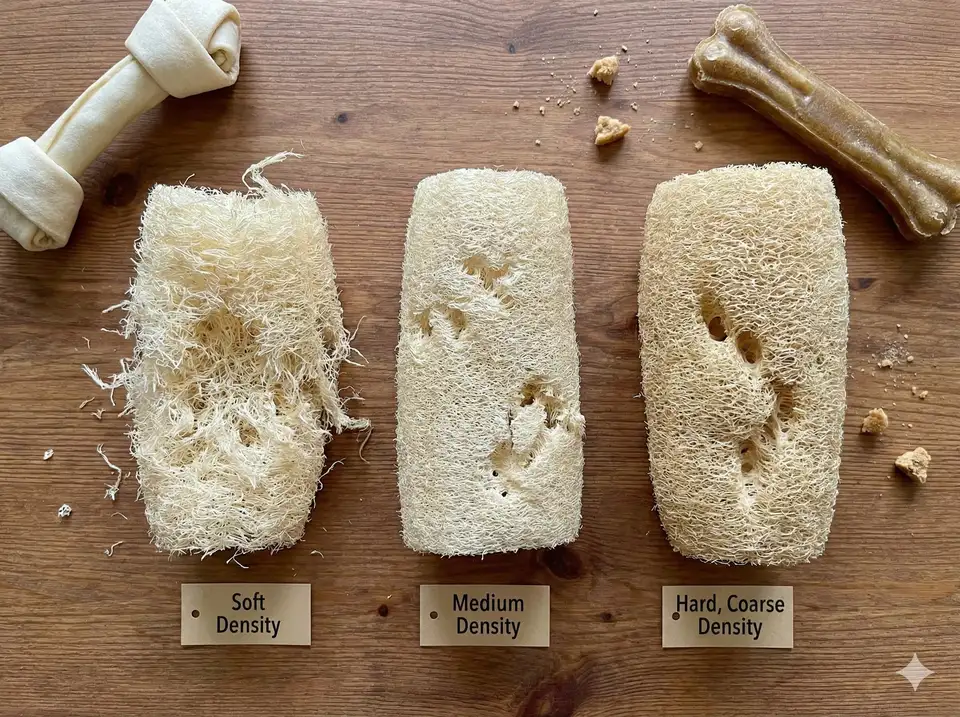
- Clean thoroughly: Rinse loofah in warm water to remove any dust or debris from processing or storage
- Inspect for quality: Check for mold, mildew, or any unusual odors. Discard if present
- Dry completely: Allow loofah to air dry fully before creating toys or adding fillings
- Cut to size: Use sharp scissors or a knife to cut loofah into appropriate sizes for your pet
- Remove loose fibers: Shake or brush off any loose strands that could be easily pulled off
Tools You'll Need
- Sharp scissors or utility knife
- Natural cotton rope or jute twine (optional)
- Needle and thread for fabric attachments (optional)
- Pet-safe fillings like catnip or treats (optional)
When to Replace Loofah Pet Toys
Knowing when to replace loofah toys is essential for pet safety. Natural materials break down over time, and worn toys can present hazards.
- Pieces become small enough to be swallowed whole by your pet
- The toy shows significant wear with large loose sections
- You notice mold or mildew growth (appears as dark spots or musty smell)
- The toy becomes excessively wet and doesn't dry properly
- Sharp or splintered pieces develop that could hurt your pet
- More than 50% of the original toy has been chewed away
- Your pet shows decreased interest (may indicate the toy has become too small or boring)
The good news is that loofah toys are completely biodegradable, so worn-out toys can be composted rather than adding to landfill waste. This makes them an excellent eco-friendly choice compared to plastic toys that must be thrown away.
Toy Rotation Tips
To extend the life of loofah toys and keep your pet engaged:
- Create multiple toys and rotate them weekly
- Store unused loofah toys in a dry, cool place
- Refresh catnip-stuffed toys by adding new catnip monthly
- Wash and dry supervised toys between play sessions
- Keep a supply of fresh loofah on hand for quick replacements
Benefits of Natural Loofah Toys
Choosing loofah pet toys offers numerous advantages over synthetic alternatives:
- Biodegradable: Completely breaks down naturally, unlike plastic toys that persist for centuries
- Renewable resource: Loofah grows quickly and can be replanted annually
- No toxic chemicals: Natural fiber doesn't release microplastics or harmful compounds
- Compostable: Worn toys enrich garden soil rather than filling landfills
- Low carbon footprint: Especially when homegrown or locally sourced
- Dental health: Natural texture helps clean teeth and massage gums
- Safe if ingested: Small amounts of natural fiber typically pass through safely
- No harmful chemicals: Free from dyes, preservatives, and synthetic materials
- Appropriate hardness: Firm enough for chewing but won't crack teeth
- Mental stimulation: Unique texture and structure provide enrichment
Practical Benefits
- Cost-effective: Inexpensive to purchase or free if you grow your own
- Versatile: Can be customized for any size or type of pet
- Lightweight: Easy for pets to carry and won't damage furniture if thrown
- Quiet: Won't create noise when played with indoors
- Easy to make: Requires minimal tools and no special skills
Frequently Asked Questions
Yes, natural loofah is safe for dogs to chew when used properly. Always use plain, untreated loofah without chemicals or dyes. Supervise your dog during play, provide appropriately sized pieces, and monitor for signs of excessive consumption. Small amounts of natural loofah fiber typically pass through the digestive system safely, but large pieces can cause blockages. Replace toys when they become small enough to swallow whole. Loofah works best for light to moderate chewers rather than aggressive power chewers.
Absolutely! Loofah is excellent for rabbits and other small animals. It provides natural dental enrichment by helping wear down continuously growing teeth. Cut loofah into 1-2 inch slices or chunks appropriate for your rabbit's size. Many rabbit owners report their bunnies love loofah toys. Supervise initially to ensure your rabbit doesn't consume excessive amounts, though small quantities of natural loofah fiber are generally safe. Combine with other safe chew items like untreated wood blocks and hay for variety.
Replace loofah toys when they become small enough to swallow whole, show more than 50% wear, develop mold or mildew, or create sharp fragments. For active chewers, this might be weekly or even daily. For light users, a loofah toy could last several weeks to months. Inspect toys daily and err on the side of caution - when in doubt, replace it. The good news is loofah is inexpensive and biodegradable, so frequent replacement is both affordable and environmentally friendly.
Small amounts of natural loofah fiber are generally safe if ingested and typically pass through the digestive system without issues. However, large pieces can cause intestinal blockages, which is why supervision is critical. If your pet consumes a significant amount of loofah or shows signs of digestive distress (vomiting, lethargy, loss of appetite, straining to defecate), contact your veterinarian immediately. To prevent overconsumption, provide appropriately sized toys, supervise play, and remove toys when they become too small or worn.
Natural loofah can be purchased from craft stores, online retailers like Amazon, bath and body shops, or specialty natural product suppliers. Always verify the loofah is 100% natural with no added chemicals, dyes, or synthetic materials. Look for unbleached, unprocessed loofah labeled as "natural" or "organic." Alternatively, you can grow your own loofah from seeds - it's easy to cultivate in warm climates and provides an endless supply of pet toy material.
Conclusion
Loofah pet toys offer a safe, natural, and eco-friendly alternative to synthetic pet toys. Whether you're creating chew toys for dogs, interactive toys for cats, or enrichment activities for small animals like rabbits and hamsters, loofah provides excellent benefits for both your pets and the environment.
The key to success with loofah pet toys is proper preparation, appropriate sizing, and consistent supervision. Always use plain, untreated loofah, inspect toys regularly, and replace them when they show significant wear. By following the safety guidelines and DIY instructions in this guide, you can create engaging, beneficial toys that your pets will love.
Best of all, if you're interested in growing your own supply, loofah is easy to cultivate in home gardens. Ready to make your first loofah pet toy? Start simple with basic chew slices or balls, then experiment with more complex designs as you discover what your pets prefer. Your furry friends - and the planet - will thank you!