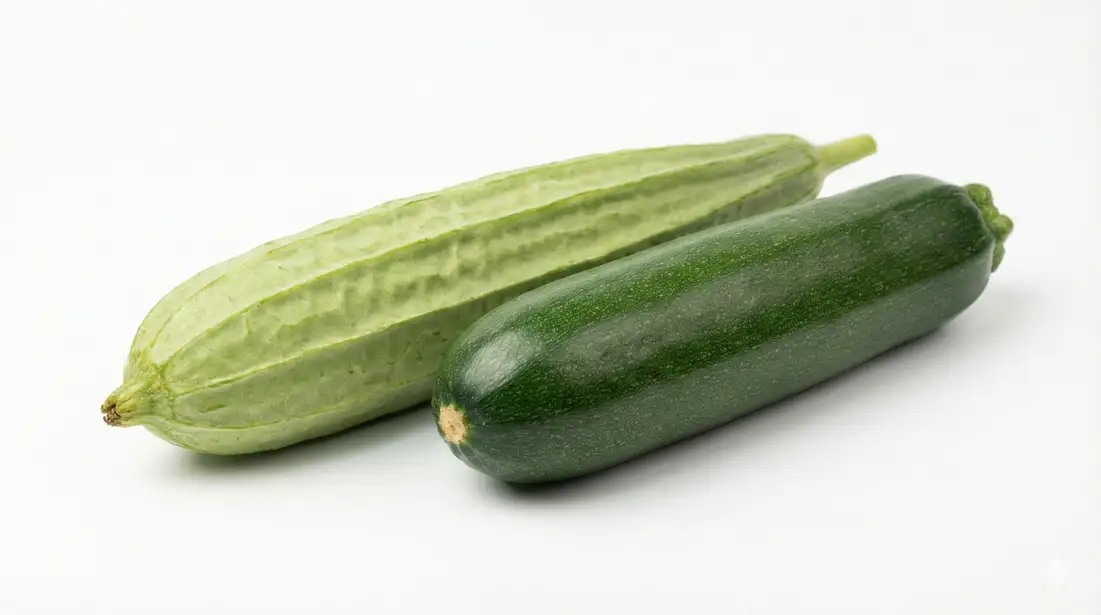
If you've been growing luffa gourds in your garden, you might be wondering how they compare to the more familiar zucchini when it comes to cooking. Both belong to the gourd family and share some similarities, but there are key differences that affect how you use them in the kitchen.
This comprehensive guide will help you understand when and how to substitute in recipes, explore their taste and texture differences, and discover which cooking methods work best for each vegetable. For more details on cooking both vegetables, see our complete guide.
Recommended Cooking Tools

Babish Carbon Steel Flat Bottom Wok (14-Inch)
Restaurant-quality wok for authentic luffa stir-fry - works on all stovetops including induction
Check Price on AmazonAs an Amazon Associate, we earn from qualifying purchases.
Luffa vs Zucchini: Key Differences
While both luffa and zucchini are members of the Cucurbitaceae family, they have distinct characteristics that set them apart in the kitchen. Understanding these differences, including how they compare to other growing cucurbits, helps you make better cooking decisions.
Botanical Differences: Luffa (also spelled loofah) comes from the Luffa aegyptiaca or Luffa acutangula species, while zucchini is a variety of Cucurbita pepo. This fundamental difference affects their growth patterns, harvest timing, and culinary applications.
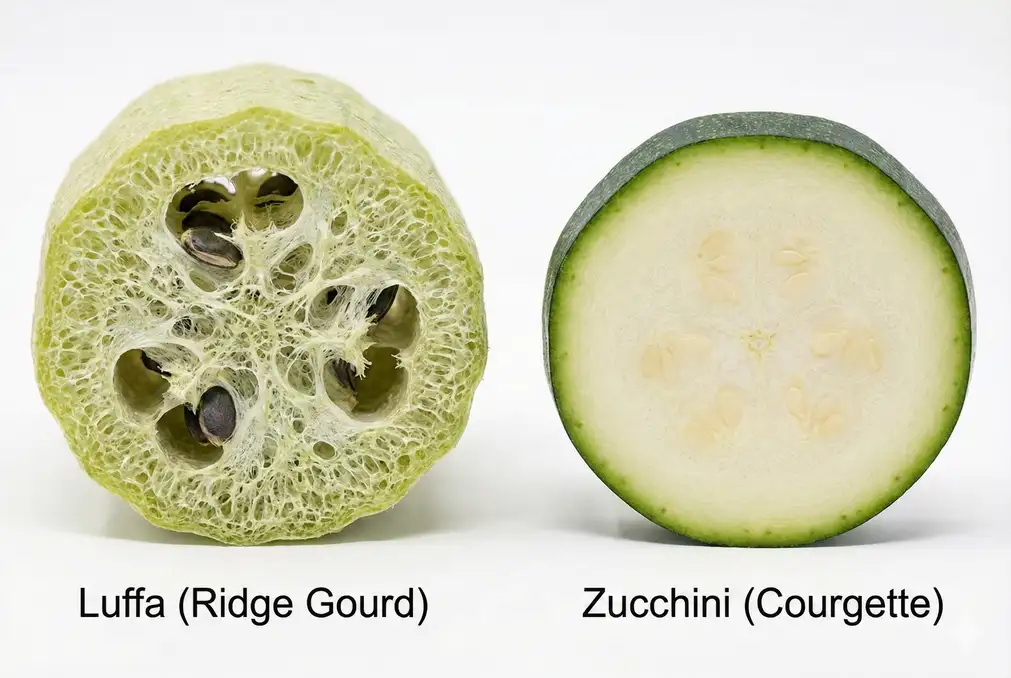
Harvest Timing: The critical difference is that luffa must be harvested young for eating (typically 6-8 inches long), while zucchini remains tender even at larger sizes (8-12 inches). If you wait too long, luffa develops its characteristic fibrous interior that makes it perfect for sponges but inedible.
Taste and Texture Comparison
Understanding the sensory differences between these two vegetables helps you make better substitution decisions in your recipes. For a deeper exploration of flavor differences, see our complete taste guide.
Flavor Profile
Zucchini: Has a very mild, slightly sweet, and grassy flavor with subtle nutty undertones. It's known for being nearly neutral, which makes it versatile in both savory and sweet dishes.
Luffa: Features a delicate, slightly sweeter taste than zucchini with a hint of cucumber-like freshness. Some describe it as having a cleaner, crisper flavor that's less earthy than zucchini.
- Both vegetables are mild enough to absorb flavors from seasonings and sauces
- Luffa tends to be slightly sweeter and more refreshing
- Neither vegetable overpowers other ingredients in a dish
- The differences are subtle - most people wouldn't notice in a heavily seasoned dish
Texture Characteristics
Zucchini: Dense and firm when raw, becoming tender and slightly creamy when cooked. It releases moisture during cooking but maintains some structure. Can become mushy if overcooked.
Luffa: More spongy and porous structure, even when young. Absorbs liquids and flavors exceptionally well. Cooks faster than zucchini and has a lighter, more delicate texture. The ridged varieties (angled luffa) have a crunchier texture than smooth luffa. Both vegetables require similar preparation methods before cooking.
Can You Substitute Luffa for Zucchini?
The short answer: Yes, in most cases. Luffa makes an excellent zucchini substitute, especially in Asian-inspired dishes, soups, and stir-fries. However, there are some considerations to keep in mind.
- Use a 1:1 ratio: Replace zucchini with the same amount of young luffa
- Reduce cooking time: Luffa cooks 2-3 minutes faster than zucchini
- Don't peel young luffa: The skin is tender and edible when harvested young
- Cut slightly larger pieces: Luffa shrinks more than zucchini during cooking
- Embrace the absorbency: Luffa soaks up sauces beautifully - use this to your advantage
When to Use Luffa Instead of Zucchini
Luffa shines in certain applications where its unique properties are advantages rather than compromises.
Best Uses for Luffa
Soups and Broths: Luffa's spongy texture absorbs flavors wonderfully, making it perfect for Chinese soups, Thai curries, and Vietnamese pho. It becomes tender without disintegrating and carries the soup's flavors in every bite.
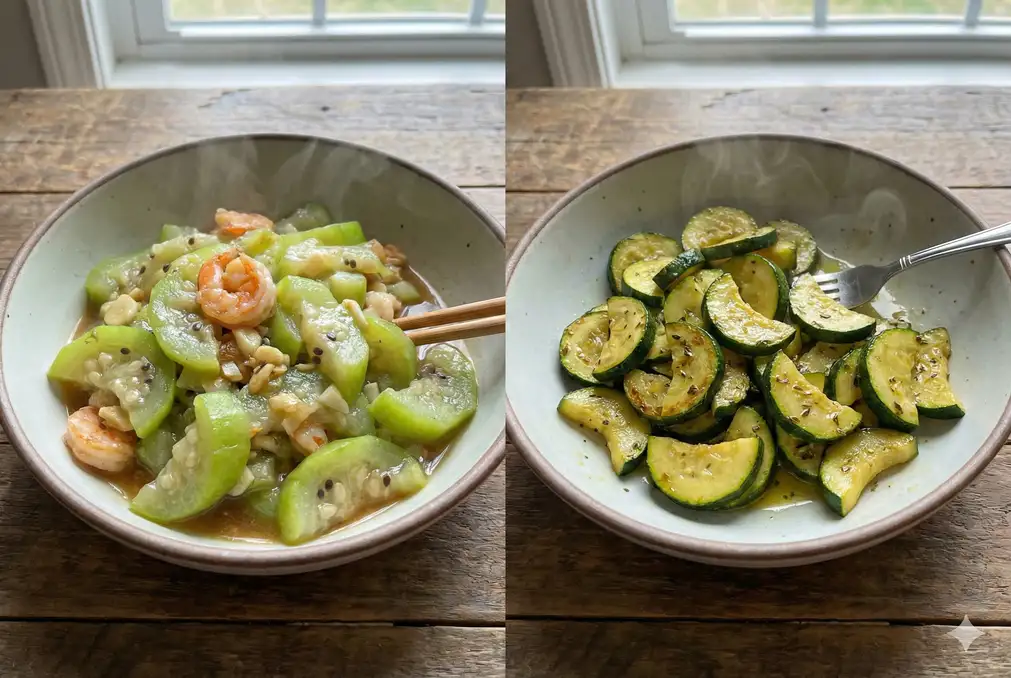
Stir-Fries: The quick cooking time and ability to absorb sauce make luffa ideal for stir-frying. It pairs beautifully with garlic, ginger, oyster sauce, and other Asian seasonings. The vegetable maintains a pleasant bite without becoming soggy.
Steamed Dishes: Luffa steams beautifully, maintaining its structure while becoming tender. Try it steamed with garlic sauce or in dim sum preparations.
Curries: Whether in Indian, Thai, or Malaysian curries, luffa absorbs the spiced coconut milk or tomato-based sauces exceptionally well, delivering intense flavor in every piece.
When Zucchini Works Better
Despite luffa's versatility, there are situations where zucchini is the superior choice.
Recipes Where Zucchini Excels
Baking: Zucchini bread, muffins, and cakes rely on zucchini's higher moisture content and neutral flavor. Luffa's more porous structure doesn't provide the same moisture and binding properties in baked goods.
Grilling: Zucchini's denser flesh holds up better on the grill, developing nice char marks without falling apart. Luffa can become too soft when exposed to high dry heat.
Raw Applications: For salads, zoodles (zucchini noodles), or raw vegetable platters, zucchini's firm, dense texture is preferable. Raw luffa can be slightly tough and less appealing in texture.
Roasting: Zucchini roasts beautifully, developing caramelized edges while maintaining structure. Luffa tends to become too soft and can dry out when roasted.
Pickling: While both can be pickled, zucchini maintains a better crunch and is more widely used in Western-style pickles.
Cooking Methods Comparison
Different cooking techniques highlight the strengths of each vegetable. Here's a detailed comparison:
| Cooking Method | Luffa | Zucchini | Winner |
|---|---|---|---|
| Stir-Frying | Excellent - absorbs sauces, quick cooking (3-4 min) | Very good - stays firm, takes 5-6 minutes | Luffa |
| Steaming | Excellent - becomes tender and silky (4-5 min) | Good - maintains firmness (6-7 min) | Luffa |
| Soups/Broths | Excellent - absorbs flavors beautifully | Good - can become mushy if overcooked | Luffa |
| Grilling | Fair - can become too soft | Excellent - develops char, stays firm | Zucchini |
| Roasting | Fair - tends to dry out | Excellent - caramelizes nicely | Zucchini |
| Baking | Not recommended | Excellent - adds moisture to baked goods | Zucchini |
| Raw/Salads | Fair - texture can be tough | Excellent - crisp and refreshing | Zucchini |
| Sauteing | Very good - quick and flavorful (4 min) | Excellent - versatile and reliable (6 min) | Tie |
Nutritional Differences
Both vegetables are low-calorie, nutritious options, but they have slightly different nutritional profiles. For a complete nutritional comparison, see our in-depth guide.
Luffa Nutrition (per 100g)
- Calories: 20
- Carbohydrates: 5g
- Fiber: 1.5g
- Protein: 1.2g
- Vitamin C: 10mg (11% DV)
- Vitamin A: 120 IU
- Iron: 0.4mg
Zucchini Nutrition (per 100g)
- Calories: 17
- Carbohydrates: 3.1g
- Fiber: 1g
- Protein: 1.2g
- Vitamin C: 17mg (19% DV)
- Vitamin A: 200 IU
- Potassium: 261mg
Key Takeaways: Zucchini has slightly more vitamin C and potassium, while luffa is marginally higher in fiber. Both are excellent low-calorie vegetables that contribute to a healthy diet. Neither has a significant advantage nutritionally.
How to Adapt Your Favorite Zucchini Recipes for Luffa
Converting your favorite zucchini recipes to use luffa is straightforward with these simple guidelines:
Step-by-Step Conversion Process
- Assess the cooking method: If the recipe involves grilling, roasting, or baking, stick with zucchini. For stir-fries, soups, curries, or steamed dishes, luffa is ideal.
- Adjust quantities: Use the same amount of luffa as zucchini (1:1 substitution).
- Modify cooking time: Reduce cooking time by 20-30% since luffa cooks faster.
- Consider moisture content: Luffa may release slightly less water than zucchini, so you might not need to salt and drain it beforehand.
- Enhance the sauce: Take advantage of luffa's absorbent nature by using slightly more flavorful sauces or seasonings.
- Always use young, tender luffa (6-8 inches long) for the best texture
- Cut luffa into slightly larger pieces than you would zucchini to account for shrinkage
- Add luffa to the pan after other ingredients that take longer to cook
- For soups, add luffa in the last 5-7 minutes of cooking to prevent overcooking
- Season luffa well - its absorbent nature means it can handle bold flavors
Frequently Asked Questions
It's not recommended. Zucchini bread relies on zucchini's high moisture content and neutral flavor. Luffa has a different texture and moisture level that won't produce the same results. Stick with zucchini for baking applications.
Luffa and zucchini have similar mild flavors, but luffa is slightly sweeter and more refreshing with cucumber-like notes. The differences are subtle, and most people find them interchangeable in cooked dishes, especially when seasoned well.
Young edible luffa should be 6-8 inches long, bright green, and feel firm but not hard. If the luffa is turning yellow, feels very light for its size, or has hard ridges, it's too mature and has developed the fibrous interior that makes it suitable only for sponges, not eating.
Yes, absolutely. While luffa is traditional in many Asian dishes, zucchini makes an excellent substitute. It will take slightly longer to cook and won't absorb flavors quite as readily, but the results will still be delicious. Use the same 1:1 ratio and add 2-3 minutes to the cooking time.
Both are extremely healthy, low-calorie vegetables with similar nutritional profiles. Zucchini has slightly more vitamin C and potassium, while luffa has marginally more fiber. The differences are minimal, so choose based on recipe requirements and personal preference rather than nutrition alone.
While luffa can be eaten raw when very young, it's not as pleasant as raw zucchini. The texture is more fibrous and less crisp. If you want to use luffa raw, harvest it very young (4-5 inches), peel it, and slice it thinly. For most raw applications, zucchini is the better choice.
Both should be stored in the refrigerator's crisper drawer in a perforated plastic bag. Zucchini stays fresh for 5-7 days, while young luffa is best used within 3-4 days as it becomes fibrous more quickly. Don't wash either vegetable until you're ready to use it, as excess moisture can cause spoilage.
Final Thoughts on Luffa vs Zucchini
Both luffa and zucchini are versatile, delicious vegetables that deserve a place in your kitchen. While they can often substitute for each other, understanding their unique characteristics helps you make the best choice for each recipe.
Choose luffa when:
- Making Asian-inspired stir-fries, soups, or curries
- You want a vegetable that absorbs sauces exceptionally well
- You're steaming vegetables for a light, healthy side dish
- You're growing your own and want to diversify your harvest
Choose zucchini when:
- Baking breads, muffins, or cakes
- Grilling or roasting vegetables
- Making raw preparations like zoodles or salads
- You need a vegetable that holds up to longer cooking times
The beauty of both vegetables is their mild flavor and adaptability. Whether you're working with luffa from your garden or picking up zucchini from the farmers market, you now have the knowledge to cook with confidence and create delicious meals.