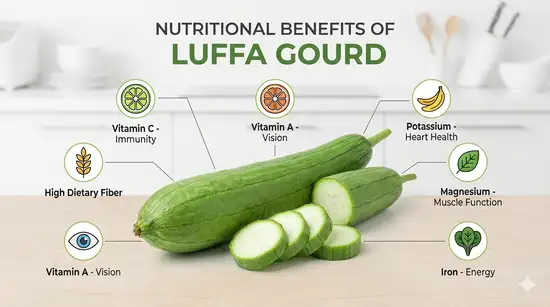
Luffa gourd (also spelled loofah), known scientifically as Luffa aegyptiaca or Luffa acutangula, is a versatile vegetable enjoyed throughout Asia, the Middle East, and increasingly in Western cuisines. While many know luffa as the source of natural bath sponges, young luffa gourds are a nutritional powerhouse and luffa as healthy food deserves a place in your eating plan.
This comprehensive nutrition guide explores the complete nutritional profile of luffa gourd, backed by data and research. Whether you're counting calories, managing diabetes, seeking digestive health, or simply looking to add more nutrient-dense vegetables to your diet, luffa offers remarkable benefits worth discovering.
Recommended Nutrition & Health Products

Babish Carbon Steel Flat Bottom Wok (14-Inch)
Restaurant-quality wok for authentic luffa stir-fry - works on all stovetops including induction
Check Price on AmazonAs an Amazon Associate, we earn from qualifying purchases.
Luffa Gourd Nutrition Facts
Understanding the nutritional composition of luffa gourd helps you make informed dietary choices. The following data shows comprehensive nutrition per 100g serving of raw, young luffa gourd—the ideal stage for culinary use. For best nutrition, harvest at peak nutrition harvest time.
Basic Composition:
- Calories: 20 kcal (1% DV)
- Water: 94 g
- Protein: 0.5 g (1% DV)
- Carbohydrates: 4.4 g (1.5% DV)
- Dietary Fiber: 1.1 g (4% DV)
- Sugars: 2.2 g
- Fat: 0.2 g (0.3% DV)
Vitamins:
- Vitamin C: 8-10 mg (11% DV)
- Vitamin A (beta-carotene): 60 µg (7% DV)
- Vitamin B6: 0.04 mg (2% DV)
- Folate (B9): 6 µg (1.5% DV)
- Thiamin (B1): 0.05 mg (4% DV)
- Riboflavin (B2): 0.02 mg (1.5% DV)
Minerals:
- Potassium: 139 mg (3% DV)
- Magnesium: 12 mg (3% DV)
- Calcium: 18 mg (2% DV)
- Iron: 0.4 mg (2% DV)
- Phosphorus: 22 mg (2% DV)
- Zinc: 0.2 mg (2% DV)
- Sodium: 2 mg (0.1% DV)
*Daily Values are based on a 2,000 calorie diet.
Calories in Luffa Gourd
One of the most appealing aspects of luffa gourd for health-conscious eaters is its remarkably low calorie content. At just 20 calories per 100g serving, luffa ranks among the lowest-calorie vegetables available, comparable to cucumbers (16 calories) and celery (16 calories). This makes it an ideal weight-friendly vegetable.
This ultra-low calorie density means you can enjoy generous portions of luffa without significantly impacting your daily calorie intake. For perspective, a typical serving of cooked luffa in a stir-fry (approximately 200g) contains only about 40 calories—less than a medium apple.
- Carbohydrates: 88% (4.4g × 4 cal/g = 17.6 cal)
- Protein: 10% (0.5g × 4 cal/g = 2 cal)
- Fat: 2% (0.2g × 9 cal/g = 1.8 cal)
The calorie content can increase with cooking methods. While steaming or boiling adds minimal calories, stir-frying with oil can add 40-100 calories per serving depending on the amount of oil used. For the lowest-calorie preparation, learn preparing nutritious luffa techniques like steaming or simmering in broth.
Vitamins and Minerals in Luffa
Despite its low calorie content, luffa gourd delivers an impressive array of essential vitamins and minerals that support overall health and wellness.
Vitamin C: Immune System Support
Luffa provides 8-10mg of vitamin C per 100g, representing approximately 11% of the recommended daily intake. This water-soluble antioxidant plays crucial roles in:
- Immune system function and protection against illness
- Collagen synthesis for healthy skin, bones, and connective tissue
- Antioxidant protection against cellular damage from free radicals
- Enhanced iron absorption from plant-based foods
Vitamin A: Vision and Skin Health
With 60 µg of beta-carotene (a vitamin A precursor), luffa supports:
- Healthy vision, particularly night vision
- Skin cell regeneration and repair
- Immune system function
- Cellular communication and growth
B Vitamins: Energy Metabolism
Luffa contains several B-complex vitamins including thiamin (B1), riboflavin (B2), vitamin B6, and folate (B9). While present in modest amounts, these vitamins contribute to energy production, nervous system health, and red blood cell formation.
Essential Minerals
Potassium (139mg per 100g) is the most abundant mineral in luffa, supporting healthy blood pressure regulation, proper muscle contraction, and cardiovascular health. Other notable minerals include magnesium (muscle and nerve function), calcium (bone health), and iron (oxygen transport). The extremely low sodium content (just 2mg per 100g) makes luffa an excellent choice for low-sodium diets.

Health Benefits of Eating Luffa
The unique nutritional profile of luffa gourd translates into numerous evidence-based health benefits. Throughout history, luffa has been valued for its traditional health uses across Asian cultures.
- Cardiovascular Health: The potassium content helps regulate blood pressure, while the fiber and low-fat profile support healthy cholesterol levels
- Immune System Support: Vitamin C and vitamin A work synergistically to strengthen immune defenses
- Hydration Support: With 94% water content, luffa helps maintain proper hydration
- Skin Health: Vitamin C promotes collagen production for skin elasticity, while vitamin A supports skin cell turnover
- Blood Sugar Regulation: The low glycemic index and fiber content help stabilize blood sugar levels
- Antioxidant Protection: Contains various antioxidant compounds including flavonoids and phenolic acids
Luffa for Weight Loss
Luffa gourd is an exceptional food for weight loss and weight management, offering multiple advantages for those seeking to reduce caloric intake while maintaining nutritional adequacy.
Why Luffa Supports Weight Loss
- Ultra-Low Calorie Density: At 20 calories per 100g, you can eat substantial portions without consuming many calories
- High Water Content: The 94% water content adds volume to meals without adding calories, triggering satiety signals
- Dietary Fiber: With 1.1g of fiber per 100g, luffa provides bulk that slows digestion and prolongs feelings of fullness
- Low Glycemic Impact: Minimal carbohydrate content means minimal impact on blood sugar and insulin levels
- Nutrient Density: Unlike many low-calorie foods, luffa provides essential vitamins and minerals
- Add 200g of luffa to stir-fries for only 40 calories but significant volume
- Use luffa in soups to create satisfying, low-calorie meals
- Substitute luffa for higher-calorie vegetables in recipes
- Try juicing for nutrition as a refreshing low-calorie drink

Luffa Fiber Content and Digestive Health
While 1.1g of fiber per 100g may seem modest compared to some high-fiber foods, luffa's fiber content contributes meaningfully to digestive health, especially when consumed as part of a varied diet rich in plant foods.
Types of Fiber in Luffa
Luffa contains both soluble and insoluble fiber, each playing distinct roles in digestive wellness:
- Slows digestion and glucose absorption, helping stabilize blood sugar
- Binds to cholesterol in the digestive tract, potentially lowering LDL cholesterol
- Feeds beneficial gut bacteria (prebiotic effect)
- Increases satiety and prolongs feelings of fullness
- Adds bulk to stool, promoting regular bowel movements
- Helps prevent constipation by speeding transit through the digestive system
- Supports overall colon health
- May reduce risk of digestive disorders
How Luffa Compares to Other Vegetables
Understanding how luffa stacks up against other common vegetables helps you appreciate its unique nutritional profile.
- Luffa Gourd: 20 cal, 4.4g carbs, 1.1g fiber, 8-10mg Vit C, 94% water
- Cucumber: 16 cal, 3.6g carbs, 0.5g fiber, 2.8mg Vit C, 95% water
- Zucchini: 17 cal, 3.1g carbs, 1.0g fiber, 17.9mg Vit C, 94% water
- Bitter Melon: 17 cal, 3.7g carbs, 2.8g fiber, 84mg Vit C, 94% water
- Chayote: 19 cal, 4.5g carbs, 1.7g fiber, 7.7mg Vit C, 95% water
- Winter Melon: 13 cal, 3.0g carbs, 2.9g fiber, 13mg Vit C, 96% water
Key Comparisons
Luffa vs. Cucumber: Both are extremely low in calories and high in water, but luffa provides more than double the fiber (1.1g vs 0.5g) and significantly more vitamin C (8-10mg vs 2.8mg), making it more nutritionally dense.
Luffa vs. Zucchini: These vegetables are remarkably similar nutritionally, with nearly identical calorie counts and fiber content. Zucchini edges out luffa in vitamin C content, while luffa has a milder, more delicate flavor that some prefer.
Luffa vs. Bitter Melon: While both are popular in Asian cuisines, bitter melon contains significantly more fiber and vitamin C but has a distinctive bitter flavor. Luffa's mild taste makes it more versatile and appealing to a broader audience.
Is Luffa Good for Diabetics?
Yes, luffa gourd is an excellent vegetable choice for people with diabetes or those at risk of developing the condition. Multiple aspects of luffa's nutritional profile make it particularly well-suited for diabetic diets.
Low Glycemic Index
Luffa has a low glycemic index (GI), meaning it causes minimal and gradual increases in blood glucose levels after consumption. This is due to:
- Low total carbohydrate content (only 4.4g per 100g)
- Presence of dietary fiber that slows glucose absorption
- High water content that dilutes carbohydrate concentration
- Minimal natural sugars (2.2g per 100g)
Blood Sugar Regulation
Research suggests that compounds found in luffa and similar gourds may help improve insulin sensitivity, slow carbohydrate breakdown, reduce post-meal blood sugar spikes, and support overall glycemic control.
- Pair luffa with lean protein sources to create balanced, blood-sugar-friendly meals
- Use luffa to add volume to meals without increasing carbohydrate load
- Combine with other low-GI vegetables for variety
- Avoid high-sugar sauces; instead season with herbs, spices, and small amounts of healthy fats
- For organic for maximum benefits, grow your own pesticide-free luffa
Frequently Asked Questions
Luffa gourd is extremely low in calories, containing only about 20 calories per 100g serving (roughly 3.5 ounces). This makes it an excellent choice for weight loss and calorie-conscious diets while still providing essential nutrients and fiber. A typical serving of cooked luffa (200g) contains approximately 40 calories.
Yes, luffa gourd is excellent for weight loss. With only 20 calories per 100g, high water content (94%), and 1.1g of dietary fiber, it helps you feel full while consuming minimal calories. The fiber also aids digestion and helps regulate blood sugar levels, preventing the cravings that can sabotage weight loss efforts.
Luffa gourd is rich in vitamin C (8-10mg per 100g), providing about 11% of daily needs. It also contains vitamin A (beta-carotene), vitamin B6, folate, thiamin, and riboflavin. These vitamins support immune function, skin health, energy metabolism, and overall wellness.
Yes, luffa gourd is beneficial for diabetics. It has a low glycemic index, contains only 4.4g of carbohydrates per 100g with 1.1g fiber, and may help regulate blood sugar levels. The fiber content slows glucose absorption, making it a diabetes-friendly vegetable that won't cause blood sugar spikes.
Luffa gourd is similar to cucumber but slightly more nutritious. Both are low in calories (20 vs 16 per 100g) and high in water (94% vs 95%). However, luffa contains more than double the fiber (1.1g vs 0.5g), more vitamin C (8-10mg vs 2.8mg), and higher levels of minerals like potassium and magnesium.
Yes, young, tender luffa can be eaten raw, though it's more commonly cooked. Raw luffa has a crisp texture similar to cucumber and a very mild flavor. When eating raw, choose very young luffa (15-20cm long) and peel if the skin is tough. Most people prefer luffa lightly cooked, which enhances its flavor and makes it easier to digest.