
Harvested your loofah too early? Don't throw it away! Those green, unripe loofah gourds are actually a prized vegetable in many cuisines around the world. In fact, in Asia, loofah is primarily grown as a food crop, not for sponges. If you're just starting out with growing your own loofah, understanding the dual-purpose nature of this plant opens up exciting culinary possibilities.
This guide explains what to do with green loofah at every stage—from tender edible gourds to the awkward "too green for sponges, too old to eat" stage.
Grow Your Own Green Loofah
KVITER Heirloom Luffa Seeds (40 Count)
Fast-sprouting non-GMO seeds with 90%+ germination - grow your own natural sponges in one season
Buy on Amazon
BN-LINK Seedling Heat Mat for Faster Germination
Cuts loofah germination time in half - waterproof design maintains optimal 75-85°F soil temperature
Buy on AmazonAs an Amazon Associate, we earn from qualifying purchases.
When Is Green Loofah Edible?
Loofah's edibility depends entirely on its maturity stage. Unlike most vegetables where bigger is simply better, loofah follows an inverse rule: smaller is more tender. As the gourd ages, internal fibers begin developing—the same fibrous network that eventually becomes your kitchen sponge. Once those fibers start forming, no amount of cooking will make the loofah palatable.
The transformation from tender vegetable to tough sponge happens gradually but irreversibly. Understanding this timeline helps you harvest at the perfect moment for the table. The window for eating is surprisingly short—typically just one to two weeks from when the fruit first forms to when fiber development begins.
- 4-6 inches: Most tender, no fiber development — Best for eating!
- 6-8 inches: Still edible if skin peels easily — Good for cooking
- 8-12 inches: Fibers starting to form — Test tenderness first
- 12+ inches: Too fibrous to eat, too immature for sponge — Compost
The Fingernail Test
Not sure if your loofah is still edible? Try this simple test:
- Press your fingernail into the skin
- If it penetrates easily and the gourd feels tender, it's edible
- If the skin is tough and doesn't dent, it's past the eating stage
For eating, harvest loofah early and often! The more you pick, the more the vine produces. Leave just a few gourds on the vine to fully mature for sponges. Understanding proper harvest timing is crucial whether you're growing for food or fiber.
How to Cook Green Loofah
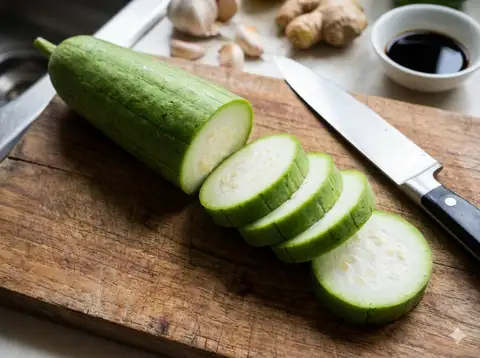
Green loofah is a staple vegetable in Chinese, Vietnamese, Indian, and other Asian cuisines. It has a mild, slightly sweet flavor similar to zucchini but with a softer, more silky texture when cooked. Unlike its Western counterpart zucchini, loofah develops a uniquely silky, almost custardy consistency when properly stir-fried—a texture prized in Cantonese cooking where it's known as "si gua" (絲瓜). The key to achieving this silky texture is high heat and brief cooking; overcooked loofah turns mushy and loses its delicate character.
- Wash the gourd thoroughly under running water
- Peel the ridged skin using a vegetable peeler (the skin is tough and bitter)
- Cut into rounds, half-moons, or diagonal slices
- Optional: Salt slices lightly and let sit 10 minutes to draw out excess moisture
- Cook immediately—peeled loofah oxidizes quickly and turns brown
Popular Cooking Methods

- Heat wok or pan with oil until very hot
- Add garlic, ginger, or aromatics briefly
- Add sliced loofah and stir-fry 2-3 minutes
- Season with soy sauce, oyster sauce, or salt
- Loofah releases water quickly—high heat is key
- Add to clear broths in the last 5-7 minutes of cooking
- Pairs wonderfully with egg drop soup
- Popular in Vietnamese canh soups
- Adds silky texture to miso soup
- Called "tori" in Indian cuisine
- Cook in curry sauce until tender (10-15 minutes)
- Pairs well with coconut milk curries
- Absorbs spices beautifully
Simple Green Loofah Recipes
These beginner-friendly recipes showcase green loofah's versatility. Both dishes come together quickly once you've mastered the basic preparation technique, and they pair beautifully with steamed rice for a complete meal.
Ingredients: 2 medium green loofah (about 1 lb total), 3 cloves garlic (minced), 2 tablespoons vegetable oil, 1 tablespoon soy sauce, 1/2 teaspoon sesame oil, salt and white pepper to taste
Instructions:
- Peel loofah and cut into 1/4-inch diagonal slices
- Heat vegetable oil in wok over high heat until shimmering
- Add garlic and stir-fry 10 seconds until fragrant
- Add loofah slices and stir-fry 2-3 minutes
- Add soy sauce, drizzle with sesame oil, season and serve

Ingredients: 1 medium green loofah, 4 cups chicken or vegetable broth, 2 eggs (beaten), 1 teaspoon ginger (minced), salt and white pepper to taste, green onions for garnish
Instructions:
- Peel loofah and cut into thin half-moons
- Bring broth to boil with ginger
- Add loofah and simmer 5 minutes until tender
- Slowly drizzle beaten eggs into soup while stirring
- Season and garnish with green onions
Green Loofah vs. Other Squash
| Feature | Green Loofah | Zucchini | Cucumber |
|---|---|---|---|
| Texture (cooked) | Silky, soft | Firmer | Watery |
| Flavor | Mild, sweet | Mild, vegetal | Fresh, watery |
| Best cooking | Stir-fry, soup | Roast, grill | Raw, pickled |
| Skin edible? | No (peel first) | Yes | Yes |
| Cook time | 2-5 minutes | 5-10 minutes | Best raw |
What If It's Too Mature to Eat?
Sometimes you end up with loofah that's too fibrous to eat but too green to make good sponges. Here's what to do:
Loofah over 12 inches that's still green won't produce good sponges. The fibers are forming but won't be strong or well-developed. These are best composted.
Options for Overgrown Green Loofah
- Compost: The best option—returns nutrients to your garden
- Leave on vine: If still attached, it may continue maturing into a usable sponge if conditions allow
- Chicken feed: Chickens may enjoy pecking at fresh loofah
- Test it anyway: Cut open and check fiber development—you might get a soft sponge that's still useful for gentle scrubbing. See our processing guide for instructions
Decide early in the season which gourds are for eating and which are for sponges. Mark "sponge" loofah with a ribbon and leave them completely alone until they turn brown and dry on the vine.
Nutritional Benefits
Green loofah offers impressive nutritional value for such a low-calorie vegetable. A one-cup serving contains only about 20 calories while providing substantial dietary fiber that supports healthy digestion. This makes it an excellent choice for those watching their caloric intake without sacrificing nutrition.
The vitamin content of green loofah is particularly noteworthy. It's rich in Vitamin A, which supports healthy vision and skin, and Vitamin C, a powerful antioxidant that bolsters immune function. Loofah also contains meaningful amounts of potassium, essential for proper heart rhythm and muscle function, along with various B vitamins that support energy metabolism.
Beyond basic nutrition, green loofah contains beneficial flavonoids—plant compounds with antioxidant properties that may help reduce oxidative stress in the body. In traditional Chinese and Ayurvedic medicine, loofah has been used for centuries to support respiratory health and reduce inflammation, though modern research on these applications is still limited.
One often-overlooked benefit: the high water content of young loofah (around 94%) makes it naturally hydrating, especially valuable during hot summer months when the vegetable is at peak harvest.
Growing Loofah for Eating
Growing loofah specifically for eating requires a different approach than growing for sponges. The key difference is timing and harvest frequency. While sponge-bound loofah stays on the vine for months, edible loofah demands vigilance—check your vines every two to three days once they start producing, and harvest any gourds that have reached 4-6 inches in length.
Morning harvest produces the best texture. Like cucumbers, loofah gourds are at their crispest in the early morning before the day's heat causes water loss. The difference is noticeable in the final dish—morning-harvested loofah has a snappier texture and cooks up more consistently.
Storage is the vegetable's Achilles heel. Unlike zucchini, which can last a week or more in the refrigerator, green loofah begins deteriorating within 2-3 days of harvest. Store it unwashed in a plastic bag in your refrigerator's crisper drawer, and plan your meals accordingly. Better yet, harvest only what you'll use that day or the next.
For the best of both worlds—fresh eating and sponges—adopt a dual-purpose strategy. Each mature loofah vine can produce 15-25 or more gourds over the growing season. Harvest frequently from most of the vine to keep production high, but designate 5-10 gourds to leave completely untouched. Mark these "sponge" loofah with a ribbon tied to the stem so you don't accidentally pick them. Let them mature fully on the vine until they dry and brown—usually 2-3 months after flowering. If you're growing in limited space, check out our tips on container growing loofah to maximize your harvest from a smaller area.