
"Wait, loofah sponges come from cucumbers?" This is one of the most common misconceptions we hear. Many people are surprised to learn that loofah sponges grow on vines at all—and even more surprised when they discover loofah has nothing to do with cucumbers! If you're considering growing your own loofah, understanding these differences is the first step.
Let's clear up the confusion once and for all.
Start Growing Your Own Loofah
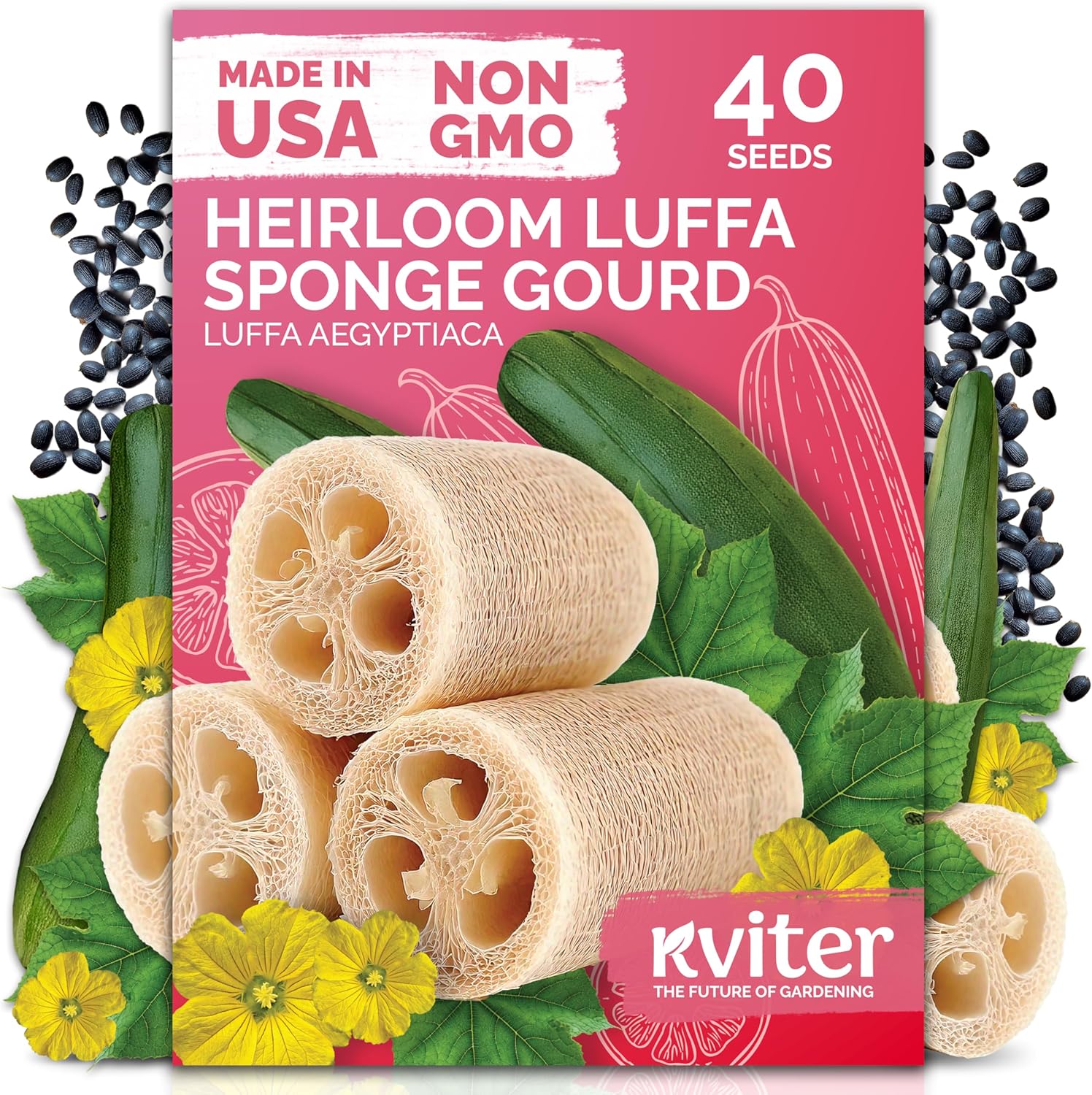
KVITER Heirloom Luffa Seeds (40 Count)
Fast-sprouting non-GMO seeds with 90%+ germination - grow your own natural sponges in one season
Buy on Amazon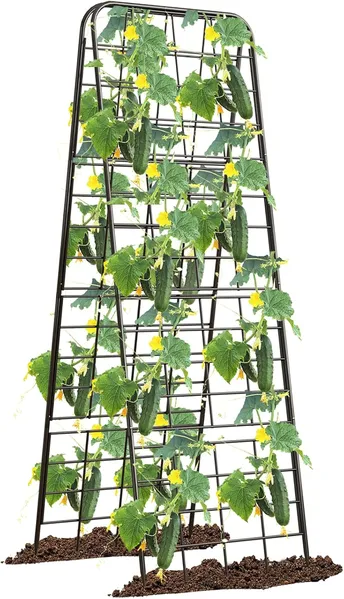
Heavy-Duty Adjustable A-Frame Trellis for Climbing Plants
Rust-proof metal frame perfect for loofah vines - folds flat for easy winter storage
Buy on AmazonAs an Amazon Associate, we earn from qualifying purchases.
Why the Confusion?
Several factors contribute to people mixing up loofah and cucumber:
Both plants are climbing vines that produce elongated fruits. They both have large leaves, yellow flowers, and tendrils for climbing. In a garden, an unfamiliar eye might easily confuse them.
Loofah and cucumber are both members of the Cucurbitaceae family—the gourd family that includes squash, melons, and pumpkins. They're botanical cousins, just not the same plant.
Many people don't realize loofah is a plant at all! When they learn it's not a sea creature, the jump to "it must be a cucumber" is a common misconception.
Immature loofah, when still edible, does resemble a cucumber or zucchini. This adds to the confusion for those who've seen young loofah at Asian markets. Learn more in our green loofah uses guide.
Common Myths: Debunked
Fact: Loofah sponges come from the Luffa plant, a completely different species. Cucumbers rot when dried—they don't develop the fibrous structure loofah has.
Fact: They're in the same family but different genera. It's like saying dogs and cats are the same because they're both mammals.
Fact: Absolutely not! You need loofah (luffa) seeds specifically. Cucumber seeds will only grow cucumbers.
Fact: Loofah is 100% plant-based! It grows on vines in gardens. You're thinking of sea sponges, which are actually animals.
Detailed Comparison
| Feature | Loofah (Luffa) | Cucumber |
|---|---|---|
| Scientific Name | Luffa aegyptiaca | Cucumis sativus |
| Common Names | Loofah, Luffa, Sponge Gourd | Cucumber, Cuke |
| Origin | South/Southeast Asia | South Asia (India) |
| Days to Maturity | 150-200 days | 50-70 days |
| Temperature Needs | Very warm (tropical) | Moderate warmth |
| Fruit Interior | Fibrous when mature | Soft, watery always |
| Primary Use | Sponges, scrubbers | Fresh eating, pickling |
| Edible? | When young only | Any stage |
| Typical Size | 12-24 inches | 6-12 inches |
Both Are Edible!
One thing loofah and cucumber do share: they're both edible vegetables when young!
Harvest loofah under 6-8 inches for eating. It tastes like mild zucchini with a silkier texture. Popular in Asian stir-fries and soups. See our Green Loofah Uses Guide.
How They Taste
Young loofah has a mild, slightly sweet flavor similar to tender zucchini. The skin is tough and must be peeled before cooking. Once cooked, the flesh becomes silky and absorbs flavors beautifully.
Cucumber is cool, crisp, and refreshing with a subtle grassy flavor. The skin is usually eaten along with the flesh, and most people enjoy cucumbers raw.
Cooking Differences
Loofah is best enjoyed cooked—stir-fried, added to soups, or curried. It's not typically eaten raw because the texture improves dramatically with heat.
Cucumber shines when eaten raw in salads, sandwiches, and drinks. It can also be pickled or lightly cooked, though cooking softens its signature crunch.
Growing Comparison
If you're a gardener, here's how they differ to grow. Understanding these differences is essential for success—loofah requires significantly more planning than cucumbers, particularly regarding proper care and maintenance throughout the season.
| Growing Factor | Loofah | Cucumber |
|---|---|---|
| Season Length | 150-200+ days warm weather | 50-70 days |
| Start Indoors? | Yes, 4-6 weeks early | Optional |
| Trellis Needed? | Yes, very strong | Optional |
| Vine Length | 15-30+ feet | 4-8 feet |
| Difficulty | Moderate-Hard | Easy |
| USDA Zones | Best in 7-11 | 3-11 (annual) |
- Loofah needs a much longer, warmer season than cucumbers
- Most gardeners north of zone 7 need to start seeds indoors
- Use season extension techniques in cooler climates
- See our Complete Growing Guide for step-by-step instructions
How to Identify Each Plant

Loofah Plant Features
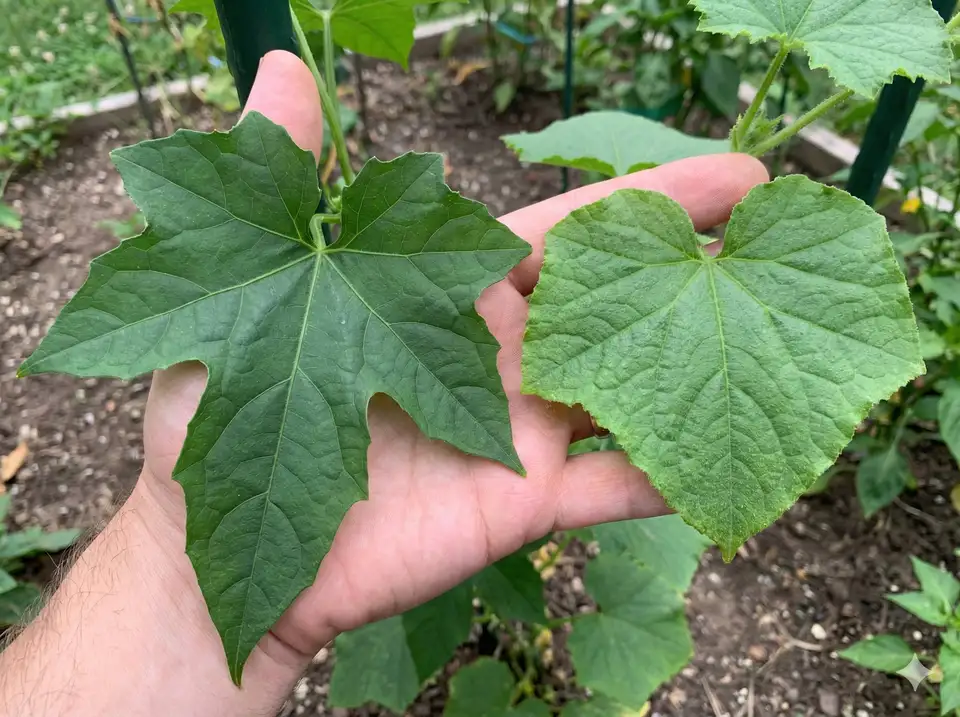
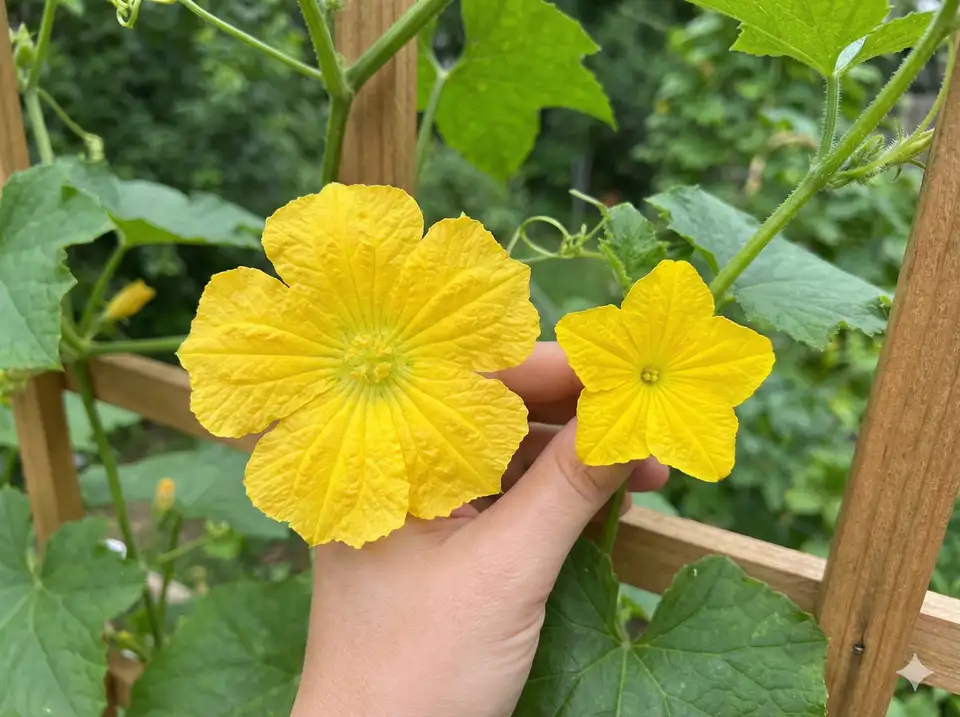
Loofah plants have large, deeply lobed leaves with a somewhat rough texture. The bright yellow flowers are separate male and female blooms on the same vine. Fruits are cylindrical, often with distinctive ridges, and can grow 12-24 inches long.
The vines are very vigorous and can reach 30+ feet in a single season. When the fruit matures, it turns brown and becomes lightweight as the fibrous interior develops—see our harvest timing guide for details. Watch for typical cucumber family pests throughout the growing season.
Cucumber Plant Features
Cucumber plants have large, triangular leaves that are rough but less deeply lobed than loofah. The yellow flowers are smaller than loofah blooms. Fruits are dark green, cylindrical, and typically 6-12 inches long depending on variety.
The vines show moderate growth, reaching 4-8 feet. When cucumbers are left on the vine too long, they turn yellow and become soft and mushy—a sign they're overripe, not that they're turning into loofah!
If you let a cucumber overripen, it turns yellow and soft—it does NOT become a loofah sponge! Only actual loofah plants develop the fibrous scrubbing structure.
The Bottom Line
Loofah and cucumber are completely different plants that happen to be distant botanical relatives. Loofah is a tropical gourd that develops a fibrous interior, making it perfect for natural sponges. Cucumber is a cool-climate vegetable with soft, watery flesh—ideal for salads and pickles, but it will never become a scrubbing sponge no matter how long you let it dry.
Now you know the truth—and can confidently correct anyone who thinks loofah sponges come from cucumbers!