Growing loofah organically ensures your sponges are free from synthetic chemicals—important since loofahs touch your skin and food surfaces. Whether you want to sell certified organic loofahs, reduce your environmental footprint, or simply grow the healthiest plants possible, this guide covers everything you need to know about chemical-free loofah cultivation. For a comprehensive overview of all growing methods, see our complete loofah growing guide.
Organic growing isn't just about what you don't use (pesticides, synthetic fertilizers). It's about building a thriving ecosystem where healthy soil grows healthy plants that resist pests and diseases naturally.
Recommended Organic Growing Supplies
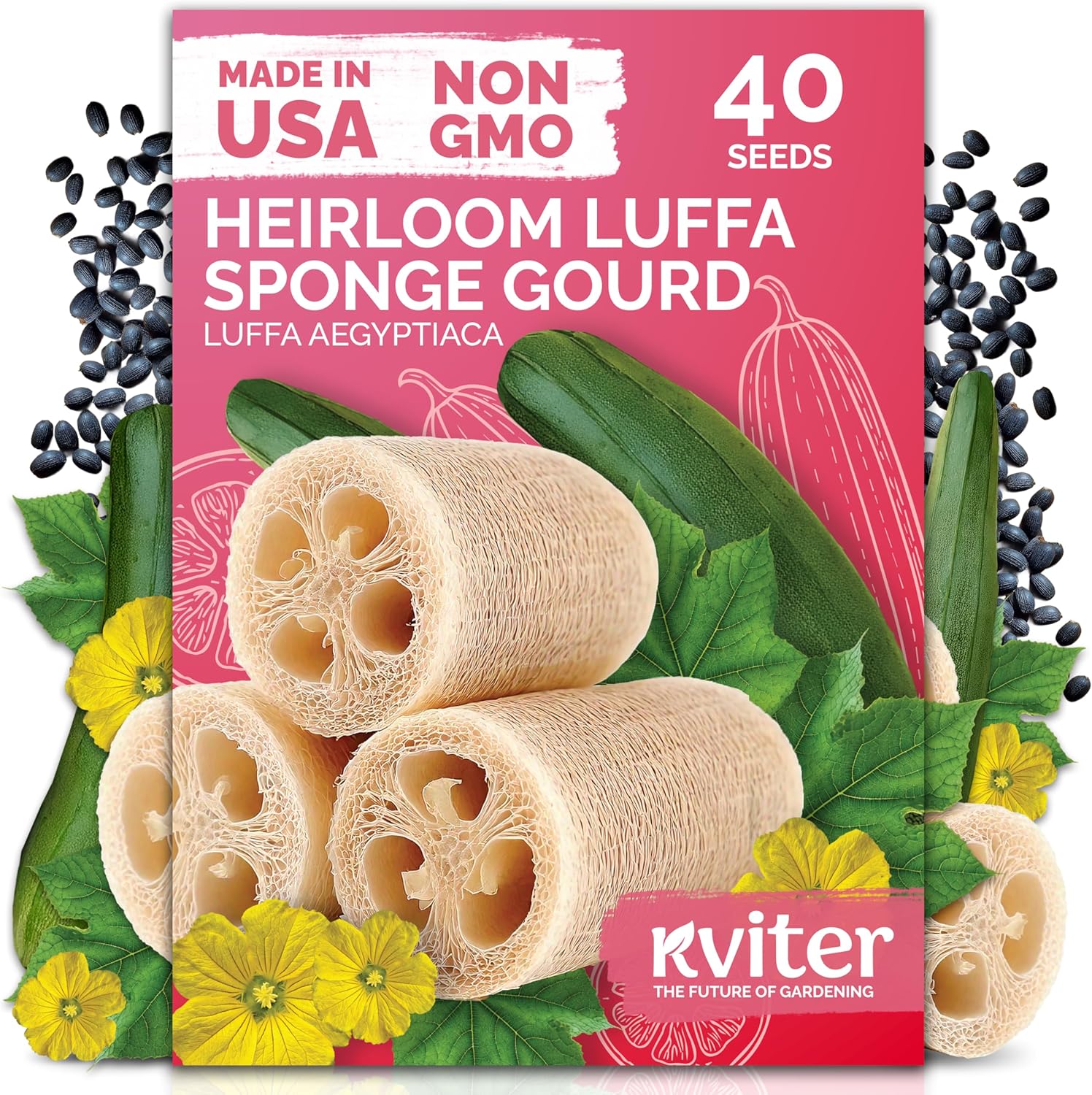
KVITER Heirloom Luffa Seeds (40 Count)
Fast-sprouting non-GMO seeds with 90%+ germination - grow your own natural sponges in one season
Buy on Amazon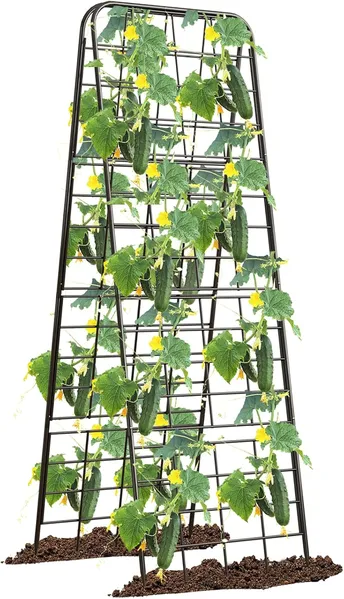
Heavy-Duty Adjustable A-Frame Trellis for Climbing Plants
Rust-proof metal frame perfect for loofah vines - folds flat for easy winter storage
Buy on AmazonAs an Amazon Associate, we earn from qualifying purchases.
Why Grow Loofah Organically?
No pesticide residue on sponges used for bathing and exfoliation.
Use kitchen scrubbers without chemical concerns on dishes.
Protects soil, water, and beneficial insects in your garden.
Organic loofahs command higher prices if you're selling.
Organic Soil Preparation
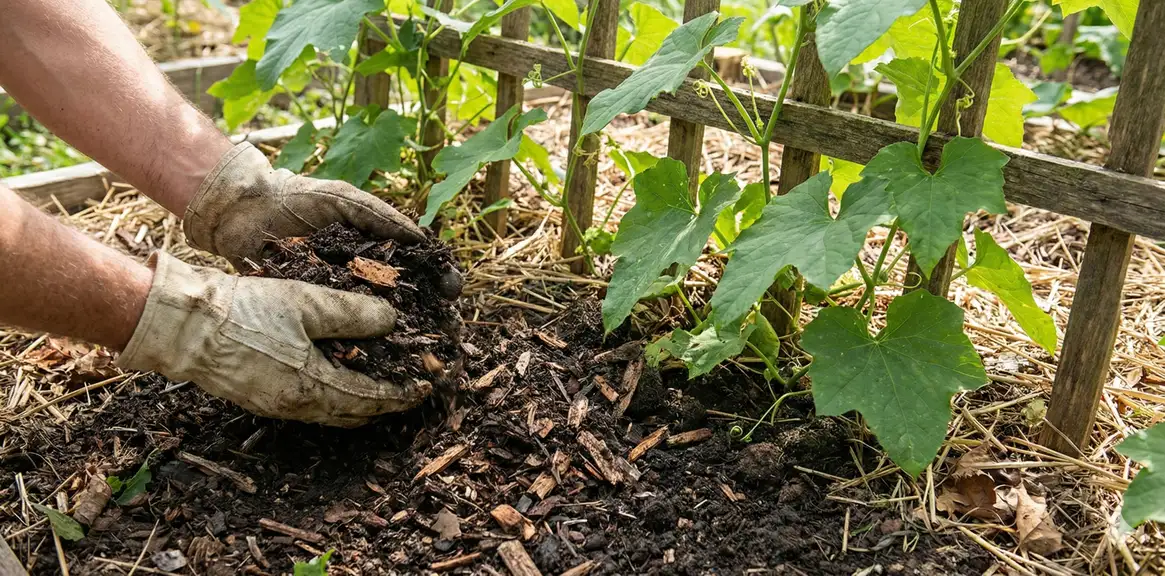
Healthy soil is the foundation of organic gardening. Loofah vines are heavy feeders, so investing in soil preparation pays dividends throughout the growing season.
- Compost: Add 3-4 inches of finished compost to planting area
- Aged manure: Work in well-rotted cow, horse, or chicken manure (never fresh)
- Cover crops: Plant nitrogen-fixing cover crops the season before loofah
- Leaf mold: Incorporate decomposed leaves for moisture retention
- pH testing: Aim for 6.0-6.8; adjust with lime or sulfur as needed
- Browns: Dried leaves, cardboard, straw (carbon source)
- Greens: Kitchen scraps, grass clippings, coffee grounds (nitrogen source)
- Ratio: 3 parts brown to 1 part green
- Turn: Every 1-2 weeks for faster decomposition
- Ready: Dark, crumbly, earthy smell (3-6 months)
Organic Fertilizing
Feed your loofah vines throughout the growing season using only organic-approved inputs. See our plant care guide for detailed fertilizer application rates and timing.
OMRI-Listed Fertilizers
- Fish emulsion: Quick nitrogen boost (5-1-1); apply every 2-3 weeks
- Kelp meal: Trace minerals and growth hormones; side-dress monthly
- Bone meal: Phosphorus for flowering (3-15-0); apply at planting
- Blood meal: Fast-acting nitrogen (12-0-0); use sparingly
- Compost tea: Liquid microbial boost; apply weekly to foliage and soil
Ingredients:
- 5-gallon bucket of non-chlorinated water
- 1-2 cups finished compost or worm castings
- 1 tablespoon unsulfured molasses
- Aquarium air pump (optional, for aeration)
Instructions:
- Fill bucket with water; let chlorine evaporate 24 hours if using tap water
- Add compost in mesh bag or directly to water
- Stir in molasses (feeds beneficial microbes)
- Aerate with pump or stir vigorously several times daily
- Brew for 24-48 hours
- Strain and apply immediately to soil and foliage
Organic Pest Control
Organic pest management focuses on prevention and natural solutions. The goal is balance—not eliminating all insects, but keeping pest populations below damaging levels. Strategic companion planting is one of the most effective preventive measures.
Prevention First
The cornerstone of organic pest management is prevention—creating conditions where pests struggle to establish rather than fighting them after they've taken hold. This starts with companion planting, where strategic neighbors like marigolds and nasturtiums emit compounds that repel cucumber beetles and other loofah pests. Plant these aromatic companions around the perimeter of your loofah bed and interplant them among the vines for maximum protection.
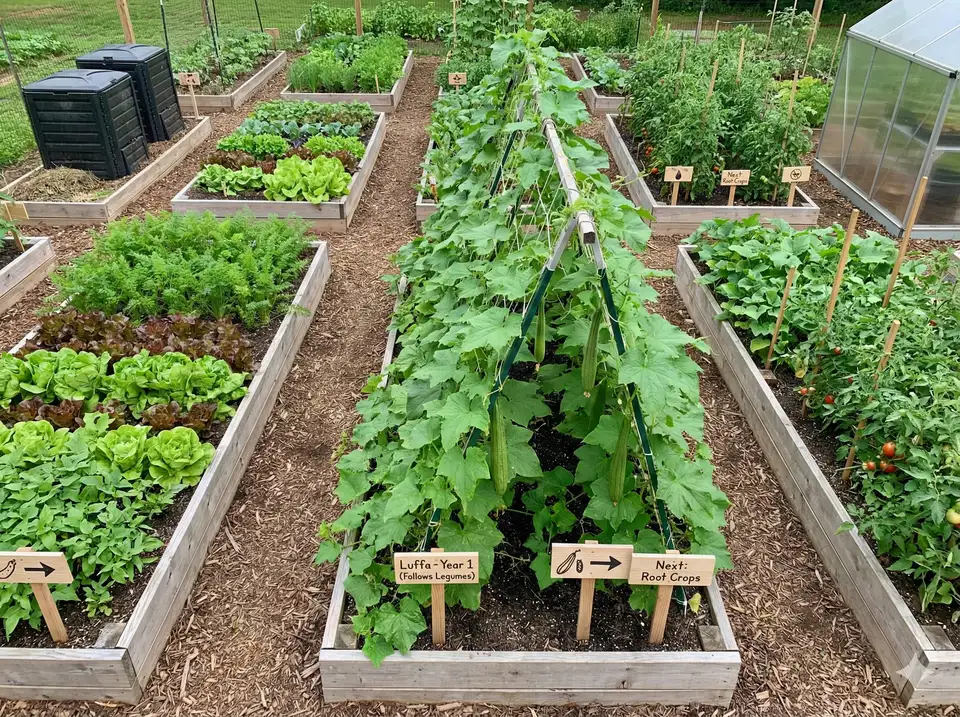
Crop rotation is equally critical. Cucumber beetles, squash vine borers, and soil-borne diseases overwinter in the soil near their host plants. By moving your loofah planting location each year and avoiding spots where any cucurbits (squash, melons, cucumbers) grew the previous season, you break these pest cycles naturally. A three-year rotation is ideal—meaning loofahs shouldn't return to the same bed for at least three growing seasons.
Floating row covers provide excellent early-season protection, creating a physical barrier against flying pests while still allowing light and water through. Install them immediately after transplanting and keep them in place until flowers appear, at which point you'll need to remove them for pollinator access. Perhaps most importantly, healthy plants naturally resist pests better than stressed ones. Consistent watering, proper nutrition, and good air circulation create vigorous vines that can tolerate some pest pressure without significant damage. Finally, keep your garden clean by removing plant debris promptly—fallen leaves and spent vines harbor pests and diseases through the winter.
Beneficial Insects
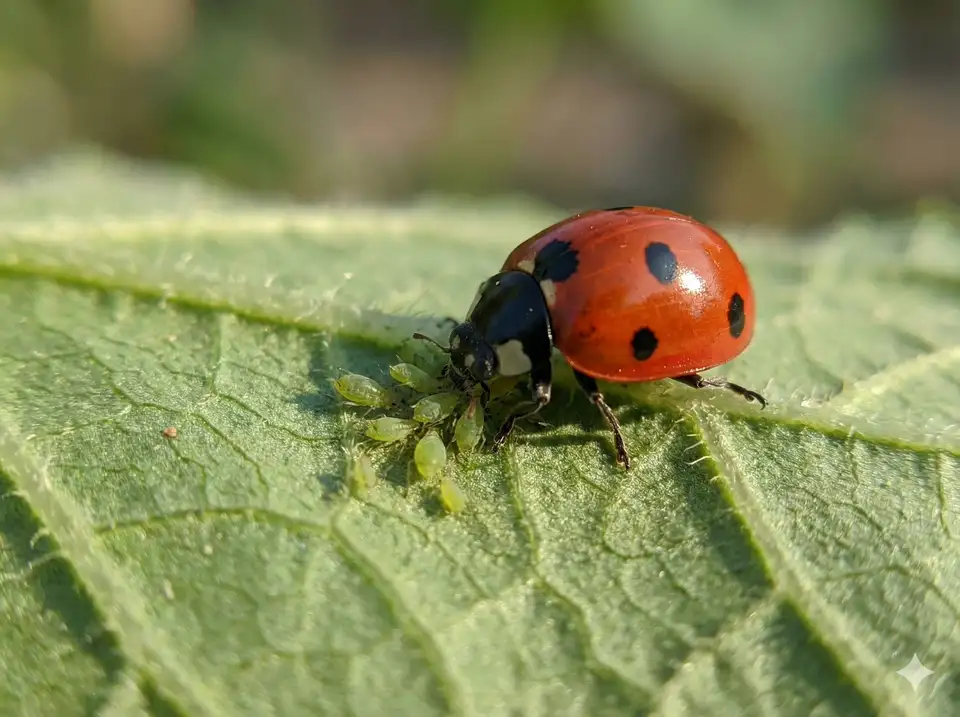
Your most powerful allies in the organic garden aren't products you buy—they're the beneficial insects already living nearby, waiting for the right habitat. Ladybugs are perhaps the most recognizable garden helpers, with a single adult consuming up to 50 aphids per day. Their larvae are even more voracious, eating hundreds of aphids before pupating. To attract ladybugs to your loofah patch, plant dill, fennel, yarrow, and other umbelliferous flowers that provide the pollen and nectar adults need between pest meals.
Green lacewings deserve equal appreciation. While adults are delicate, fluttery creatures that feed on nectar, their larvae—sometimes called "aphid lions"—are ferocious predators that consume aphids, mites, thrips, whiteflies, and small caterpillars. Parasitic wasps (tiny, non-stinging species) lay their eggs inside pest caterpillars and beetle larvae, controlling populations from within. Attract them with small-flowered plants like sweet alyssum, cilantro, and Queen Anne's lace. Ground beetles patrol the soil surface at night, devouring cucumber beetle eggs and larvae before they can damage your plants.
Creating habitat for beneficial insects requires a shift in thinking—you're not just growing loofahs, you're cultivating an ecosystem. Plant diverse flowers that bloom throughout the season, providing continuous food sources. Maintain a shallow water dish with pebbles where insects can drink safely. Leave some leaf litter and undisturbed areas where beneficials can shelter. Most importantly, avoid broad-spectrum pesticides, even organic ones, which kill beneficials along with pests and undermine your long-term pest control.
Organic Sprays
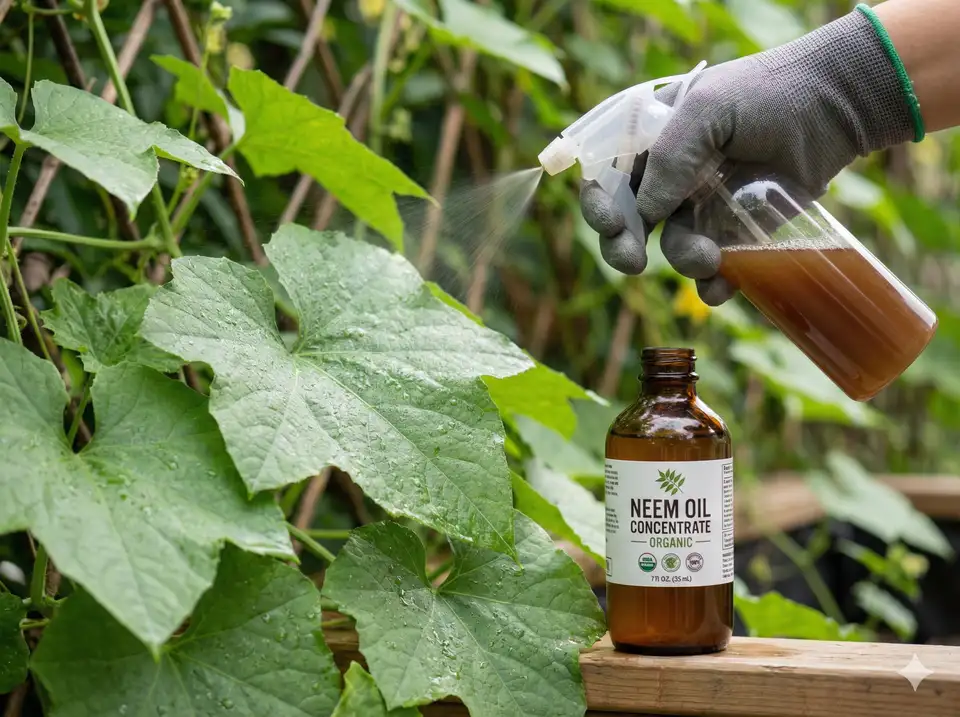
When prevention and beneficial insects aren't enough, organic-approved sprays provide backup control. Neem oil, extracted from the seeds of the neem tree, is the workhorse of organic pest management. Rather than killing insects on contact, it disrupts their feeding behavior and reproductive cycles, causing gradual population decline. Applied in the evening when beneficials are less active, neem is remarkably selective—its effects primarily impact insects that feed on treated foliage.
Insecticidal soap offers immediate knockdown of soft-bodied pests like aphids, whiteflies, and spider mites. Made from potassium salts of fatty acids, it works by penetrating insect cell membranes on contact. The key advantages are its safety profile and lack of residual toxicity—once dry, it poses no threat to beneficial insects. However, this means you must achieve direct contact with pests, making thorough coverage of leaf undersides essential. Spinosad, derived from soil bacteria, provides excellent control of caterpillars, thrips, and some beetles. It's particularly useful against leaf-eating caterpillars that can defoliate loofah vines.
Pyrethrin, extracted from chrysanthemum flowers, offers broad-spectrum control but should be used as a last resort since it kills beneficial insects too. Its saving grace is rapid breakdown—sunlight degrades it within hours, minimizing long-term ecological impact. For cucumber beetles specifically, kaolin clay creates a physical barrier when sprayed on foliage. The white film confuses and irritates beetles, making treated plants unrecognizable as food sources. It washes off easily and must be reapplied after rain, but it's completely non-toxic and can be used right up to harvest.
Ingredients:
- 1 gallon water
- 2 tablespoons pure neem oil
- 1 teaspoon liquid castile soap (emulsifier)
Instructions:
- Mix soap into water first (helps neem oil emulsify)
- Add neem oil and shake vigorously
- Apply in evening (neem degrades in sunlight)
- Spray undersides of leaves where pests hide
- Reapply every 7-14 days or after rain
Organic Disease Prevention
Most loofah diseases can be prevented through cultural practices. Once disease takes hold, organic options are limited, so prevention is crucial.
- Air circulation: Space plants properly; use vertical trellising
- Water management: Drip irrigation keeps foliage dry; water in morning
- Mulching: Prevents soil splash that spreads disease
- Sanitation: Remove diseased leaves immediately; clean tools
- Resistant varieties: Choose disease-resistant seed when available
Organic Fungicide Options
When fungal diseases strike despite your best preventive efforts, organic fungicides can help slow their spread. Baking soda spray is the simplest home remedy—mix one tablespoon of baking soda with a gallon of water and a teaspoon of liquid soap (which helps it stick to leaves). The alkaline solution creates an inhospitable environment for powdery mildew spores. Apply weekly at the first sign of white patches, focusing on both leaf surfaces.
Milk spray has shown surprising effectiveness in research trials, suppressing powdery mildew as effectively as some commercial fungicides. Mix one part milk to nine parts water and spray in bright sunlight—the interaction between milk proteins and UV light creates compounds that are toxic to mildew. This is particularly useful for organic growers seeking food-safe options. Sulfur, one of the oldest fungicides, remains effective against powdery mildew and some leaf spots. Apply as a dust or wettable powder according to label directions, but never within two weeks of applying any oil-based spray, as the combination can burn foliage.
Copper fungicides, while OMRI-listed and approved for organic use, should be considered a last resort. They're effective against bacterial and fungal diseases but accumulate in soil over time, potentially harming soil life and becoming toxic at high concentrations. If you must use copper, apply it sparingly, follow label rates precisely, and rotate with other treatments to minimize buildup. Remember that all fungicides work best as preventatives—once a fungal infection is well-established, your options become limited regardless of what products you use.
Organic Mulching
Mulch is essential for organic loofah growing, suppressing weeds without herbicides while conserving moisture and building soil. This is especially important for organic container growing.
- Straw: Excellent weed suppression, breaks down slowly, easy to apply
- Shredded leaves: Free, improves soil as it decomposes, attracts earthworms
- Wood chips: Long-lasting, good for pathways between plants
- Grass clippings: High nitrogen, apply thin layers (2") to prevent matting
- Compost: Feeds soil while mulching; apply 2-3" layer
- Living mulch: Plant clover or low-growing companions as ground cover
Organic vs. Conventional: What's Allowed?
| Input Type | Organic | Conventional |
|---|---|---|
| Compost & manure | Yes | Yes |
| Synthetic fertilizers (10-10-10) | No | Yes |
| OMRI-listed fertilizers | Yes | Yes |
| Neem oil | Yes | Yes |
| Synthetic pesticides | No | Yes |
| Insecticidal soap | Yes | Yes |
| Roundup/glyphosate | No | Yes |
| Hand weeding | Yes | Yes |
Organic Certification
If you plan to sell loofahs as "certified organic," you'll need to follow USDA National Organic Program (NOP) guidelines:
- Land transition: No prohibited substances for 3 years before harvest
- Documentation: Keep detailed records of all inputs and practices
- Inspection: Annual inspection by accredited certifying agent
- Fees: Certification costs vary ($500-2,000+ annually)
- Exemption: Farms with <$5,000 organic sales can label "organic" without certification (but not "certified organic")
Sourcing Organic Seeds
For truly organic loofah growing, what you plant matters as much as how you grow. Certified organic seeds come from parent plants grown under organic conditions, processed in facilities that meet organic standards, and never treated with synthetic fungicides or pesticides. While the seeds themselves won't make your harvest "certified organic" (that requires following organic practices throughout the growing season), starting with organic seeds aligns with organic principles and avoids introducing synthetic chemicals to your garden from day one.
If certified organic loofah seeds prove difficult to find, look for "untreated" seeds as the next best option. Many conventional seeds are coated with synthetic fungicides to prevent damping off—the coating often appears as a bright pink or blue color. Untreated seeds skip this chemical treatment, making them acceptable for organic growing even if the parent plants weren't certified organic. Reputable sources for organic and untreated seeds include Johnny's Selected Seeds, High Mowing Organic Seeds, Baker Creek Heirloom Seeds, and Seed Savers Exchange.
Perhaps the most satisfying option is saving your own seeds from year to year. Loofahs are open-pollinated, meaning seeds saved from your best plants will grow true to type. Select seeds from your healthiest, most productive vines—those that thrived without disease, produced abundant fruit, and matured before frost. This gradual selection process adapts your loofah strain to your specific growing conditions, creating a locally-adapted variety that performs better each season. Check our seed starting guide for detailed germination instructions and our seed saving guide for proper collection and storage techniques.

Organic Growing Schedule
Here's a timeline incorporating organic practices throughout the loofah growing season:
| Timing | Organic Task |
|---|---|
| Fall before planting | Add compost, plant cover crop, build soil |
| Early spring | Turn under cover crop; apply aged manure |
| Planting time | Add bone meal to planting holes; apply organic mulch |
| Seedling stage | Install row covers; begin compost tea applications |
| Vegetative growth | Side-dress with organic fertilizer monthly; scout for pests |
| Flowering | Remove row covers for pollination; switch to bloom fertilizer |
| Fruiting | Maintain consistent watering; apply neem if pest pressure increases |
| Harvest | Process using natural methods; no bleach |
| Post-harvest | Compost vines; plant cover crop; replenish soil |