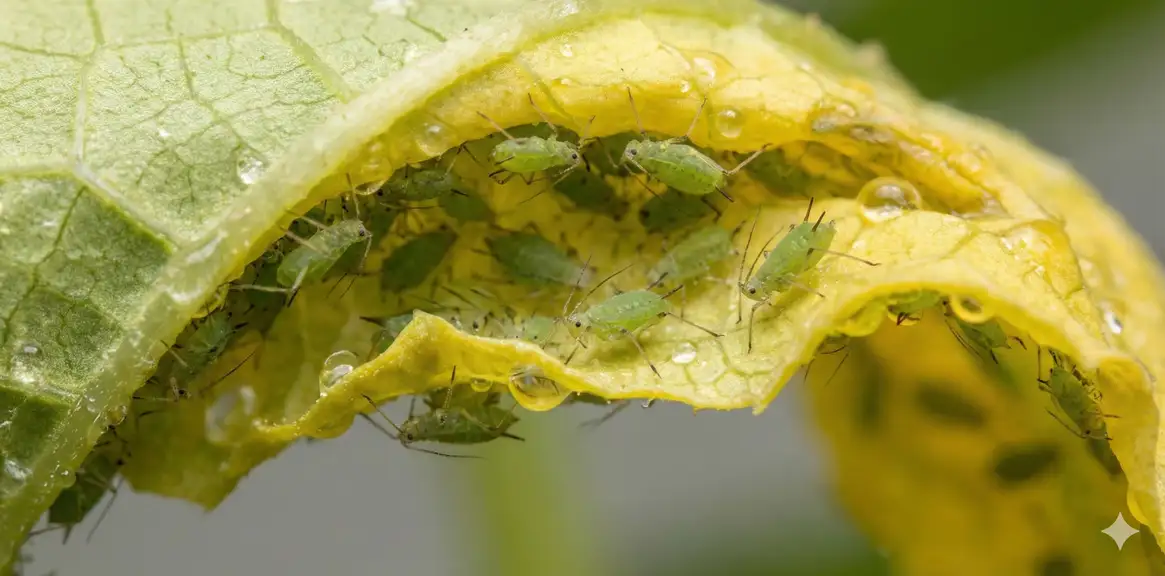
Loofah vines, like all cucurbits, attract specific pests that can damage or destroy your harvest. The good news: most pest problems are preventable with proper cultural practices, and outbreaks can be controlled without harsh chemicals if caught early.
This guide covers identification, prevention, and control for every major loofah pest, with both organic and conventional treatment options. For successful loofah cultivation, understanding pest management is essential alongside proper watering, fertilizing, and support structures.
Healthy Plants Resist Pests
KVITER Heirloom Luffa Seeds (40 Count)
Fast-sprouting non-GMO seeds with 90%+ germination - grow your own natural sponges in one season
Check Price on Amazon
Twira Heavy-Duty Metal Garden Arch Trellis (7.9FT)
Rust-proof galvanized steel supports 100+ lbs of loofah vines - easy assembly with ground stakes
Check Price on AmazonAs an Amazon Associate, we earn from qualifying purchases.
Cucumber Beetles
Severity: HIGH - Vector for bacterial wilt
Identification
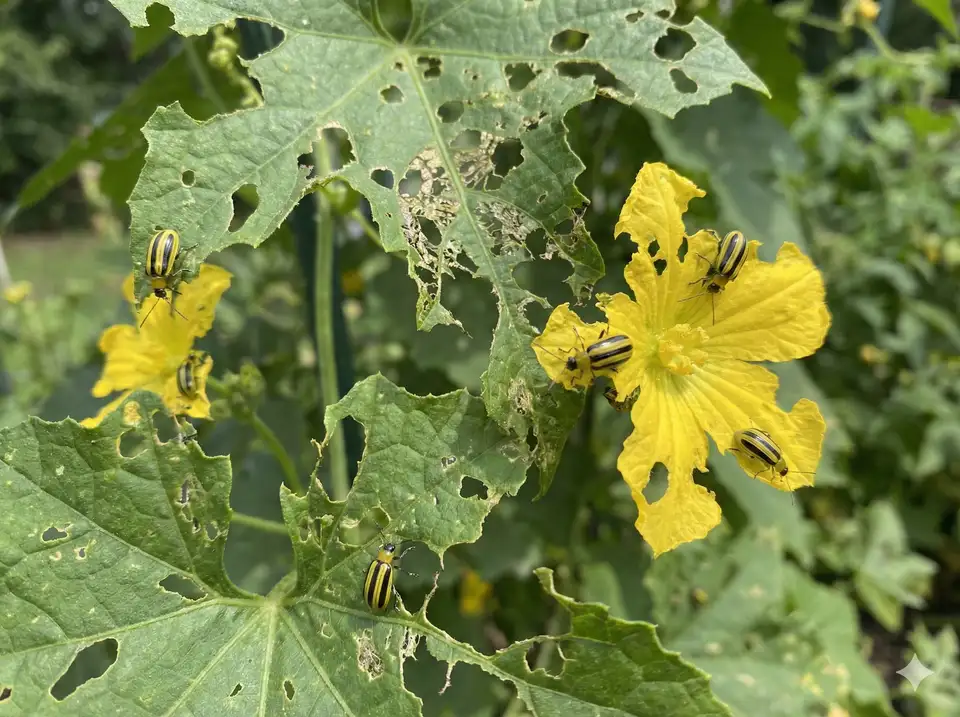
- 1/4 inch long, yellow-green with black stripes or spots
- Found on leaves, flowers, and fruit
- Most active in morning and evening
- Larvae are white grubs in soil near roots
Damage
Cucumber beetles chew holes in leaves, flowers, and developing fruit. More seriously, they spread bacterial wilt—a devastating disease that causes infected plants to wilt and die within days (see our loofah diseases guide). Their larvae also feed on roots underground, further weakening plants.
- Prevention: Row covers until flowering; companion plant with marigolds, radishes
- Organic: Hand-pick into soapy water; kaolin clay spray; neem oil
- Traps: Yellow sticky traps catch adults
- Conventional: Pyrethrin, carbaryl (Sevin)
Cucumber beetles are particularly dangerous because they transmit bacterial wilt—a disease that kills plants within days once infected. Prevention is critical since there's no cure for bacterial wilt.
Squash Vine Borers
Severity: HIGH - Can kill entire vine
Identification
- Adult moth: red-orange body, clear wings, wasp-like (1/2 inch)
- Larva: white caterpillar with brown head inside stem
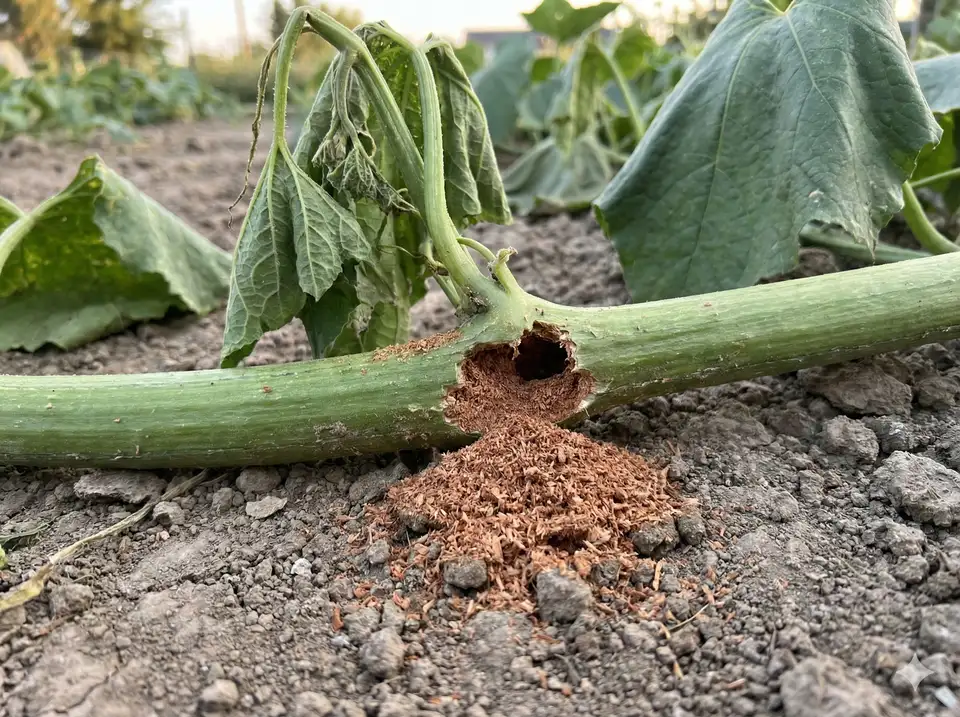
- Look for sawdust-like frass (excrement) at base of stem
- Sudden wilting of one vine section is key symptom
Damage
Vine borer larvae tunnel through stems from the inside, blocking water and nutrient flow to the rest of the plant. Infected vines wilt suddenly, often on hot afternoons when water demand is highest. If the main stem is damaged, the entire plant can die—making early detection critical.
- Prevention: Wrap lower stems with aluminum foil or row cover fabric; mound soil over stem nodes
- Early detection: Check stems for frass weekly in early summer
- Surgical removal: Slit stem lengthwise, remove larvae, bury stem in moist soil
- Organic: Bt (Bacillus thuringiensis) injected into stem at first sign
Mound soil over stem nodes every few inches along your loofah vines. This encourages secondary rooting, so if vine borers attack one section, the plant can survive from other root points.
Aphids
Severity: MEDIUM - Weaken plants, spread viruses
Identification
- Tiny (1/8 inch), pear-shaped, green, black, or yellow
- Cluster on new growth, undersides of leaves
- Sticky "honeydew" on leaves attracts ants
- Curled or distorted new leaves
Damage
Aphids suck plant sap, weakening growth and reducing vigor. They also transmit viral diseases like mosaic virus from plant to plant. The sticky honeydew they excrete promotes sooty mold fungus growth on leaves, further reducing photosynthesis. Heavy infestations can significantly stunt plant growth and reduce fruit production.
- Biological: Encourage ladybugs, lacewings, parasitic wasps
- Physical: Strong water spray knocks off aphids
- Organic: Insecticidal soap, neem oil
- Trap crop: Plant nasturtiums nearby—aphids prefer them

Spider Mites
Severity: MEDIUM - Worse in hot, dry conditions
Identification
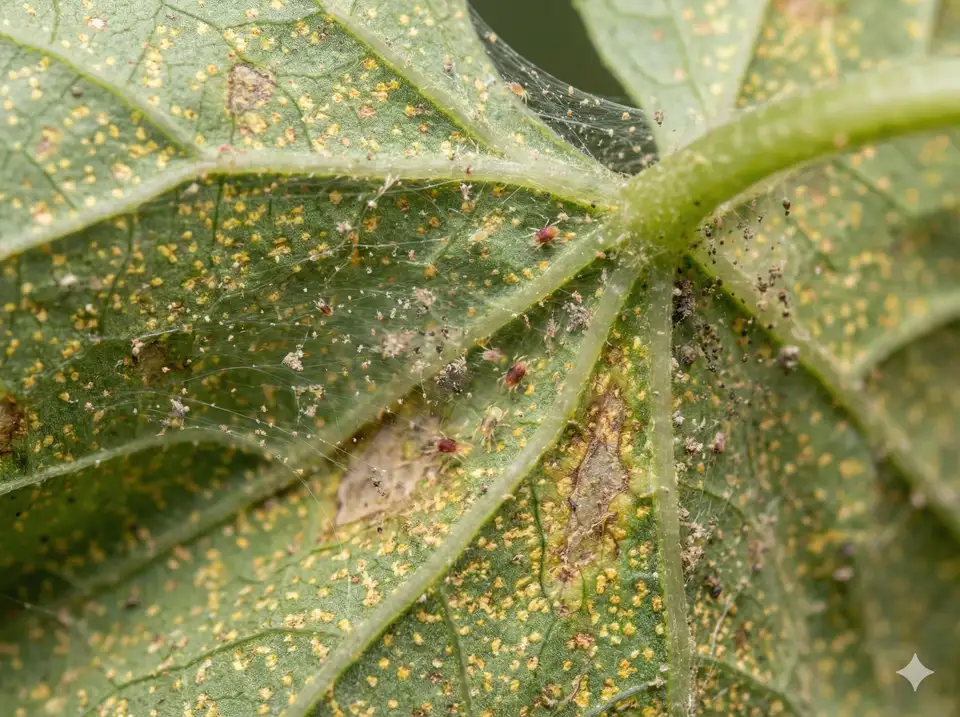
- Tiny (nearly invisible), 8-legged, yellowish-green with two dark spots
- Fine webbing on undersides of leaves
- Leaves develop stippled, bronze appearance before turning yellow
- Use magnifying glass to see mites
Damage
Spider mites pierce individual leaf cells and suck out the contents, causing leaves to develop a stippled, bronze appearance before turning yellow and then brown. Severe infestations lead to premature leaf drop, weakening the plant. Populations can explode rapidly in hot, dry weather, turning a minor problem into a major infestation within days.
- Prevention: Maintain adequate humidity; avoid drought stress
- Physical: Strong water spray—mites can't return once dislodged
- Organic: Neem oil, insecticidal soap (repeat every 5-7 days)
- Biological: Predatory mites (Phytoseiulus persimilis)
Other Common Pests
Beyond the major pests above, loofah plants can be affected by several other insects. Here's a quick reference for identification and control:
| Pest | Signs | Control |
|---|---|---|
| Whiteflies | Tiny white flies; cloud when disturbed; sticky honeydew | Yellow sticky traps; insecticidal soap; neem |
| Squash Bugs | Brown/gray shield-shaped; bronze eggs on leaves | Hand-pick; destroy eggs; neem oil |
| Leaf Miners | Winding white trails inside leaves | Remove affected leaves; neem; spinosad |
| Flea Beetles | Tiny jumping beetles; shot-hole damage in leaves | Row covers; diatomaceous earth; pyrethrin |
| Slugs/Snails | Slime trails; ragged holes in leaves; active at night | Handpick; beer traps; iron phosphate bait |
Prevention Strategies
The best pest control is prevention. Implementing Integrated Pest Management (IPM) practices reduces pest pressure before problems start.
- Crop rotation: Don't plant cucurbits in the same spot two years in a row
- Row covers: Protect young plants until flowering begins (remove for pollination)
- Companion planting: Marigolds, nasturtiums, radishes deter many pests
- Attract beneficials: Plant flowers to bring ladybugs, lacewings, parasitic wasps
- Healthy plants: Proper watering and fertilizing helps plants resist pests
- Garden hygiene: Remove plant debris where pests overwinter
- Early detection: Scout plants weekly; catch problems before they explode
Organic Pest Control Products
For gardeners committed to organic growing methods, these OMRI-listed products provide effective pest control without synthetic chemicals:
Neem oil concentrate is the most versatile organic pesticide, effective against aphids, mites, and beetles while being safe for beneficial insects when applied correctly. Insecticidal soap kills soft-bodied insects on contact and is completely safe for food crops—just be sure to spray in early morning or evening to avoid leaf burn.
Kaolin clay (sold as Surround WP) creates a physical barrier that confuses and deters cucumber beetles without harming the plant. Yellow sticky traps help monitor pest populations and catch flying adults like whiteflies and cucumber beetles before they can lay eggs.
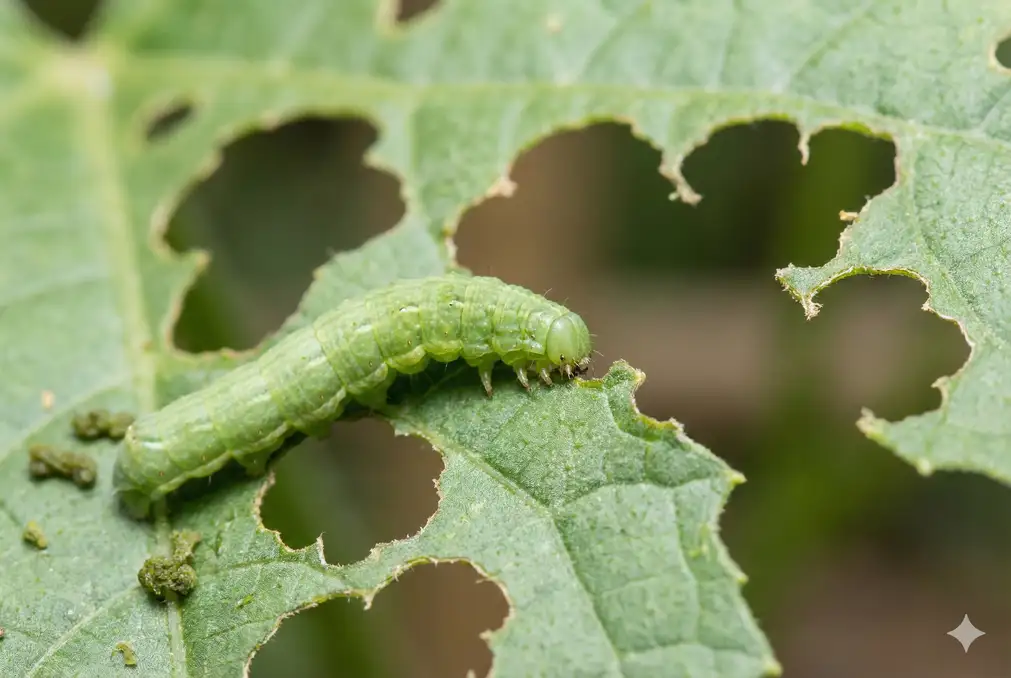
For caterpillar pests like vine borer larvae, Bt (Bacillus thuringiensis) is a naturally occurring bacteria that's lethal to caterpillars but harmless to other organisms. Diatomaceous earth can be dusted around plant bases to deter crawling insects, though it needs reapplication after rain.
Always apply organic pesticides in early morning or evening when bees are less active. Even organic products can harm beneficial insects if applied during peak pollinator activity.