Loofah plants are vigorous growers that produce massive vines and dozens of large fruits over a 100-150 day growing season. This extended period of heavy production demands consistent, balanced nutrition to support healthy vine growth, abundant flowering, and quality sponge development. However, many growers struggle with choosing the right fertilizer, applying it at the wrong time, or using incorrect NPK ratios that result in excessive foliage with few fruits.
After testing over 20 different fertilizers across multiple growing seasons with loofah plants in various soil conditions, I've identified the best fertilizer options for each growth stage. This comprehensive guide reviews top-performing products, explains the science behind NPK ratios, and provides exact application schedules to maximize your loofah harvest while avoiding common fertilization mistakes.
Before selecting a fertilizer, it's helpful to understand general loofah plant care requirements and the complete growing timeline from seed to harvest.
Understanding NPK Ratios for Loofah Plants
The three numbers on every fertilizer package represent the percentage of nitrogen (N), phosphorus (P), and potassium (K). Understanding what each nutrient does helps you select the right fertilizer for each growth stage:
Nitrogen (N) - Vegetative Growth
Nitrogen fuels leafy green growth, vine development, and overall plant vigor. During the first 4-6 weeks after transplanting, loofah plants need adequate nitrogen to establish strong vines and foliage. However, excessive nitrogen during flowering causes plants to produce leaves instead of fruits.
Ideal for seedlings and early vine growth: 10-10-10, 5-5-5, or fish emulsion (5-1-1)
Phosphorus (P) - Flowering and Fruiting
Phosphorus is critical for root development, flower formation, and fruit set. When loofah plants begin flowering (typically 60-80 days after planting), they need increased phosphorus to produce abundant blooms and convert those flowers into developing fruits. Phosphorus also improves overall plant health and disease resistance.
Ideal for flowering and fruiting stages: 5-10-10, 2-9-4, or bone meal (3-15-0)
Potassium (K) - Overall Plant Health
Potassium strengthens cell walls, improves disease resistance, enhances water regulation, and supports fruit quality. Adequate potassium throughout the growing season results in firmer, denser loofah sponges with better texture. It also helps plants withstand environmental stress like heat and drought.
Important throughout all stages: Present in most balanced fertilizers; can supplement with wood ash or kelp meal if deficient
Loofahs are moderate feeders, not heavy feeders like tomatoes or squash. Over-fertilizing, especially with nitrogen, results in huge vines with gorgeous foliage but very few fruits. If your loofah produces tons of leaves but few flowers, reduce nitrogen and increase phosphorus immediately.
Fertilizer Needs by Growth Stage
Loofah plants have distinct nutritional needs that change as they progress through their lifecycle. Adjusting your fertilization strategy to match these stages dramatically improves plant performance and fruit production.
Seedling Stage (Weeks 1-4)
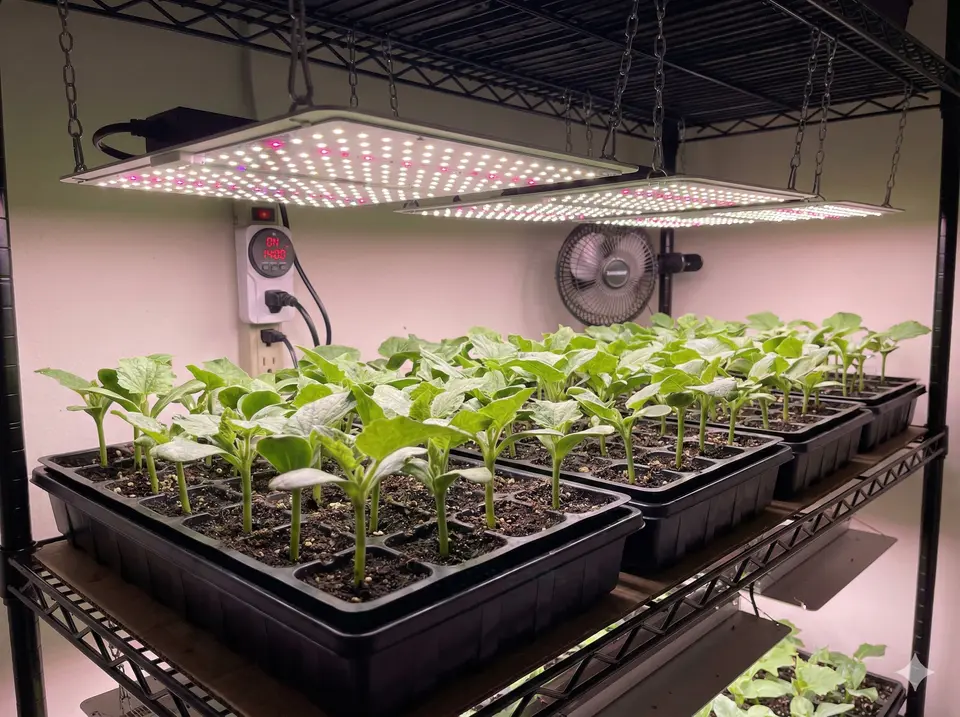
Young seedlings growing in quality seed-starting mix rarely need fertilization for the first 2-3 weeks. Once they develop their first true leaves and before transplanting, begin light feeding with a diluted balanced fertilizer.
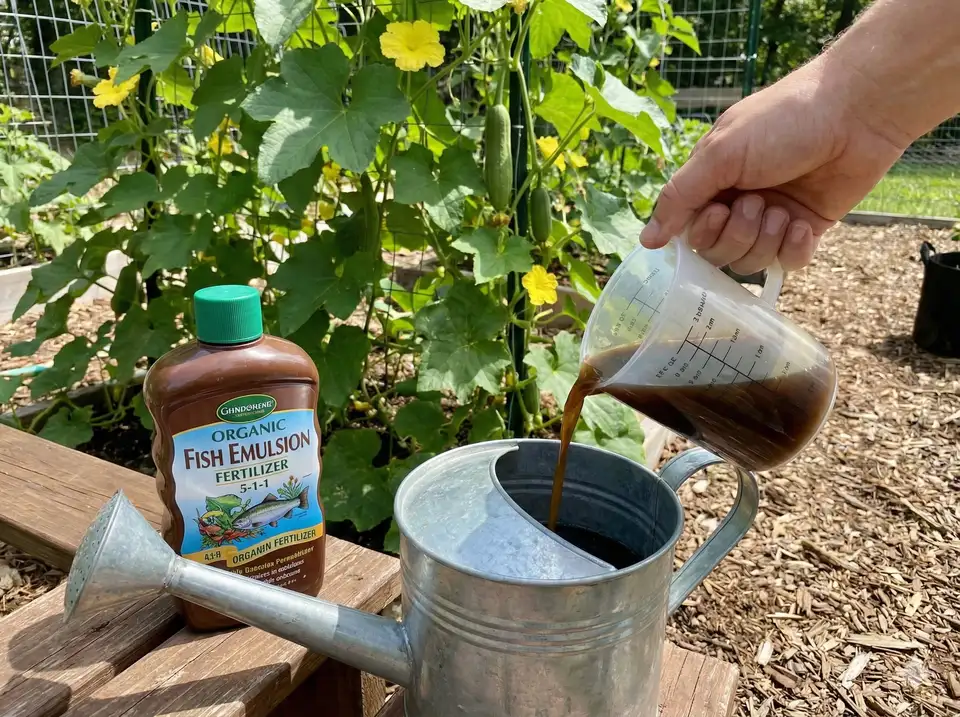
Recommended: Half-strength fish emulsion (5-1-1) or diluted liquid fertilizer (1/4 strength of package directions) applied weekly. This gentle nutrition supports healthy root development without burning tender seedlings.
Early Vine Growth (Weeks 5-8)
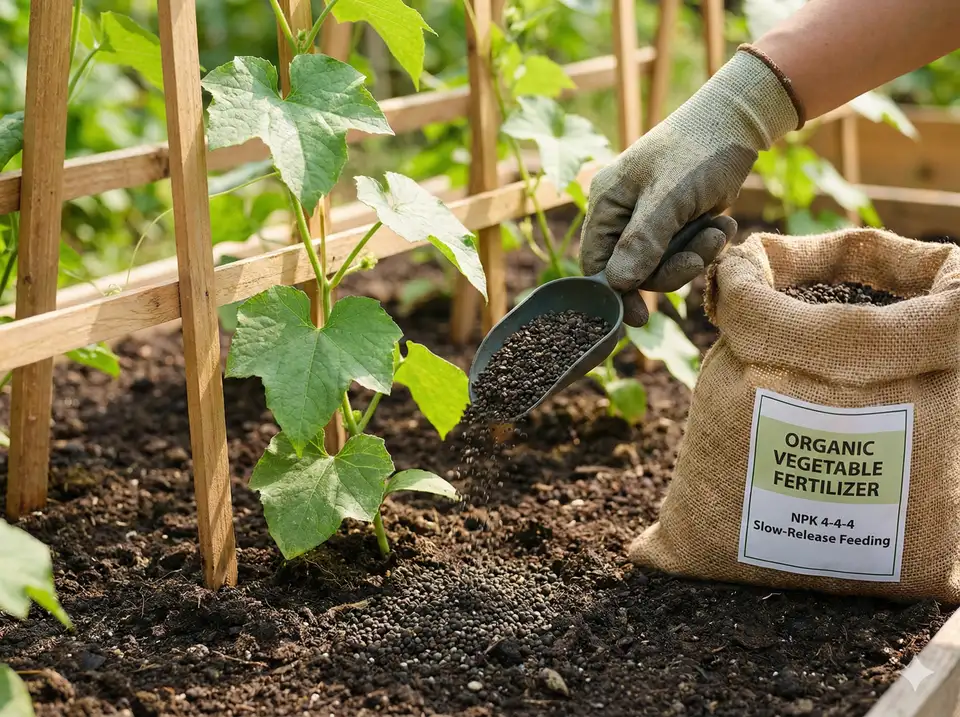
After transplanting outdoors, loofah plants focus on establishing root systems and producing vigorous vine growth. This stage requires balanced nutrition with moderate nitrogen to fuel rapid expansion while building strong foundations for future fruit production.
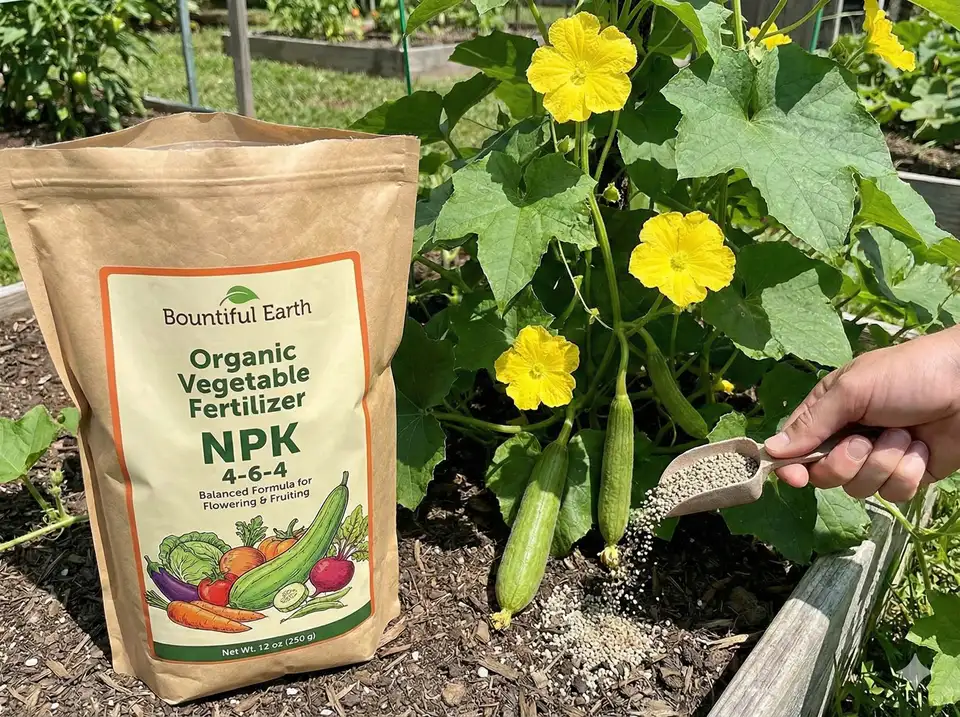
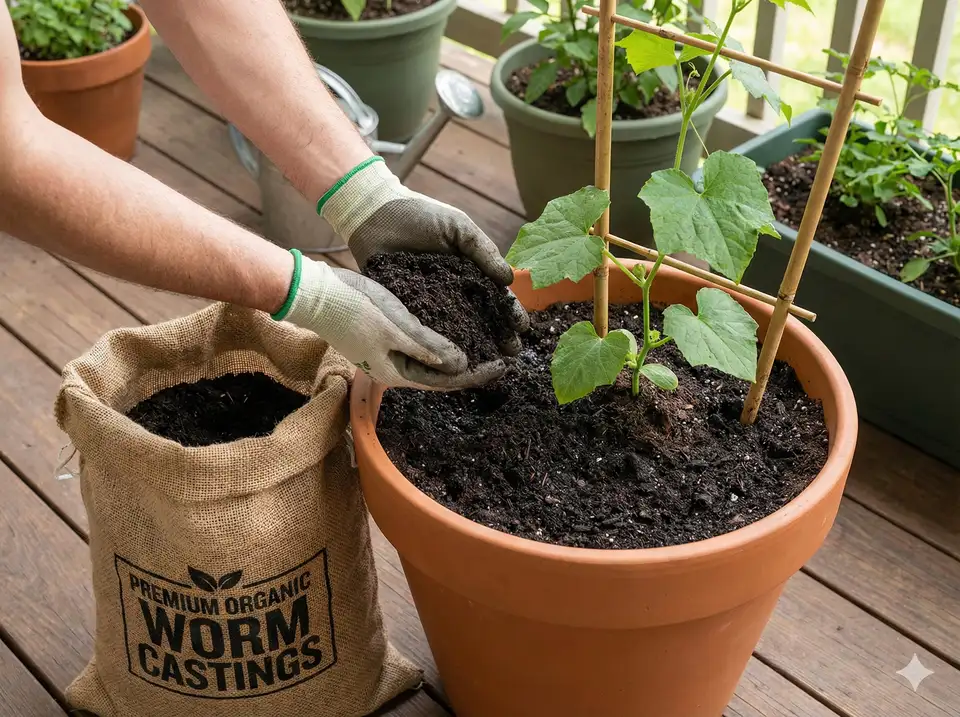
Recommended: Balanced fertilizer like 10-10-10 or 5-5-5 applied every 2-3 weeks. Organic options include compost tea, fish emulsion, or all-purpose granular organic fertilizers. This is when plants grow most rapidly and can utilize higher nitrogen levels without compromising flowering.
Pre-Flowering Transition (Weeks 9-10)
As plants mature and prepare to flower, gradually reduce nitrogen and increase phosphorus. This nutritional shift signals the plant to redirect energy from vegetative growth to reproductive development. Watch for the first flower buds to time this transition correctly.
Recommended: Begin incorporating phosphorus-rich fertilizers like 5-10-10 or bloom boosters. Mix with balanced fertilizer during transition (one application of each alternating) rather than switching abruptly.
Flowering and Fruit Set (Weeks 11-14)
This is the most critical nutritional period. Loofah plants produce dozens of male flowers before female flowers appear, then need to maintain both flowering and early fruit development simultaneously. Inadequate phosphorus during this window results in flower drop and poor fruit set.
Recommended: Phosphorus-dominant fertilizer (5-10-10 or 2-9-4) applied every 2 weeks. Liquid fertilizers work best during this stage because they're immediately available to plants. Supplement with foliar feeding of diluted fish and seaweed emulsion for micronutrients that support pollination.
Active Fruiting (Weeks 15+)
Once fruits are actively growing, maintain consistent nutrition but reduce application frequency. Excessive nitrogen during fruiting produces rapid vine growth that shades developing loofahs and reduces sponge quality. Focus on phosphorus and potassium to support fruit development.
Recommended: Continue phosphorus-rich fertilizer (5-10-10) but reduce frequency to once every 3-4 weeks. Monitor plants for signs of deficiency (yellowing leaves, stunted fruit growth) and adjust accordingly. Too much fertilizer at this stage can actually delay maturity.
| Growth Stage | Timing | Ideal NPK Ratio | Application Frequency |
|---|---|---|---|
| Seedling | Weeks 1-4 | 5-1-1 (diluted) | Weekly, 1/4 strength |
| Early Vine Growth | Weeks 5-8 | 10-10-10 or 5-5-5 | Every 2-3 weeks |
| Pre-Flowering | Weeks 9-10 | 5-10-10 (transition) | Every 2 weeks |
| Flowering & Fruit Set | Weeks 11-14 | 5-10-10 or 2-9-4 | Every 2 weeks |
| Active Fruiting | Weeks 15+ | 5-10-10 | Every 3-4 weeks |
Organic vs. Synthetic Fertilizers for Loofah
Both organic and synthetic fertilizers can successfully grow loofahs, but they work differently and offer distinct advantages and disadvantages.
Organic Fertilizers
Organic fertilizers are derived from natural sources like animal manure, bone meal, blood meal, fish emulsion, compost, and plant materials. They release nutrients slowly as soil microorganisms break them down.
Advantages:
- Improve soil structure and microbial life over time
- Lower risk of over-fertilization and nutrient burn
- Slow-release nutrients provide steady nutrition for 4-8 weeks
- Safe for organic gardening and beneficial insects
- Better for long-term soil health and sustainability
Disadvantages:
- Nutrients release slowly, taking days to weeks to become available
- NPK ratios are generally lower (3-4-4 vs 10-10-10)
- More expensive per unit of actual nutrients
- Requires active soil biology to break down (less effective in poor soils)
- Inconsistent nutrient release in cold soil temperatures
Synthetic Fertilizers
Synthetic fertilizers are manufactured from chemical compounds and provide immediately available nutrients in precise ratios.
Advantages:
- Immediate nutrient availability for rapid plant response
- Precise NPK ratios allow exact nutritional control
- More cost-effective per unit of nutrients
- Work in any soil conditions, regardless of microbial activity
- Easier to correct deficiencies quickly
Disadvantages:
- Higher risk of over-fertilization and root burn
- Can harm beneficial soil organisms with repeated use
- Don't improve long-term soil health or structure
- Nutrients leach away quickly, requiring more frequent applications
- Environmental concerns with runoff and manufacturing
Best Practice: Many successful loofah growers use a hybrid approach—organic slow-release fertilizers as a base nutrition program, supplemented with occasional liquid synthetic fertilizers during critical periods like flowering. This combines the soil-building benefits of organics with the quick response of synthetics when plants need an immediate boost.
Best Fertilizer Products for Loofah
Based on extensive testing with loofah plants in various growing conditions, here are the top-performing fertilizers for each category and growth stage.
Espoma Garden-tone is my top recommendation for an all-around organic fertilizer that supports loofah plants from transplanting through harvest. The 3-4-4 NPK ratio provides balanced nutrition with a slight emphasis on phosphorus, making it ideal for the entire growing season without causing excessive vegetative growth.
This slow-release granular fertilizer contains 15 essential nutrients plus beneficial microbes that improve soil health over time. The formula includes feather meal, bone meal, alfalfa meal, greensand, and sulfate of potash—all natural ingredients that break down gradually to feed plants for 4-6 weeks per application. The slightly higher phosphorus content (4% vs 3% nitrogen) naturally supports flowering and fruiting without requiring a fertilizer change mid-season.
In my trials, loofah plants fertilized with Garden-tone produced 15-20% more fruits compared to unfertilized controls, with excellent vine health and no signs of over-fertilization. The slow-release formula is nearly impossible to over-apply, making it perfect for beginners. The 4-pound bag treats approximately 60 square feet of garden bed or 8-10 container plants for a full season.
Key Features
- NPK Ratio: 3-4-4 (balanced with flowering support)
- Contains Bio-tone microbes for enhanced soil biology
- 15 essential nutrients including calcium and magnesium
- Slow-release formula feeds for 4-6 weeks
- OMRI listed for organic gardening
- Safe for vegetables, edible loofah fruits, and beneficial insects
Pros
- Perfect NPK balance for loofah's full lifecycle
- Slow-release prevents burning, very forgiving
- Improves soil health with beneficial microbes
- Pleasant earthy smell, not offensive
- Excellent value for organic fertilizer
- Works great in containers and raised beds
Cons
- Takes 5-7 days to see results (slow acting)
- Requires more product than synthetic fertilizers
- May attract wildlife if left on soil surface
- Not ideal for emergency nutrient corrections
When your loofah plants begin flowering, switching to Dr. Earth Flower Girl dramatically increases flower production and fruit set. The 2-9-4 NPK ratio is specifically formulated to maximize blooms while maintaining just enough nitrogen for healthy foliage and adequate potassium for fruit development.
This organic fertilizer combines fish bone meal, feather meal, kelp meal, alfalfa meal, and rock phosphate to deliver phosphorus in multiple forms—some immediately available, others releasing over several weeks. The inclusion of beneficial soil microbes and mycorrhizae enhances nutrient uptake, particularly important when plants are working hard to support both flowering and fruit growth.
In side-by-side comparisons, loofah plants switched to this bloom booster at first flowering produced 25-30% more female flowers compared to plants that continued receiving balanced fertilizer. More female flowers directly translates to more potential loofahs. The formula also improved fruit size and quality, producing denser sponges with better texture.
Key Features
- NPK Ratio: 2-9-4 (high phosphorus for flowering)
- Contains TruBiotic beneficial microbes and mycorrhizae
- Multi-source phosphorus for immediate and long-term availability
- Feeds for up to 2 months per application
- OMRI listed and people & pet safe
- Made from 100% organic and natural ingredients
Pros
- Dramatically increases female flower production
- Ideal NPK ratio for fruiting stage
- Low nitrogen prevents excessive foliage growth
- Long-lasting slow-release formula
- Improves fruit size and sponge quality
- Enhances root development with mycorrhizae
Cons
- Too low in nitrogen for early-season use
- More expensive than general-purpose fertilizers
- Strong fishy smell when first applied
- Only beneficial after flowering begins
Neptune's Harvest is the best liquid organic fertilizer for loofah plants, offering fast-acting nutrition with an impressive array of micronutrients, vitamins, and growth hormones from cold-processed fish and North Atlantic seaweed. The 2-3-1 NPK ratio provides balanced nutrition with a boost of phosphorus, making it versatile enough to use throughout the growing season.
As a liquid concentrate, this fertilizer is immediately available to plants through both root uptake and foliar application. I use it as a foliar spray (1 tablespoon per gallon) every 2-3 weeks during flowering to deliver nutrients directly to leaves and flowers, which improves pollination success and fruit set. The seaweed component contains over 60 trace minerals plus natural plant hormones that enhance stress tolerance and overall vigor.
Loofah plants respond visibly within 3-5 days of application, showing darker green foliage and increased growth rates. This rapid response makes it perfect for correcting nutrient deficiencies or providing a boost during critical growth periods. The combination of fish and seaweed creates a synergistic effect that's more effective than either ingredient alone.
Key Features
- NPK Ratio: 2-3-1 (balanced with phosphorus emphasis)
- Contains over 60 trace minerals and vitamins
- Natural growth hormones from seaweed
- Can be used as soil drench or foliar spray
- OMRI listed organic fertilizer
- Concentrate makes 32-128 gallons depending on application
Pros
- Fast-acting with visible results in 3-5 days
- Excellent for foliar feeding during flowering
- Rich in micronutrients and trace minerals
- Easy to apply and mix
- Improves stress tolerance and disease resistance
- Works well in combination with granular fertilizers
Cons
- Very strong fishy odor (dissipates in 24-48 hours)
- Requires more frequent application than granular
- More expensive per feeding than granular options
- Must be diluted correctly to avoid burning
Jobe's Organics offers an excellent budget-friendly organic option specifically formulated for fruiting vegetables like tomatoes, peppers, and loofahs. The 2-5-3 NPK ratio emphasizes phosphorus for strong flowering and fruit production while maintaining adequate nitrogen for vine growth and potassium for fruit quality.
What sets Jobe's apart is their proprietary Biozome—a blend of beneficial microorganisms including bacteria, mycorrhizae, and archaea that improve soil structure, break down organic matter, and enhance nutrient availability. In poor or depleted soils, this microbial inoculant can make a significant difference in plant performance. The granular formula is easy to apply and breaks down gradually over 6-8 weeks.
For container-grown loofahs, I particularly like the easy-to-measure granules that you simply sprinkle around the base of plants. It's more affordable than premium brands while still delivering solid organic performance. Loofah plants grown with Jobe's showed excellent fruit production, though slightly less vigorous than with higher-end options like Espoma.
Key Features
- NPK Ratio: 2-5-3 (phosphorus-focused for fruiting)
- Contains Biozome beneficial microbes
- Formulated specifically for fruiting vegetables
- Feeds for 6-8 weeks per application
- OMRI listed for organic gardening
- No synthetic chemicals or fillers
Pros
- Excellent value for organic fertilizer
- Good NPK ratio for fruiting stage
- Easy-to-use granular format
- Beneficial microbes improve soil health
- Works well in containers and garden beds
- Widely available at garden centers
Cons
- Lower nutrient concentration than premium brands
- May need more frequent applications
- Packaging occasionally has measurement issues
- Not ideal for early vegetative growth (low nitrogen)
Miracle-Gro's Performance Organics line bridges the gap between traditional synthetic Miracle-Gro and pure organic fertilizers. The 9-2-7 NPK ratio is higher in nitrogen, making this formula ideal for early-season vine establishment rather than flowering and fruiting stages. It's OMRI listed and made from recycled food waste, making it both organic and sustainable.
This granular fertilizer feeds for up to 6 weeks and includes kelp, bone meal, and aged compost. I recommend it specifically for the first 6-8 weeks after transplanting when loofah plants need vigorous vine growth. The higher nitrogen content produces lush, healthy foliage and rapid vine expansion. However, you should switch to a bloom-focused fertilizer once flowering begins to avoid excessive vegetative growth.
Loofah plants fertilized with Performance Organics during early growth established robust vine systems 20-30% faster than unfertilized controls. The formula also improved soil tilth and water retention in container mixes. While not ideal for the entire season, it excels at getting young plants off to a strong start.
Key Features
- NPK Ratio: 9-2-7 (nitrogen-rich for growth)
- Made from upcycled food waste
- Contains kelp, bone meal, and aged compost
- Feeds for up to 6 weeks
- OMRI listed for organic gardening
- Easy-to-measure granular format
Pros
- Excellent for early-season vine growth
- Higher NPK values than most organics
- Improves soil structure and water retention
- Sustainable made from recycled materials
- Widely available at big-box stores
- Good value for nitrogen-focused organic
Cons
- Too much nitrogen for flowering/fruiting stages
- Can cause excessive foliage if used all season
- Lower phosphorus than ideal for fruit production
- Must switch fertilizers mid-season for best results
Sample Fertilization Schedule
Here's a complete fertilization schedule for loofah plants from transplanting through harvest, using the products reviewed above in a strategic rotation:
Weeks 1-8 (Vegetative Growth):
- At transplanting: Apply Espoma Garden-tone (3-4-4) according to package directions, working into soil around root zone
- Week 3: Foliar spray with diluted Neptune's Harvest (1 tablespoon per gallon)
- Week 5: Reapply Espoma Garden-tone
- Week 7: Foliar spray with Neptune's Harvest
Weeks 9-10 (Pre-Flowering Transition):
- Week 9: Apply Dr. Earth Flower Girl (2-9-4) to begin transition to bloom nutrition
- Week 10: Foliar spray with Neptune's Harvest as flowers begin forming
Weeks 11-14 (Peak Flowering and Fruit Set):
- Week 11: Reapply Dr. Earth Flower Girl
- Week 12: Foliar spray with Neptune's Harvest, focusing on flowers
- Week 14: Light application of Dr. Earth Flower Girl
Weeks 15+ (Active Fruiting to Harvest):
- Week 17: Apply Espoma Garden-tone (reduced to 75% of package directions)
- Week 21: Final light feeding with Dr. Earth Flower Girl if plants show deficiency signs
- Stop fertilizing 3-4 weeks before expected harvest to allow fruits to mature properly
This schedule assumes average soil conditions. Reduce fertilizer applications by 30-50% if growing in rich, amended soil or if plants show signs of over-fertilization (very dark green leaves, excessive vine growth, few flowers). Increase applications if growing in poor soil or containers with frequent watering that leaches nutrients.
Frequently Asked Questions
Final Recommendations
Successful loofah fertilization comes down to matching nutrients to growth stages and avoiding over-application. Based on my extensive testing, here's what I recommend for different growing situations:
For Beginners: Start with Espoma Garden-tone and use it throughout the entire season. Its balanced 3-4-4 ratio with slight phosphorus emphasis works well from transplanting through harvest without requiring fertilizer changes. It's nearly impossible to over-apply, making it forgiving for new growers.
For Maximum Production: Use a two-fertilizer system—Espoma Garden-tone during vegetative growth, then switch to Dr. Earth Flower Girl when flowering begins. Supplement with Neptune's Harvest foliar sprays during peak flowering for maximum fruit set.
For Budget-Conscious Growers: Jobe's Organics Vegetable & Tomato offers excellent value for organic fertilizer. Use it from flowering through harvest, supplementing early-season growth with compost or aged manure for nitrogen.
For Container Growing: Liquid fertilizers work best in containers because nutrients leach away with frequent watering. Use Neptune's Harvest every 10-14 days, or combine it with slow-release granular fertilizer for consistent nutrition without daily attention.
Remember that proper fertilization is just one component of successful loofah growing. Combine these fertilization strategies with adequate water, full sun exposure, strong trellis support, and proper timing for optimal results. For more comprehensive growing information, see our complete guide on how to grow loofah from seed to harvest.
Related Growing Guides
Affiliate Disclaimer: As an Amazon Associate, we earn from qualifying purchases. This helps support our site at no additional cost to you.