Why Loofah Plants Need Sturdy Trellis Support
Loofah vines (Luffa aegyptiaca) are vigorous climbing plants that can grow 15-30 feet in a single growing season, producing large gourds weighing 1-3 pounds each. Unlike lightweight flowering vines, loofah plants require exceptionally sturdy support structures to handle the combined weight of dense foliage and multiple heavy gourds.
Without proper support, loofah vines sprawl on the ground where fruits develop poorly, rot easily, and grow misshapen. A quality trellis lifts the vines vertically, promoting better air circulation, preventing disease, maximizing sun exposure, and allowing gourds to hang freely and develop their characteristic straight, cylindrical shape perfect for bath sponges.
The best loofah trellises share several critical features: height of at least 6 feet (preferably 7-8 feet), weight capacity of 50+ pounds per section, rust-resistant or naturally weather-resistant materials, secure ground anchoring, and adequate climbing surface for tendrils to grip. Whether you choose metal arches, cattle panels, A-frames, or DIY options, these fundamental requirements ensure your loofah harvest succeeds.
Best Trellis Options for Growing Loofah Vines
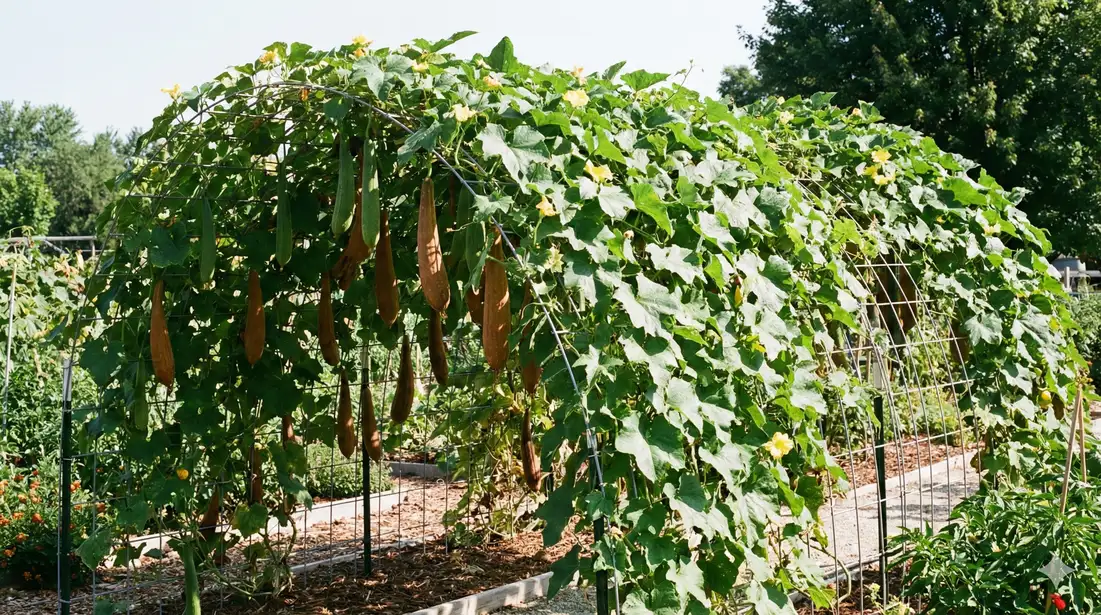
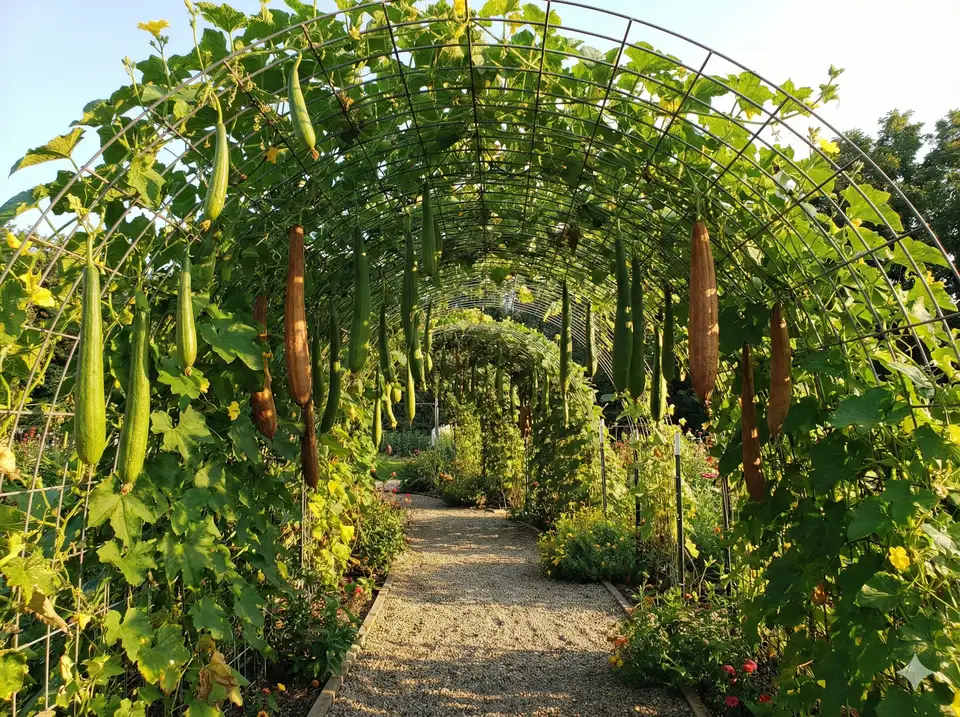
This commercial-grade metal arch trellis stands 7.5 feet tall and 4 feet wide, providing exceptional vertical growing space for loofah vines. Constructed from powder-coated steel tubing (0.8-inch diameter), it easily supports 75+ pounds of mature vines and multiple gourds without bending or sagging.
The arch design offers maximum growing area while creating an attractive garden feature. The wide 18-inch grid spacing accommodates thick loofah stems while providing ample points for tendrils to grip. Ground stakes extend 12 inches deep for superior stability even in windy conditions. The dark green powder coating resists rust and blends naturally into garden settings.
Key Features:
- 7.5 feet tall x 4 feet wide arch design
- Powder-coated steel construction (0.8" tubing)
- 75+ lb weight capacity per arch
- 18-inch climbing grid spacing
- 12-inch ground stakes for stability
- Rust-resistant coating with 5-year warranty
- Easy 30-minute assembly with included hardware
Pros
- Exceptional height for tall loofah vines
- Superior weight capacity handles heavy gourds
- Durable powder-coated finish lasts years
- Attractive arch design enhances gardens
- Very stable with deep ground anchoring
- Suitable for multiple climbing plants
Cons
- Higher price point ($90-120)
- Requires space for 4-foot width
- Heavy (35 lbs) - difficult to move once installed
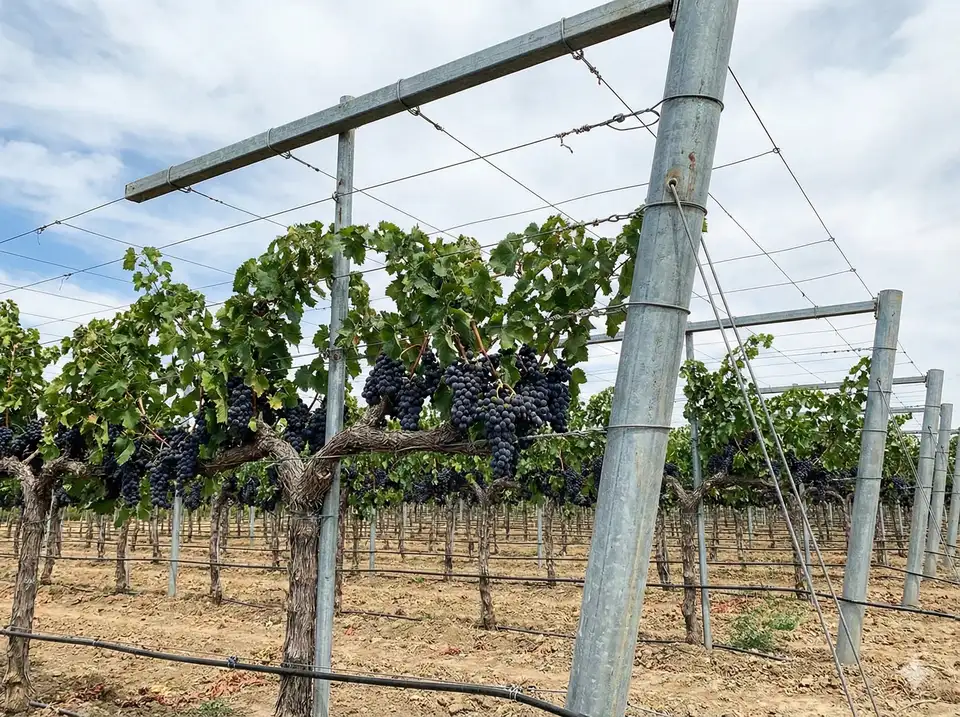
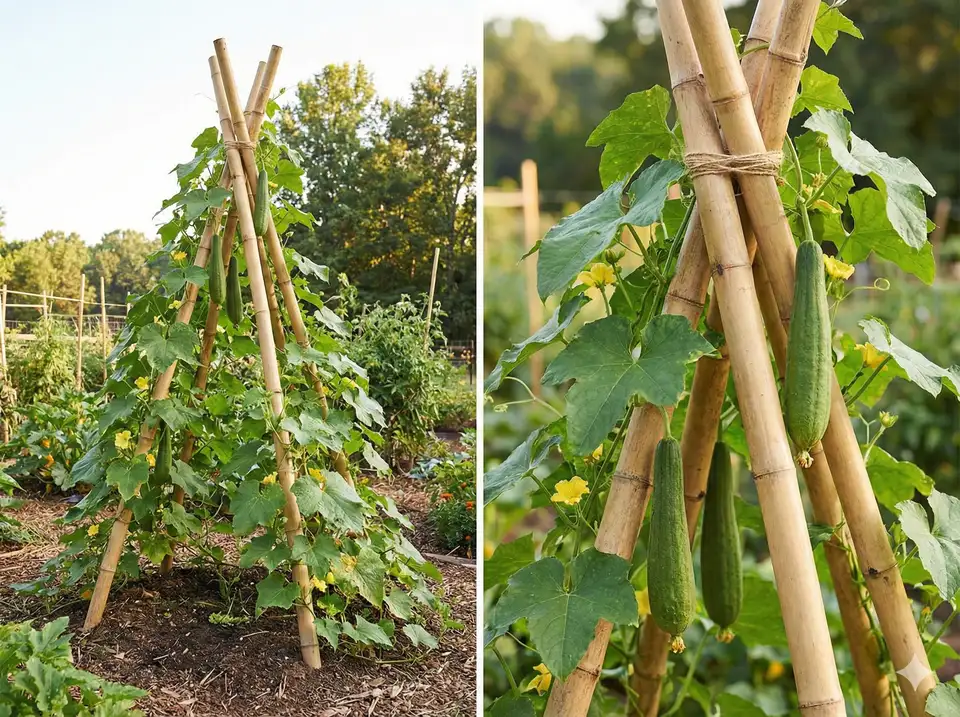
For budget-conscious gardeners, this bamboo trellis offers an affordable natural option that still provides adequate support for loofah vines. The 6-foot tall frame uses thick 1.5-inch diameter bamboo poles lashed together with weather-resistant twine, combined with UV-treated nylon trellis netting rated for 40 pounds.
While not as robust as metal options, this trellis works well for 2-3 loofah plants in smaller gardens. The natural bamboo ages gracefully and biodegrades at the end of its 2-3 season lifespan. The 6-inch mesh netting provides excellent grip for tendrils, and the entire system can be set up in under 20 minutes without tools.
Key Features:
- 6 feet tall x 3 feet wide bamboo frame
- Natural 1.5-inch diameter bamboo poles
- 40 lb capacity UV-treated nylon netting
- 6-inch mesh spacing perfect for tendrils
- Ground stakes included for anchoring
- No tools required for assembly
- Eco-friendly biodegradable materials
Pros
- Very affordable ($35-50)
- Natural aesthetic blends into gardens
- Quick and easy setup
- Adequate for 2-3 loofah plants
- Eco-friendly biodegradable materials
- Lightweight and easy to move
Cons
- Lower weight capacity than metal options
- 2-3 season lifespan before replacement
- 6-foot height limits very tall vines
- May require reinforcement for large harvests
Used by serious loofah growers and small farms, cattle panels represent the gold standard for supporting heavy gourd crops. These 16-foot long galvanized steel panels feature welded 4-inch square grid construction rated for over 200 pounds when properly supported. A single panel can support 6-8 productive loofah plants.
Cattle panels excel at commercial-scale growing because they're virtually indestructible, lasting 15+ years in outdoor conditions. The 4-foot height works perfectly when panels are arched between T-posts to create a 6-7 foot tall growing tunnel. The welded wire construction withstands extreme wind and weight loads that would destroy lighter trellis systems.
Key Features:
- 16 feet long x 4 feet tall galvanized steel
- 4-inch welded wire grid construction
- 200+ lb capacity when properly installed
- Rust-resistant galvanized coating
- Supports 6-8 mature loofah plants per panel
- 15+ year outdoor lifespan
- Requires T-posts for installation (sold separately)
Pros
- Exceptional weight capacity handles any harvest
- Extremely durable - lasts 15+ years
- Best value for large-scale growing
- Supports many plants per panel
- Industrial-grade galvanized steel
- Perfect 4-inch grid spacing for loofahs
Cons
- Requires T-posts (add $30-40 to cost)
- Heavy and difficult to handle alone (60 lbs)
- More installation labor required
- Large footprint needs significant garden space
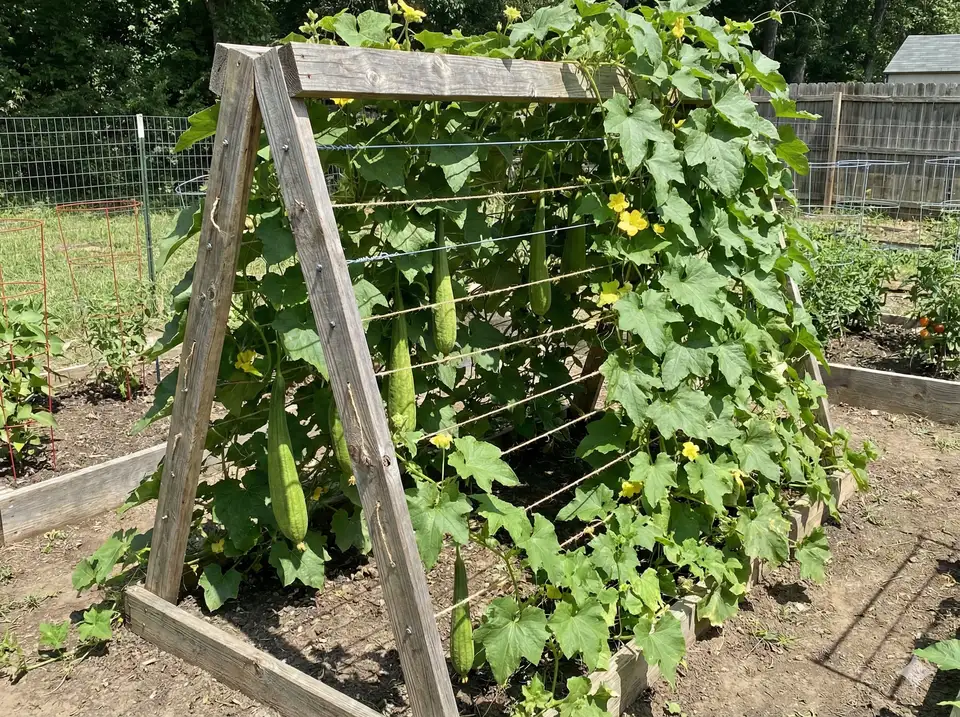
This cedar A-frame trellis provides an elegant solution for small gardens where space efficiency matters. Standing 7 feet tall with a 3-foot base footprint, the A-frame design supports climbing on both sides, effectively doubling your growing capacity while using minimal ground space. The natural cedar construction resists rot and insects without chemical treatment.
Each side features horizontal wire cables spaced 8 inches apart, creating an ideal climbing structure for loofah tendrils. The A-frame design inherently provides excellent stability without requiring ground anchoring, and the weight distributes evenly across both sides. This trellis works particularly well when you want to grow loofahs on one side and companion plants like beans or cucumbers on the other.
Key Features:
- 7 feet tall x 3 feet wide at base
- Natural rot-resistant cedar construction
- Horizontal wire cables spaced 8 inches apart
- 60 lb capacity (30 lbs per side)
- Self-supporting A-frame design
- Weatherproof finish with 3-year warranty
- Two-sided climbing surface doubles capacity
Pros
- Space-efficient footprint for small gardens
- Two-sided design doubles growing area
- Beautiful natural cedar appearance
- Self-supporting, no anchoring needed
- Excellent height at 7 feet
- Rot and insect resistant wood
Cons
- Moderate weight limit per side (30 lbs)
- Mid-range price ($70-100)
- Cedar may gray without annual sealing
- Wire spacing may need supplemental netting
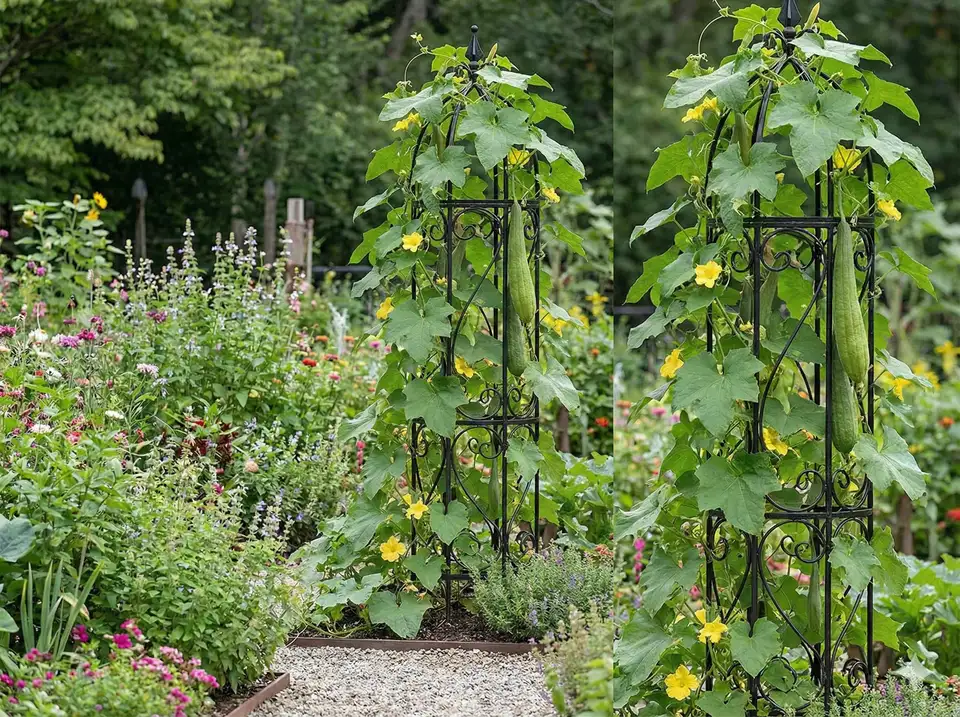
This decorative metal garden arbor combines functionality with aesthetic appeal, creating an attractive garden focal point while supporting vigorous loofah vines. Standing 8 feet tall with a 5-foot width and 2-foot depth, it provides one of the largest growing surfaces available in a single structure. The black powder-coated steel construction handles significant weight while maintaining an elegant appearance.
The arbor's lattice side panels and top arch provide multiple climbing pathways, encouraging vines to spread evenly and preventing overcrowding. This design works exceptionally well over garden paths, where hanging loofahs create a living tunnel effect. The wider base (5 feet) provides excellent stability, and the ground spikes anchor firmly even in loose soil.
Key Features:
- 8 feet tall x 5 feet wide x 2 feet deep
- Powder-coated steel tubing construction
- Lattice side panels with top arch
- 80 lb total weight capacity
- 14-inch ground spikes for stability
- Black finish with decorative finials
- Creates walkthrough garden feature
Pros
- Impressive 8-foot height accommodates tall vines
- Attractive decorative element enhances gardens
- Large growing surface with multiple climbing points
- Creates stunning walkthrough effect
- High weight capacity for multiple gourds
- Extremely stable with wide base
Cons
- Higher price ($95-135)
- Large footprint requires significant space
- Complex assembly takes 60-90 minutes
- Heavy (45 lbs) and difficult to relocate
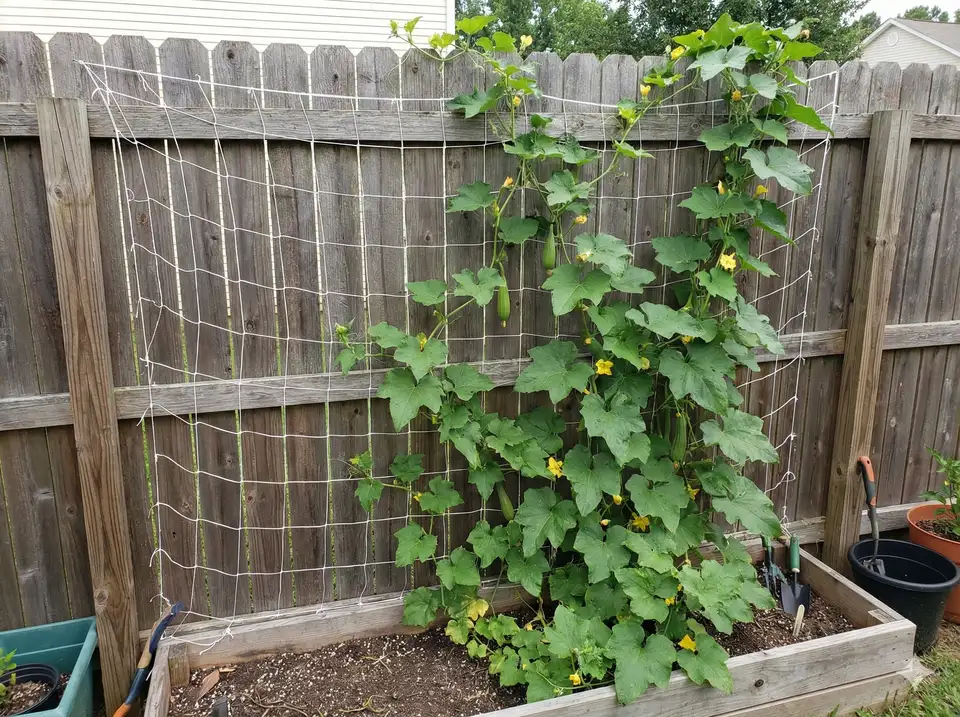
For gardeners who want maximum flexibility, this DIY trellis kit provides everything needed to create a custom loofah support system. The kit includes heavy-duty 6-inch mesh netting (6.5 feet tall x 30 feet long), sturdy 7-foot fiberglass stakes, and all necessary mounting hardware. Configure it vertically, horizontally, or at angles to fit your unique garden layout.
The professional-grade polyethylene netting is UV-treated to last 5+ seasons and rated for 60 pounds of climbing plants. The fiberglass stakes won't rot, rust, or attract lightning like metal alternatives. This kit excels when you need to support a long row of loofahs, create a privacy screen, or adapt to irregular garden spaces where standard trellises won't fit.
What's Included:
- 30 feet x 6.5 feet heavy-duty poly netting
- 6-inch square mesh spacing
- Six 7-foot fiberglass support stakes
- 50 mounting clips and zip ties
- 60 lb capacity per 10-foot section
- UV-treated for 5+ season lifespan
- Complete installation instructions
Pros
- Highly customizable to any garden layout
- 30-foot length supports many plants
- Excellent value for coverage area
- Fiberglass stakes never rust or rot
- Easy to expand with additional netting
- Lightweight and easy to reposition
Cons
- Requires more setup time and planning
- Less rigid than solid frame trellises
- May need additional stakes in windy areas
- Not as visually polished as finished products
Understanding Loofah Trellis Requirements
Successful loofah growing depends on choosing a trellis that meets the specific needs of these unique vining plants. Understanding these requirements helps you select the best option for your garden:
Height Considerations
Loofah vines naturally want to climb 15-30 feet, though they'll adapt to available trellis height. Minimum trellis height should be 6 feet, but 7-8 feet is optimal. Taller structures allow vines to develop more leaves and flowers, directly increasing gourd production. The top 2-3 feet of vine produce the majority of flowers and subsequently, loofahs.
Weight Capacity
A mature loofah plant produces 5-12 gourds per vine, each weighing 1-3 pounds. Add the weight of dense foliage (10-15 lbs per plant), and a single plant can exceed 30-40 pounds at peak production. Choose trellises rated for at least 50 pounds per section to provide a safety margin, especially in windy regions where dynamic loads increase stress.
Climbing Surface
Loofah tendrils need something to grip - smooth poles won't work. Ideal climbing surfaces include wire mesh (4-6 inch spacing), horizontal cables or wires (8-12 inches apart), or vertical posts with cross-bracing. Avoid mesh smaller than 3 inches (difficult to harvest through) or larger than 8 inches (insufficient grip points).
Material Durability
Loofah growing season spans 4-5 months in hot, humid conditions with frequent watering. Materials must withstand constant moisture, intense sun, and significant weight. Galvanized steel, powder-coated metals, rot-resistant woods (cedar, redwood), and UV-treated plastics perform best. Untreated wood and uncoated steel deteriorate within 1-2 seasons.
Trellis Styles Compared: Which Works Best?
Different trellis designs offer distinct advantages for loofah growing. Understanding these trade-offs helps match your structure to your specific needs:
Arch Trellises
Arch trellises create beautiful garden focal points while providing excellent vertical support. The curved design encourages vines to spread evenly, preventing overcrowding at the top. Arches work wonderfully over pathways, where hanging loofahs create an immersive garden experience. Best for: ornamental gardens, pathway coverage, and 3-5 plant production.
Flat Panel Systems
Vertical flat panels (including cattle panels) maximize growing density and simplify harvest access. This style works best along fences, garden edges, or property lines where you want vertical screening. The flat orientation makes fruit inspection and harvesting straightforward. Best for: large-scale production, space efficiency, and creating living walls.
A-Frame Trellises
A-frame designs offer the best space efficiency, providing two-sided growing surfaces in a compact footprint. The angled sides shed rain naturally and distribute weight evenly. A-frames excel in small gardens where every square foot matters. Best for: small gardens, maximizing limited space, and dual-purpose plantings.
Arbor Structures
Arbors combine function and aesthetics, creating architectural garden elements that support substantial vine growth. The enclosed three-dimensional structure provides climbing surfaces from multiple angles. Best for: decorative gardens, creating garden rooms, and supporting multiple heavy vines.
DIY String/Net Systems
Customizable netting stretched between posts offers maximum flexibility and excellent value for large-scale growing. This approach allows you to design perfect-fit solutions for irregular spaces. Best for: long rows, large plantings, budget growing, and temporary installations.
Building Your Own Loofah Trellis
DIY trellis construction can save 50-70% compared to commercial options while creating a structure perfectly suited to your space. Here's how to build an effective loofah trellis:
Simple T-Post and Wire Trellis
The most economical DIY option uses metal T-posts and wire fencing or heavy wire mesh. Install 6-7 foot T-posts every 8 feet along your planting row, driving them 18-24 inches into the ground. Attach 4-6 foot tall welded wire fencing or cattle panel sections to create a vertical climbing surface. Total cost: $3-5 per linear foot.
Wooden A-Frame Trellis
Build an attractive cedar A-frame using two 8-foot 2x4 boards per side, connected at the top with galvanized brackets. Space horizontal wire cables every 10-12 inches up both sides for tendrils to grip. This design requires basic carpentry skills and costs $40-60 in materials for a 6-foot tall structure.
PVC Pipe Arch Trellis
Create an affordable arch using 1.5-inch diameter PVC pipe (costs $15-25). Install rebar stakes on both sides, slip 10-foot PVC pipes over rebar, and bend into an arch shape. Attach nylon trellis netting or wire mesh to create climbing surface. While not as durable as metal arches, PVC structures last 3-5 seasons and work well for beginners.
Cattle Panel Arch (Best DIY Option)
Purchase a 16-foot cattle panel ($60-80) and bend it into a U-shape to create a 6-7 foot tall arch. Secure ends to 4-foot rebar stakes driven deep into the ground. This incredibly strong structure supports massive vine growth and lasts 15+ years. It's the favorite among experienced loofah growers for its durability and perfect grid spacing.
When building DIY trellises, overengineer for strength. Loofah vines are much heavier than they appear, and structures that seem adequate in spring often fail under the weight of late-season harvest. Add extra bracing, use heavier materials than you think necessary, and anchor deeply for best results.
Installation and Positioning Tips
Proper trellis installation is just as important as choosing the right structure. Follow these guidelines for best results:
Site Selection
Position trellises in full sun locations receiving 8+ hours of direct sunlight daily. Orient north-south when possible to ensure both sides receive equal sun exposure. Consider prevailing wind direction - position perpendicular to strong winds for maximum stability, or parallel if using the trellis as a windbreak. Ensure adequate space around the base (3-4 feet) for planting, watering, and maintenance access.
Ground Preparation
Clear and level the installation area before setting posts or stakes. Mark exact placement with stakes and string to ensure straight alignment, especially for long rows. Consider the mature plant spacing (3-4 feet between plants) when positioning trellis sections.
Secure Anchoring
Anchor depth is critical for stability under heavy loads. Drive metal stakes or posts at least 18-24 inches into the ground, deeper in sandy soils. Use concrete footings for permanent wooden structures or heavy arbors. Test stability by pulling hard on the structure before planting - any wobbling indicates insufficient anchoring.
Reinforcement Strategies
Add cross-bracing to tall structures to prevent swaying in wind. Install guy-wires anchored 4-5 feet from base for extra-tall or heavily loaded trellises. Consider connecting multiple trellis sections together for a stronger, more stable system. Reinforce connection points with heavy-duty zip ties, steel wire, or galvanized brackets.
Price Comparison and Value Analysis
Trellis costs vary dramatically based on materials, size, and quality. Understanding price tiers helps you find the best value for your needs:
Budget Options ($25-50)
This tier includes bamboo trellises, basic netting kits, and simple DIY materials. Suitable for 1-3 loofah plants and 2-3 season lifespan. Budget options work well for beginners testing loofah growing or temporary installations. Expect to replace or reinforce these structures within 2-3 years.
Mid-Range Options ($50-100)
The sweet spot for most home gardeners includes quality arch trellises, cattle panels with T-posts, and solid wooden A-frames. These structures support 4-8 plants with 5-10 year lifespans. Mid-range investments offer the best balance of initial cost, durability, and production capacity.
Premium Options ($100-150+)
Premium trellises feature commercial-grade materials, decorative designs, and exceptional longevity (10-20 years). Best for serious gardeners, ornamental gardens, or commercial growing operations. While expensive initially, premium structures cost less per season when amortized over their long lifespan.
DIY Cost Comparison
Building your own trellis typically costs 40-60% less than comparable commercial options:
- DIY T-post and wire trellis: $25-40 vs. $80-100 commercial equivalent
- DIY wooden A-frame: $40-60 vs. $90-120 commercial equivalent
- DIY cattle panel arch: $70-90 vs. $150-200 commercial metal arch
- DIY netting system: $30-50 vs. $70-90 commercial kit
However, DIY options require time, tools, and skills. Factor in 2-4 hours labor plus tool costs when comparing true value.
Maintaining Your Loofah Trellis
Regular maintenance extends trellis life and ensures safe support throughout the growing season:
Pre-Season Inspection
Before planting, inspect all connections, check for rust or rot, tighten loose fasteners, and replace damaged sections. Test stability by applying strong pulling force from multiple angles. Address any weaknesses before vines add significant weight.
Mid-Season Monitoring
Check weekly during peak growing season (July-August) when weight loads are highest. Look for bending, leaning, or loose connections. Add supplemental support immediately if structure shows stress. Redistribute vine growth if one area becomes overloaded.
Post-Season Care
After harvest, remove all dead vines and debris which trap moisture and accelerate deterioration. Inspect for damage and repair immediately. Apply rust-preventive coating to exposed metal, wood sealant to bare wood areas. Store removable sections indoors in harsh winter climates.
Long-Term Preservation
Metal trellises benefit from annual rust treatment and touch-up painting every 2-3 years. Wooden structures need sealing/staining every 2 years. Replace netting every 4-5 seasons before it deteriorates and fails mid-season. Keep replacement hardware on hand for quick repairs.
Related Articles
Frequently Asked Questions
As an Amazon Associate, we earn from qualifying purchases.