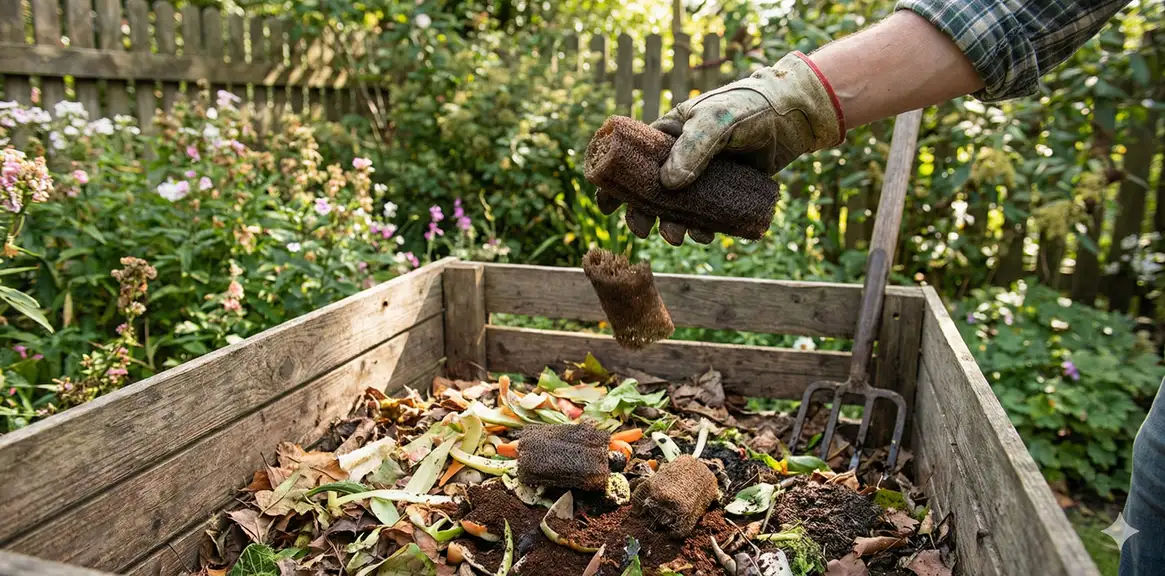
One of the biggest advantages of natural loofah over synthetic sponges is what happens at the end of its life. This biodegradable advantage really sets loofah apart. While plastic sponges sit in landfills for centuries, slowly breaking into microplastics that contaminate soil and water, loofah returns to the earth in weeks—completing a beautiful cycle that synthetic alternatives simply cannot match.
This difference matters more than most people realize. The average household goes through 6-12 sponges per year. Multiply that by millions of households, and you have a massive amount of plastic waste. Every loofah you compost instead of throwing away represents a small but meaningful environmental choice.
This guide covers everything you need to know about composting loofah, from basic methods to tips for faster decomposition, plus creative alternatives if you don't have a compost pile.
Why Compost Loofah?
Composting isn't just about getting rid of waste—it's about transforming used materials into something valuable. When you compost loofah, you're participating in a natural cycle that returns nutrients to the soil, plays a role in reducing landfill waste, and creates a resource for future plant growth.
Loofah makes an excellent compost addition because of its structure. The fibrous network breaks down into organic matter that improves soil texture, increases water retention, and feeds the microorganisms that make healthy soil. Unlike food scraps that can become slimy and attract pests, loofah decomposes cleanly without odor issues.
- Zero waste - Nothing goes to landfill; every fiber returns to the earth
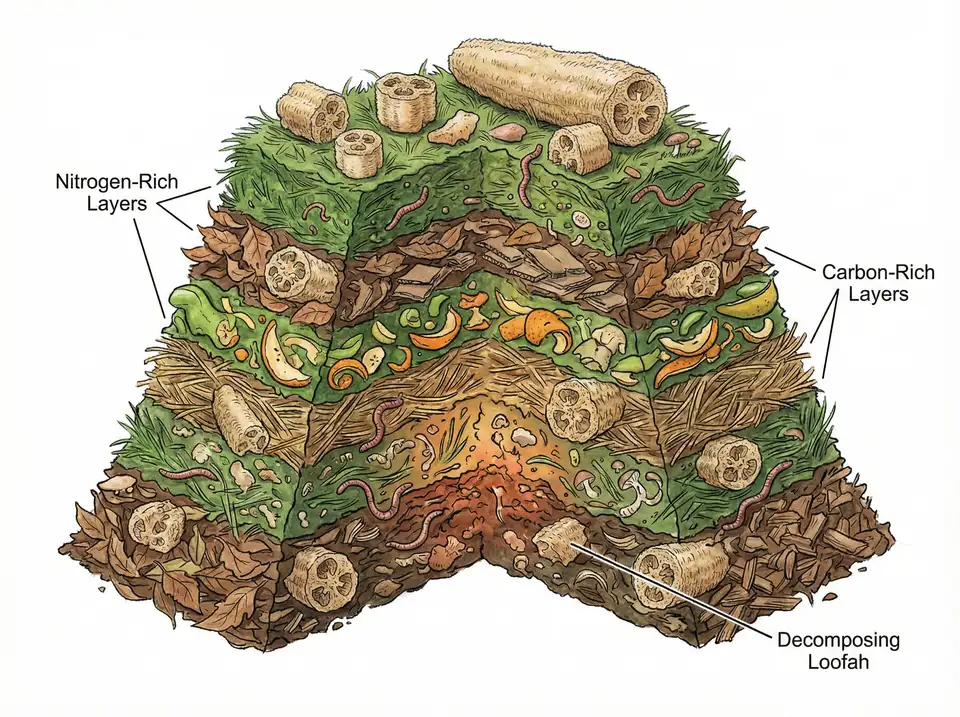
- Carbon-rich material - Excellent "brown" addition that balances nitrogen-rich food scraps
- Soil improvement - Adds organic matter and improves drainage in heavy soils
- Closes the loop - Finished compost can be used to grow more loofahs
- No microplastics - Unlike synthetic sponges, creates zero pollution during breakdown
Loofah is classified as "brown" compost material (carbon-rich), similar to dried leaves, cardboard, or straw. For optimal composting, balance it with "green" materials like food scraps, fresh grass clippings, or coffee grounds. A good ratio is roughly 3 parts brown to 1 part green by volume.

Composting Methods
There's no single "right" way to compost loofah. The best method depends on your living situation, available space, and how quickly you want results. All of these approaches work—choose the one that fits your lifestyle.
Method 1: Traditional Compost Pile or Bin
This is the most common approach and works well for households with outdoor space. The heat generated by an active compost pile significantly speeds up decomposition.
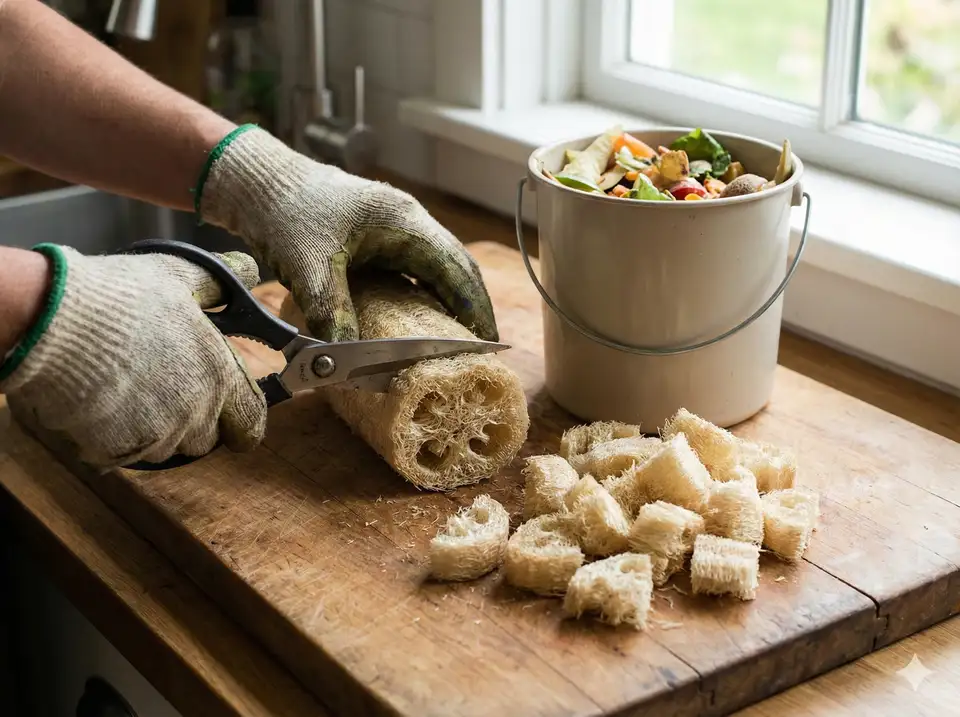
- Cut into small pieces - Use scissors or a knife to cut the loofah into 1-2 inch pieces. For more tips on composting loofah scraps, smaller pieces decompose faster because microbes have more surface area to work on.
- Soak in water (optional) - Pre-soaking the pieces for a few hours jumpstarts decomposition by softening the fibers and introducing moisture that microbes need.
- Add to compost - Mix loofah pieces into your compost pile or bin. Bury them in the center where it's warmest and microbial activity is highest.
- Balance with greens - Add nitrogen-rich "green" materials like food scraps or grass clippings to balance the carbon-rich loofah.
Method 2: Direct Burial
No compost bin? No problem. Direct burial is the simplest method and works surprisingly well. The loofah decomposes right where the nutrients will be used—in your garden bed.
- Cut loofah into small pieces
- Dig a 6-8 inch hole in a garden bed
- Add loofah pieces and cover with soil
- Mark the spot (optional) - you won't see any trace in 6-8 weeks
This method works particularly well in fall, when you can bury loofahs and let them break down over winter. By spring, the nutrients will be available for new plantings.
Method 3: Worm Bin (Vermicomposting)
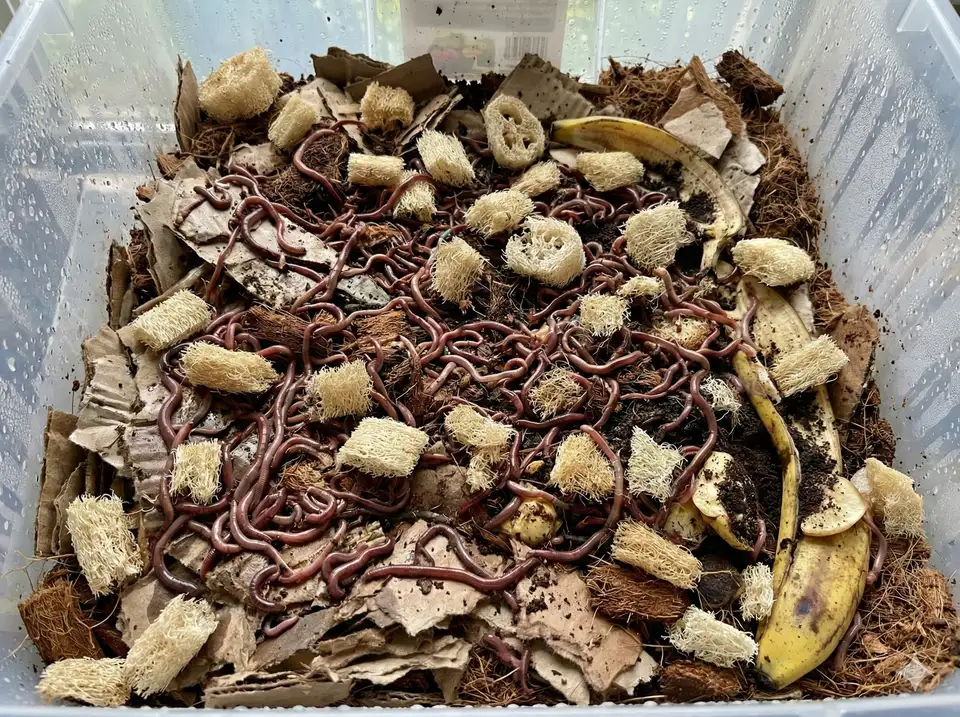
If you use a worm bin for composting, you can add loofah—though it takes longer than food scraps. Worms don't eat the loofah directly, but they consume the bacteria and fungi that break it down.
- Cut into very small pieces (1/2 inch or less)
- Pre-soak thoroughly until completely soft
- Add in small quantities mixed with food scraps
- Be patient—worms process loofah slower than vegetable matter
Method 4: Use as Mulch
Shredded loofah makes excellent biodegradable mulch. Learn how to use in garden mulch applications. It breaks down over a single growing season while helping retain soil moisture and suppress weeds.
Shred or cut loofah into thin strips and spread around plants. It works especially well around tomatoes, peppers, and other plants that benefit from consistent soil moisture. As the season progresses, the loofah slowly breaks down and adds organic matter to the soil.
Decomposition Timeline
How quickly loofah breaks down depends on several factors, but in an active, well-maintained compost pile, you can expect complete decomposition in 4-8 weeks. Here's what to expect at each stage.
| Timeframe | What's Happening |
|---|---|
| Week 1-2 | Loofah begins to soften and break apart; color fades from tan to gray; fibers become flexible |
| Week 3-4 | Fibers become brittle; significant decomposition underway; pieces break apart when handled |
| Week 5-6 | Most material has broken down; hard to identify individual pieces; blending with surrounding compost |
| Week 6-8 | Fully decomposed; indistinguishable from finished compost; ready to use in garden |

Factors That Speed Decomposition
- Smaller pieces (more surface area for microbes)
- Active, hot compost pile (130-150°F ideal)
- Adequate moisture (like a wrung-out sponge)
- Pre-soaking before adding
- Regular turning/mixing
- Warm weather
Factors That Slow Decomposition
- Large pieces or whole loofahs
- Cold weather or frozen compost
- Dry conditions
- Inactive/cold compost pile
- Too much carbon (not enough green materials)
Before You Compost: Second-Life Uses
Before tossing that worn loofah in the compost, consider whether it has some useful life left. Understanding end of life disposal options helps you make the most of each loofah. A sponge that's too worn for body exfoliation might still work for other purposes, extending its useful life and maximizing value.
- Downgrade to cleaning - Worn bath loofahs work great for bathroom cleaning or scrubbing garden pots and tools
- Seed starting - Cut into discs and place in seedling trays for drainage; they break down as roots develop
- Craft projects - Old loofahs can be used for texture stamps, as natural package filling, or in kids' art projects
- Pet enrichment - Small pieces (thoroughly cleaned of soap residue) can amuse rabbits and guinea pigs who enjoy gnawing on natural fibers
- Garden ties - Cut into strips for soft, biodegradable plant ties that won't damage stems

What NOT to Compost
While natural loofah is completely compostable, not everything marketed as a "loofah" actually is. Before adding anything to your compost, make sure it's genuinely plant-based.
- Synthetic loofahs - Plastic mesh "loofahs" (often called poofs or bath poufs) are NOT compostable—they're made from nylon or polyethylene
- Loofah with synthetic additions - Some have plastic handles, synthetic sponge layers, or nylon rope
- Heavily chemically-treated loofahs - Some commercial loofahs are bleached with chlorine or treated with preservatives
- Loofahs with adhesives - Some mounted or packaged loofahs have non-compostable backing or glue
If in doubt, check the label or product description. 100% natural plant fiber loofahs—especially homegrown ones—are always safe to compost. When buying, look for "natural loofah," "luffa," or "vegetable sponge" and avoid products with plastic components.
The Full Circle: Compost to Loofah
Here's where composting loofah becomes truly satisfying: you can use your loofah compost to grow more loofahs. Ready to complete the organic cycle? This closed-loop system means you're creating zero waste and actually building soil health with every loofah you use.
The cycle works like this:
- Compost your used loofahs (along with other organic waste)
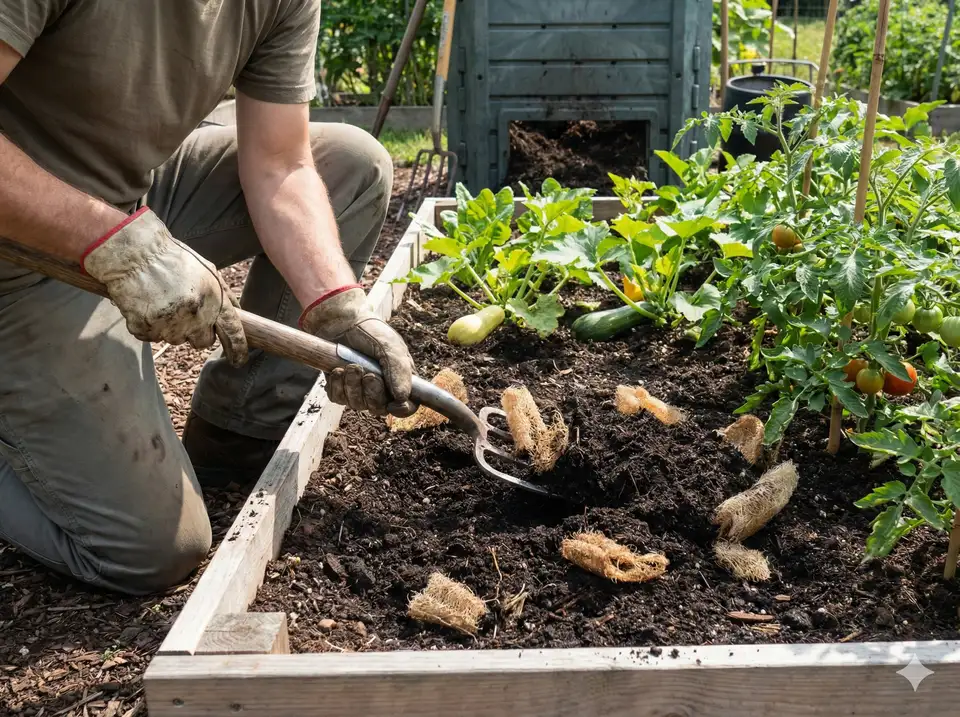
- Add finished compost to your garden beds
- Plant loofah seeds in the enriched soil
- Harvest new loofahs at the end of the growing season
- Use, wear out, compost, and repeat!
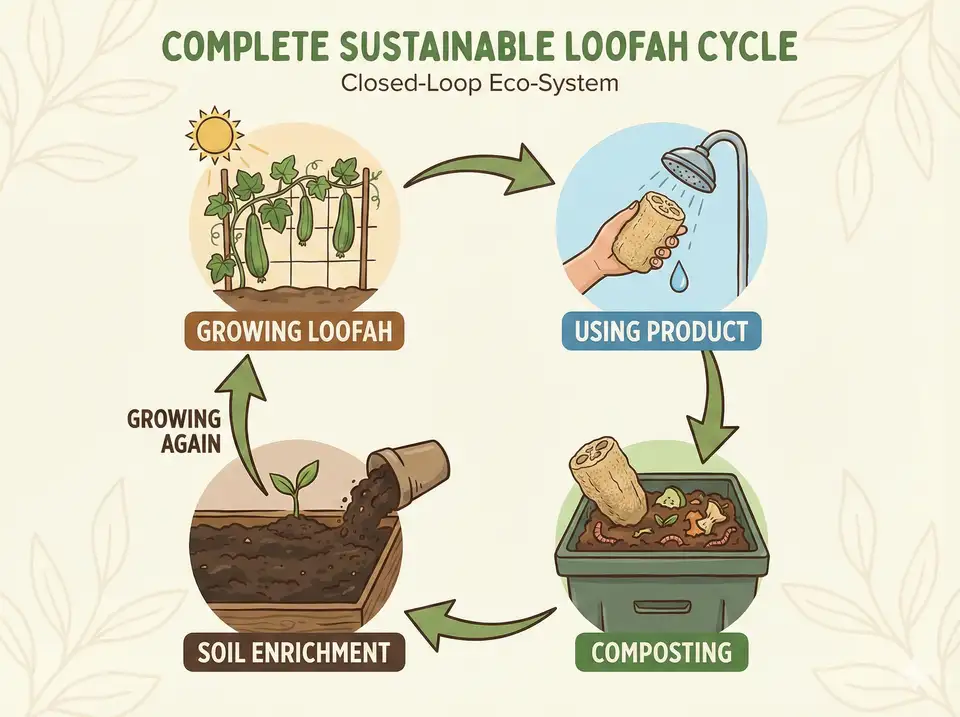
If you grow your own loofahs, you can achieve true self-sufficiency. One healthy loofah plant produces 10-15 sponges per season—easily enough for a family of four with extras to give away. The spent loofahs return to your compost pile, enriching the soil for next year's crop. It's a beautiful, sustainable system that costs almost nothing once established.
Frequently Asked Questions
Can I compost loofah with soap residue?
Small amounts of natural soap residue are fine—the composting process breaks down most organic compounds. However, if you used heavily fragranced products, antibacterial soaps, or chemical cleaners, give the loofah a thorough rinse before composting. Heavily perfumed products can affect the microbial balance in your compost.
Can municipal composting accept loofah?
Most municipal compost programs accept natural loofah, as it's classified as plant matter. However, check your local guidelines since some programs have restrictions on what they can process. When in doubt, call your waste management provider.
Will loofah attract pests?
No. Unlike food scraps, dried loofah doesn't attract rodents, raccoons, or insects. It's essentially dried plant fiber—no different from adding straw or dried leaves to your compost. If anything, the carbon-rich loofah helps balance nitrogen-heavy food scraps that can sometimes cause odor issues.
Can I put a whole loofah in compost?
You can, but it will take much longer—typically 3-6 months instead of 4-8 weeks. The dense fiber structure doesn't allow microbes easy access to the interior. Cutting into pieces significantly speeds decomposition and is recommended.
Is loofah compost safe for vegetable gardens?
Absolutely. Natural loofah contains no harmful compounds—it's just plant fiber. Once composted, it's indistinguishable from other finished compost and perfectly safe for growing vegetables, herbs, and fruits.
Recommended Products
Almooni Egyptian Loofah Bath Sponges (3-Pack)
Premium thick-fiber natural loofahs - gentle exfoliation for all skin types - lasts 3-4 weeks each
Buy on Amazon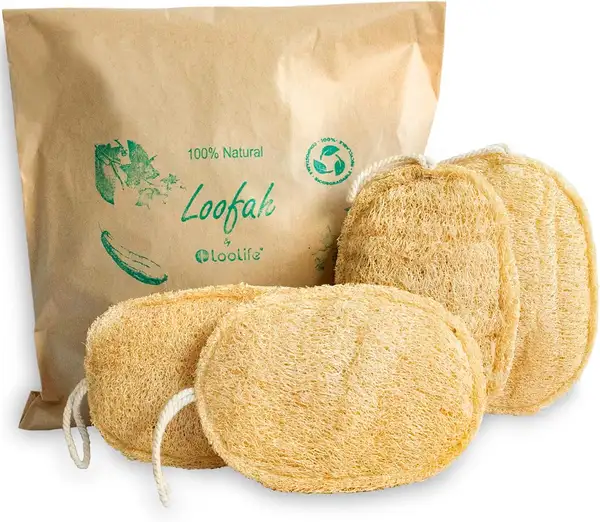
Natural Loofah Exfoliating Sponges (4-Pack)
100% organic biodegradable bath sponges - plastic-free alternative that's gentle on skin and planet
Buy on AmazonAs an Amazon Associate, we earn from qualifying purchases.