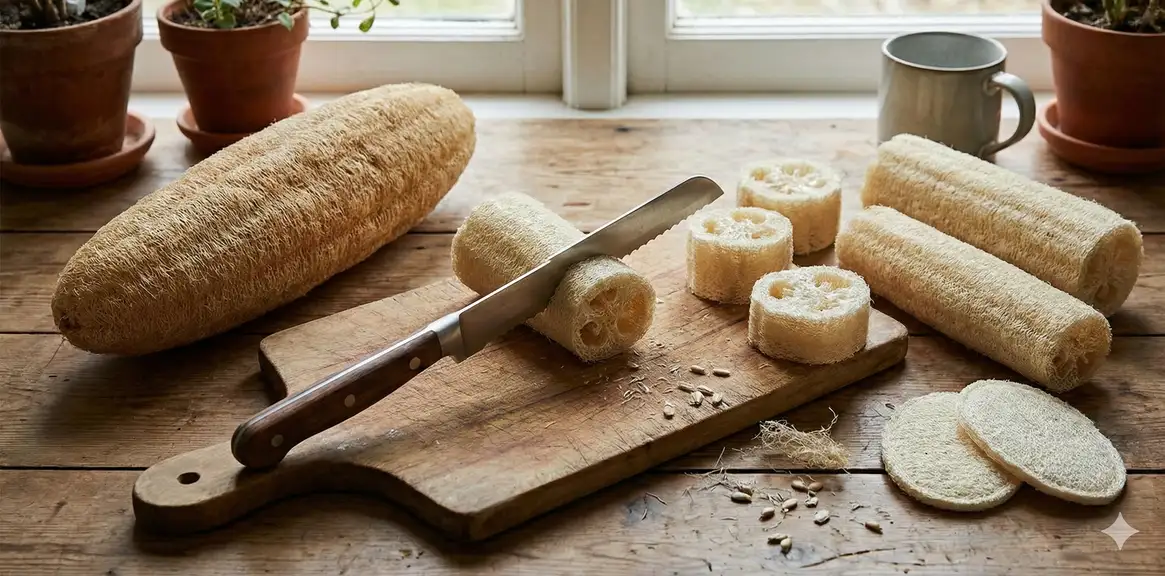
Whole loofahs are great, but they're often too large for comfortable kitchen loofah use. Cutting your loofah into properly sized pieces makes them easier to grip, helps them dry faster, and lets you get more scrubbers from each loofah.
This guide covers the best sizes, cutting techniques, and tips for preparing loofah for various kitchen tasks. If you'd prefer to skip the DIY approach, there are pre-cut options available that work just as well.
Tools You'll Need
- Serrated knife - Best for cutting through fibrous material
- Heavy-duty scissors - Good for thinner loofahs
- Cutting board - Stable surface for safe cutting
- Bowl of water - For pre-soaking
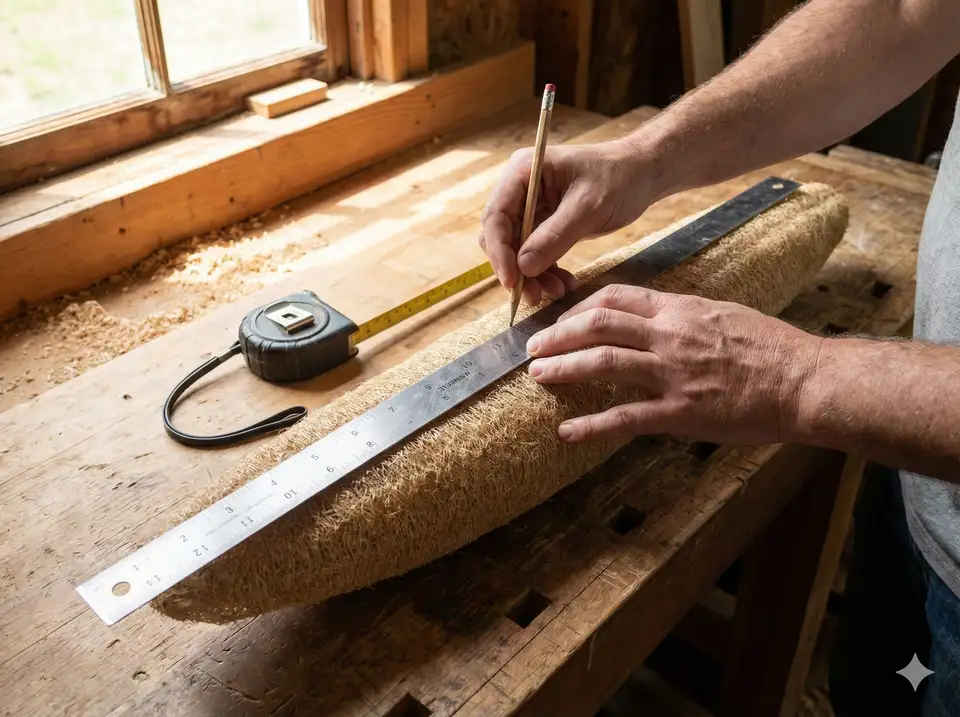
- Ruler or measuring tape - For consistent sizes (optional)
Preparing Loofah for Cutting
Before cutting, prepare your loofah properly for the best results.
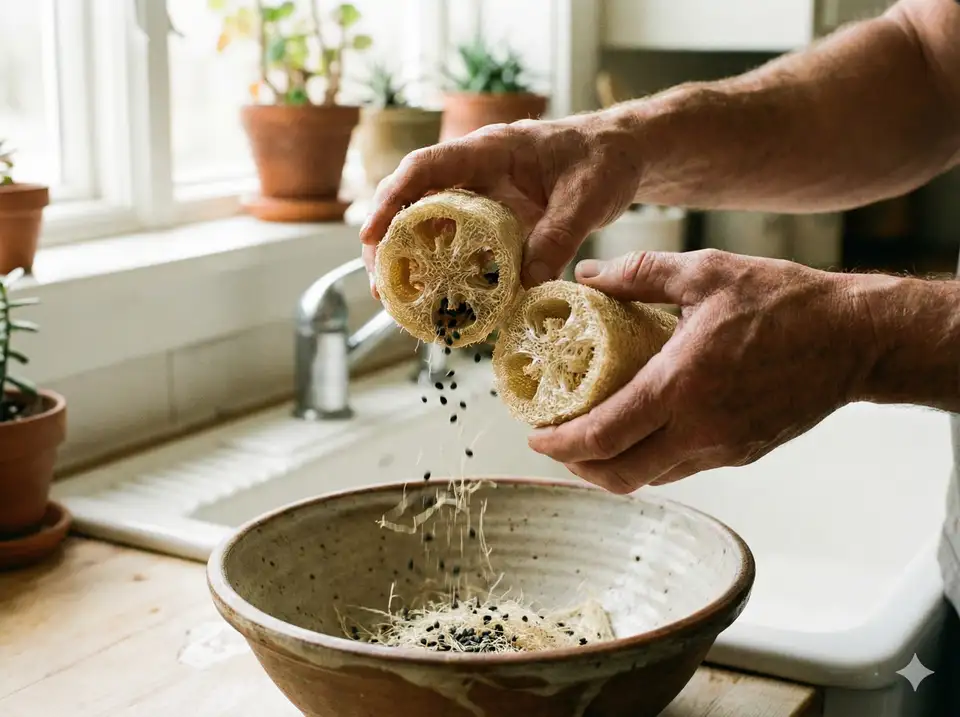
- Shake out seeds - If using homegrown loofah, remove any remaining seeds
- Soak in warm water - 10-15 minutes softens fibers for easier cutting
- Remove outer skin - If not already peeled, remove any remaining skin
- Clean thoroughly - Make sure loofah is debris-free before cutting
If you're starting with fresh-harvested loofahs, see our guide on processing whole loofahs before cutting them for kitchen use.
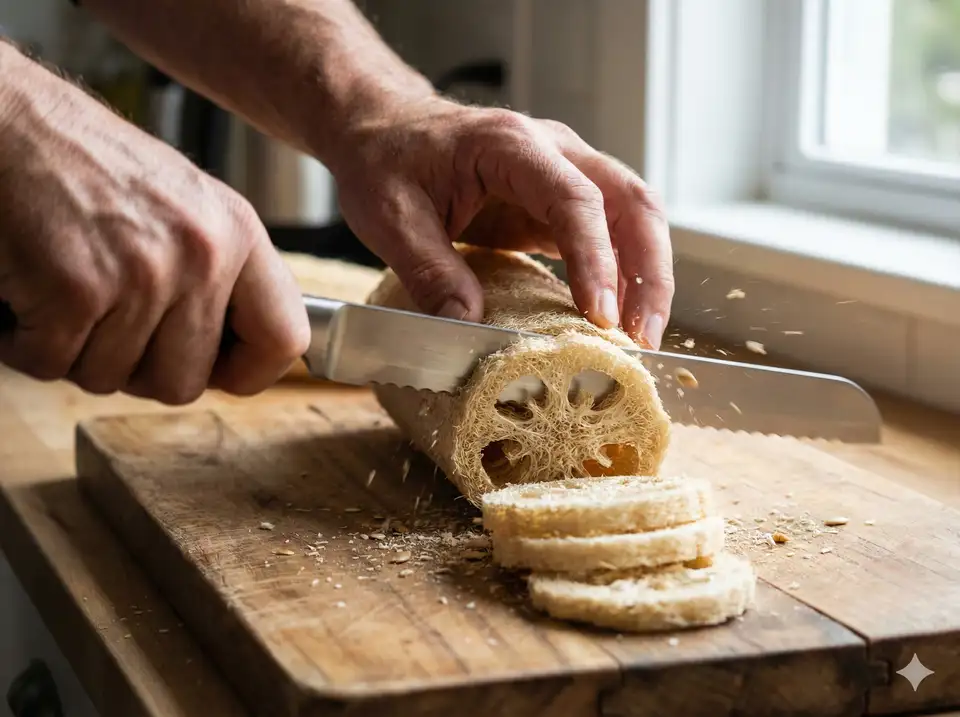
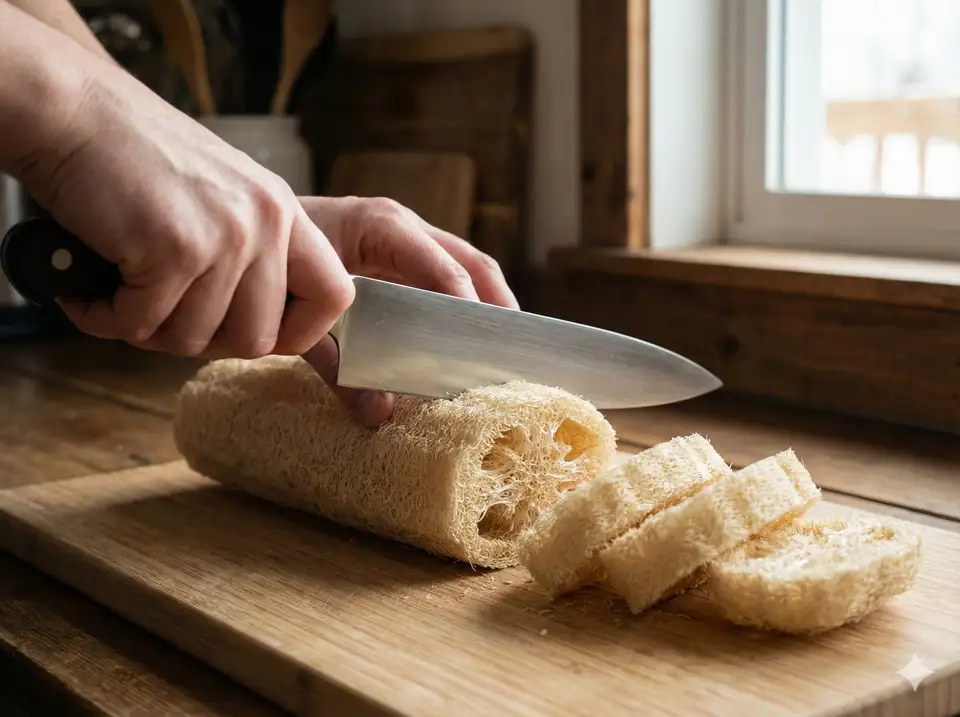
A bread knife works perfectly for cutting loofah - the serrated edge grips the fibrous material without crushing it.
Best Sizes for Kitchen Uses
Different kitchen tasks call for different loofah sizes. Just like there are different sizes for different tasks in the bathroom, the same principle applies in the kitchen. Here's a guide to cutting for specific uses.
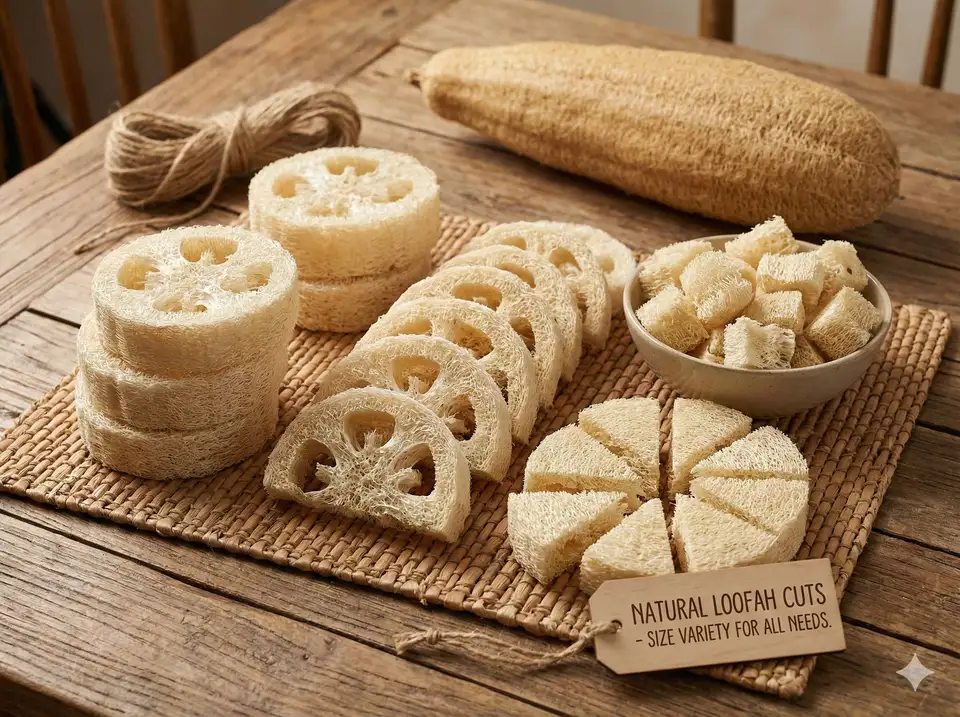
Perfect palm-size for washing dishes. Cut crosswise into round discs or slice lengthwise and cut into rectangles. Dense enough for scrubbing power, small enough for good grip.
Smaller pieces work well for scrubbing potatoes, carrots, and other root vegetables. The natural texture removes dirt without damaging skin.
Use the densest part of the loofah for heavy-duty pot scrubbers. Larger size provides more surface area and scrubbing power.
Cut lengthwise and flatten for countertop and surface cleaning. Larger surface area covers more ground efficiently.
Cutting Techniques
Method 1: Crosswise Rounds
The most common method for kitchen scrubbers:
- Lay loofah horizontally on cutting board
- Using serrated knife, cut straight down every 3-4 inches
- Use sawing motion - don't press too hard
- Result: Circular disc-shaped scrubbers
Method 2: Lengthwise Split
Creates flat, rectangular pieces:
- Cut loofah in half lengthwise down the center
- Open/flatten each half
- Cut into desired rectangle sizes
- Result: Flat scrubbing pads
Method 3: Quarter Sections
For handheld gripping:
- Cut crosswise into 4-inch sections
- Cut each section in half lengthwise
- Cut each half in half again
- Result: Quarter-moon shaped pieces that fit in palm
Maximizing Your Loofah
One whole loofah can provide months of kitchen scrubbers if cut strategically. An average loofah (12-18") yields 8-12 kitchen scrubbers, while a large loofah (18-24") can yield 12-16 pieces.
The dense center sections work best for heavy-duty scrubbing, while softer end sections are better for delicate surfaces. Thin outer pieces can be used for light cleaning, for creative loofah projects, or added to your compost bin.
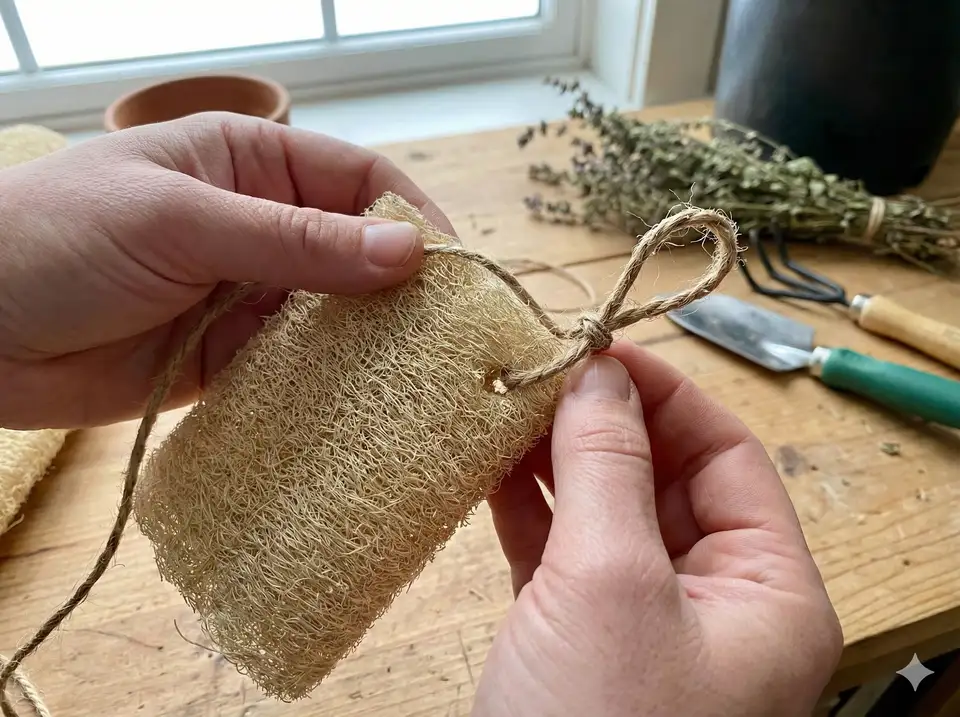
Store extra cut pieces in a dry location. They'll keep indefinitely until needed. Just wet before first use.
Maintaining Cut Loofahs
Once cut, your kitchen loofahs need proper care to maximize their lifespan and hygiene.
- Rinse thoroughly after each use
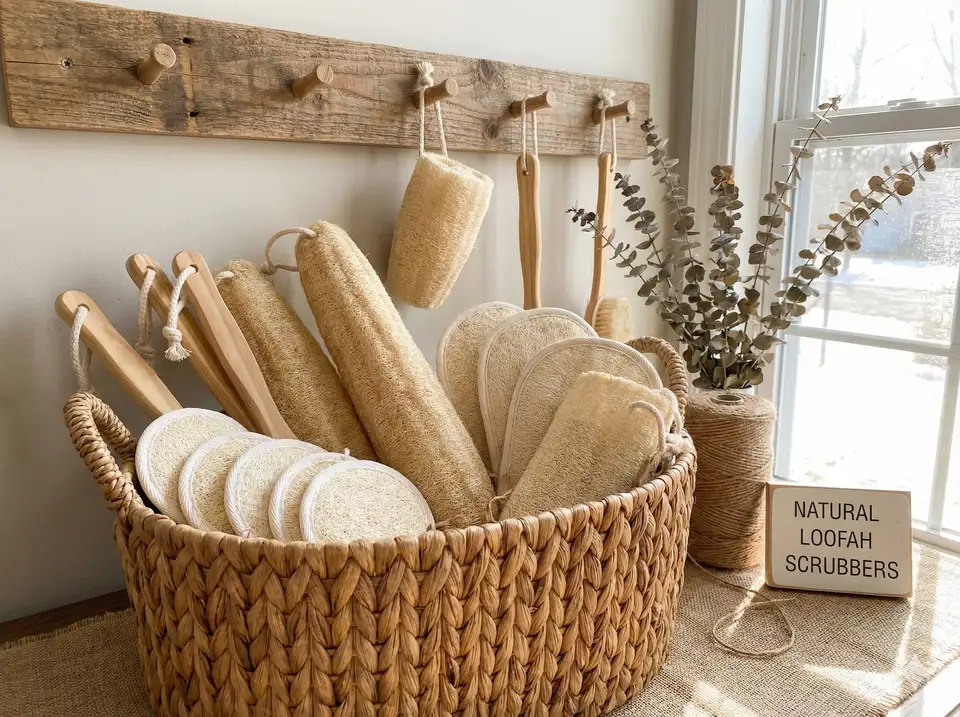
- Squeeze out water and hang to dry
- Store outside sink - wet environments breed bacteria
- Sanitize weekly - run through dishwasher or soak in vinegar solution
- Replace every 3-4 weeks - or when it starts to smell
When worn out, toss in the compost - it'll break down in weeks.
Frequently Asked Questions
Can I cut loofah dry or should I soak it first?
You can cut it dry, but soaking for 10-15 minutes makes it significantly easier. Dry loofah can be tough and may crumble at the edges.
What if my loofah is hollow in the center?
That's normal. The hollow center actually helps with drying and creates a natural grip. For kitchen use, the solid outer ring provides all the scrubbing power you need.
Should I remove the seeds before cutting?
Yes. Shake out loose seeds first. Any remaining seeds will fall out during cutting. Save seeds if you want to grow your own.
Can I use regular scissors?
Kitchen shears or heavy-duty scissors work for thinner loofahs. For dense, thick loofahs, a serrated knife is more effective.
Related Guides
Recommended Products
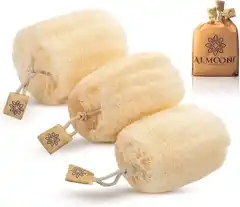
Almooni Egyptian Loofah Bath Sponges (3-Pack)
Premium thick-fiber natural loofahs - gentle exfoliation for all skin types - lasts 3-4 weeks each
Buy on Amazon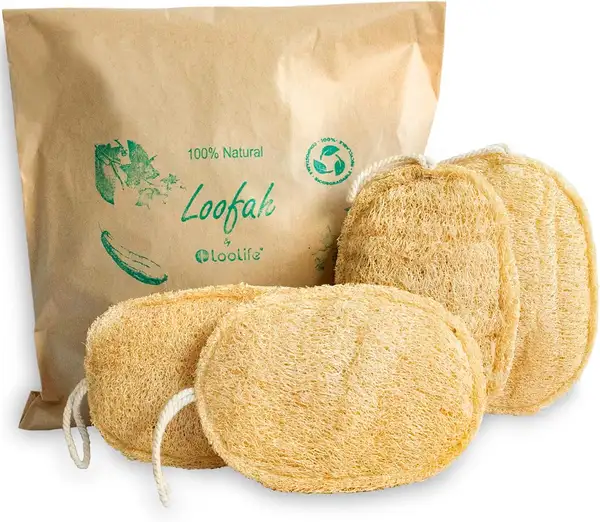
Natural Loofah Exfoliating Sponges (4-Pack)
100% organic biodegradable bath sponges - plastic-free alternative that's gentle on skin and planet
Buy on AmazonAs an Amazon Associate, we earn from qualifying purchases.