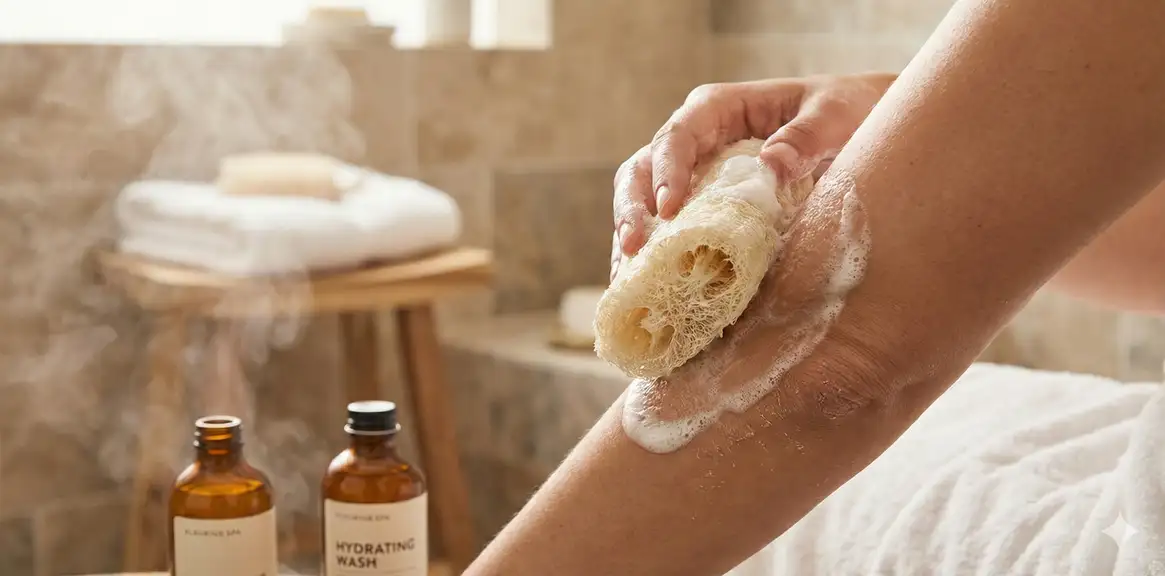
If you struggle with dry, flaky skin, a natural loofah sponge can be your secret weapon for achieving soft, smooth skin. Unlike harsh synthetic scrubs, loofah provides gentle exfoliation techniques that remove dead skin cells while stimulating circulation - both key factors in managing dry skin.
However, using loofah incorrectly can actually make dry skin worse. This guide covers everything you need to know about using loofah effectively for dry skin, including the right technique, frequency, and aftercare routine.
Why Loofah Works for Dry Skin
Dry skin occurs when your skin's natural moisture barrier is compromised, leading to water loss and a buildup of dead skin cells. This layer of dead cells can make skin look dull and prevent moisturizers from penetrating effectively. I dealt with chronically dry skin for years—especially on my legs and arms during winter—before I discovered that my expensive moisturizers weren't the problem. The real issue was that dead skin was blocking everything I applied from actually absorbing.
Natural loofah helps by gently removing dead skin cells to reveal fresh, healthy skin beneath. What surprised me most was how immediately different my skin felt after just one proper exfoliation session. The difference in moisturizer absorption was dramatic—products that used to sit on top of my skin suddenly sank in within seconds. This exfoliation can improve skin texture and hydration since there's no longer a barrier of dead cells blocking hydrating products from penetrating deeper into the skin.
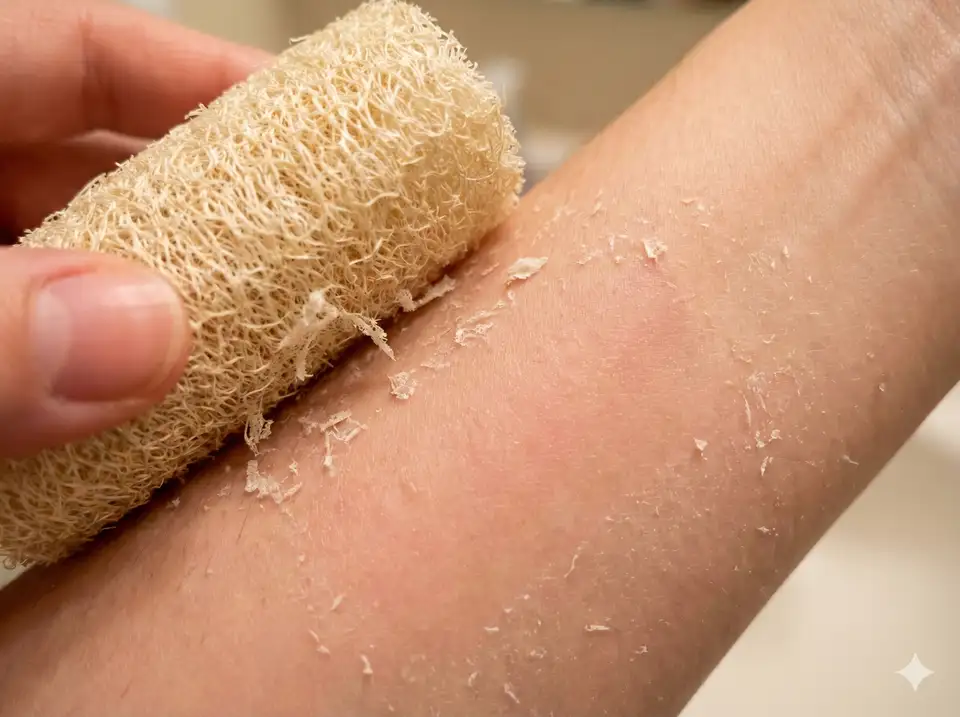
The gentle scrubbing motion also stimulates blood circulation, bringing nutrients and oxygen to skin cells. You'll often notice a slight pink flush after using a loofah—that's increased blood flow doing its job. This circulation boost helps your skin cells turn over more efficiently and can give dry, dull skin a healthier appearance. The texture also helps unclog pores that can trap moisture and cause irritation, which is why many people with dry skin also notice fewer bumps and less roughness over time.
For dry skin, you need to care for delicate skin—choose a loofah that's been soaked and softened rather than a stiff, dry one. I made the mistake of using a brand-new loofah straight out of the package once—my skin was irritated for two days. Now I always soak mine for at least 3 minutes in warm water before use, and the difference is night and day.
How to Use Loofah for Dry Skin
Proper technique is crucial when using loofah on dry skin. Too much pressure or frequency can strip away natural oils and damage the skin barrier.
Step-by-Step Technique
- Soak your loofah - Submerge in warm water for 2-3 minutes until soft and pliable
- Shower first - Let warm (not hot) water soften your skin for 3-5 minutes before exfoliating
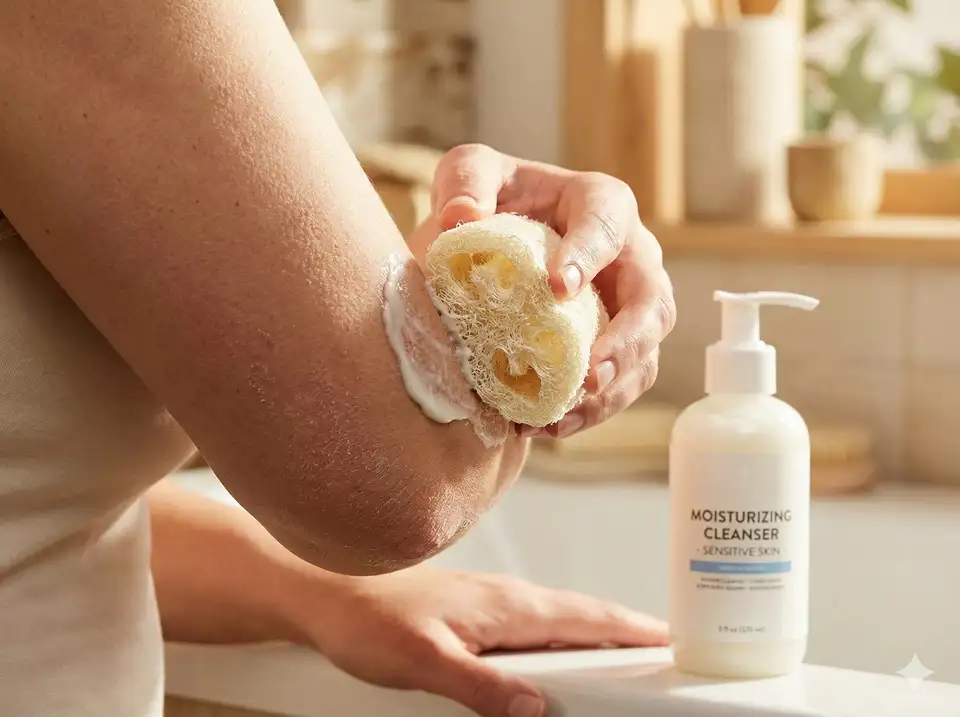
- Apply gentle cleanser - Use a hydrating, fragrance-free body wash on your loofah
- Use light pressure - Let the loofah texture do the work; don't scrub aggressively
- Move in circular motions - Work from extremities toward your heart to boost circulation
- Rinse thoroughly - Remove all soap residue from skin and loofah
- Pat dry gently - Don't rub with your towel, which can irritate freshly exfoliated skin
- Moisturize immediately - Apply rich moisturizer within 3 minutes while skin is still damp
Never use loofah on cracked, bleeding, or severely irritated skin. Wait until skin has healed before resuming exfoliation.
How Often to Exfoliate Dry Skin
Over-exfoliation is the biggest mistake people with dry skin make. While it might seem logical that more exfoliation equals smoother skin, the opposite is true for dry skin types.
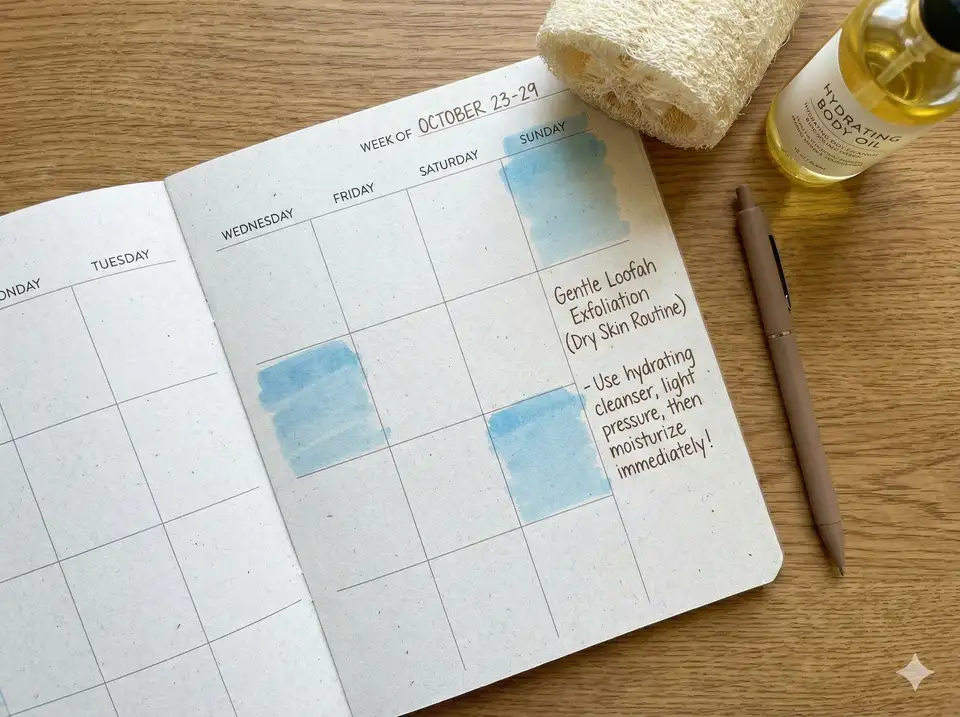
Recommended frequency: 2-3 times per week maximum
Signs you're over-exfoliating include increased redness or irritation, skin that feels tight or "squeaky clean," increased sensitivity to products, and worsening dryness or flakiness. If you notice these signs, reduce frequency to once per week and focus on deep moisturizing.
Best Loofah Types for Dry Skin
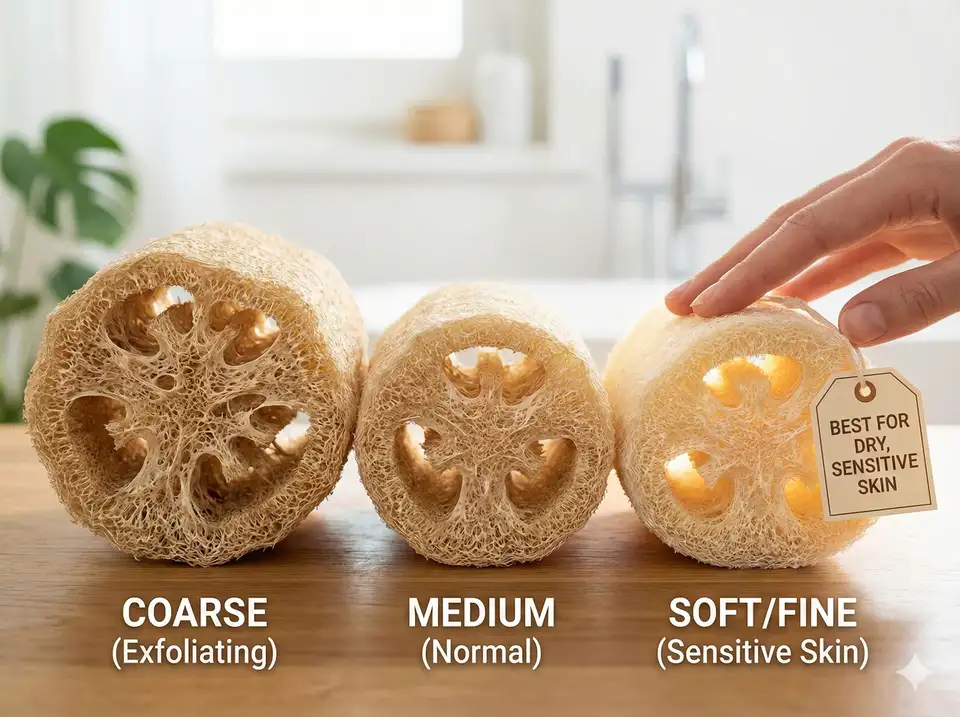
Not all loofahs are created equal—natural fibers are gentler—and I've learned this the hard way. The first loofah I bought was a dense, mature one with thick fibers—probably great for someone with oily, resilient skin, but it left my dry legs looking like I'd been attacked by a cat. For dry skin, you want options that provide effective but gentle exfoliation, and understanding the differences can save you from unnecessary irritation.
When shopping for a loofah, feel the texture before buying if possible. A good loofah for dry skin should feel almost silky when wet, not scratchy or coarse. The fibers should be fine and uniform rather than thick and irregular. If you're buying online, look for descriptions like "soft," "fine-fibered," or "gentle"—and read reviews from people who mention having sensitive or dry skin.
Recommended Options
- Young, soft loofahs - Look for soft natural loofahs for dry skin harvested earlier in the growing season with finer fibers that are gentler on skin
- Pre-softened loofahs - Some manufacturers pre-treat loofahs to reduce abrasiveness, which saves you break-in time
- Thin-cut loofah slices - Less dense material means gentler scrubbing action with more control
- Loofah mitts - The backing provides more control over pressure, and you're less likely to press too hard
I've found that loofah mitts work particularly well for dry skin because the fabric backing naturally limits how much pressure you can apply. With a traditional loofah, it's easy to scrub too aggressively without realizing it—especially on problem areas like elbows and knees where you're trying to smooth rough patches.
What to Avoid
Steer clear of very mature, dense loofahs with thick fibers—these are simply too abrasive for compromised skin barriers. Similarly, never use a stiff, dry loofah that hasn't been properly soaked; the rigid fibers can create micro-tears in already vulnerable skin. I'd also avoid loofahs combined with rough synthetic materials, which can be unpredictable in texture and often contain plastic fibers that don't soften the way natural ones do.
One thing that surprised me: even a "soft" loofah can feel harsh if it's been sitting unused for a while. Natural loofahs need to be rehydrated regularly to maintain their gentleness. If yours has been dry for more than a week, give it a good 5-minute soak before using it on your skin.
Moisturizing After Loofah Use
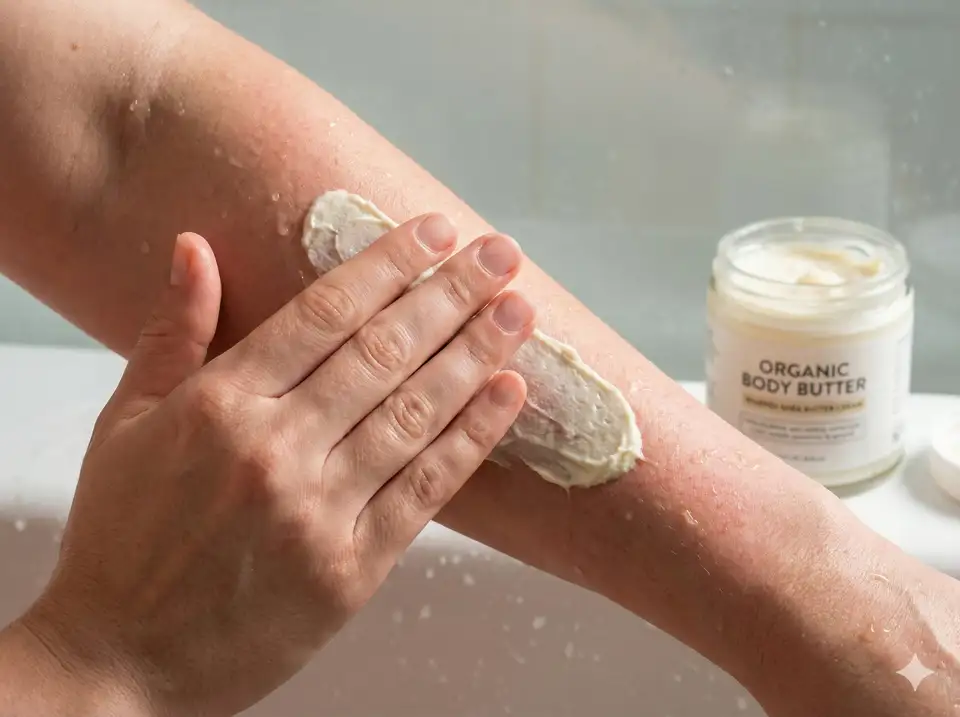
The most critical step in using loofah for dry skin is what you do immediately afterward. Exfoliation opens up your skin to receive hydration, but it also temporarily compromises your moisture barrier. Think of it like this: you've just cleared the path for moisture to get in, but you've also removed some of your skin's natural protection. What you do in the next few minutes determines whether you end up with supple skin or an even drier situation than before.
The 3-Minute Rule
Apply moisturizer within 3 minutes of stepping out of the shower—this isn't just a suggestion, it's the difference between good results and great results. Your skin is still slightly damp, your pores are open, and your freshly exfoliated skin is literally primed to absorb whatever you put on it. I used to take my time getting dressed, checking my phone, maybe making coffee before moisturizing. Once I started timing myself and applying lotion while still in the bathroom, the improvement in my skin was noticeable within a week.
Don't fully dry off before moisturizing. Pat yourself mostly dry, but leave your skin slightly damp—this trapped moisture gets sealed in by your moisturizer and boosts hydration significantly. If your skin dries completely before you apply product, you've lost about half the benefit of your exfoliation session.
Best Moisturizers to Use After Loofah Exfoliation
Not all moisturizers are created equal for freshly exfoliated skin. You want ingredients that both draw moisture in and lock it there. Here's what works:
- Ceramide-based creams - These help repair and strengthen the skin barrier you've just exfoliated. Look for products that list ceramides in the first few ingredients.
- Hyaluronic acid serums - This ingredient holds up to 1,000 times its weight in water, drawing moisture into skin cells. Apply while skin is damp for best results.
- Shea or cocoa butter - Natural occlusives that create a physical barrier to lock in moisture. Great for very dry areas like elbows and heels.
- Oils (jojoba, argan, coconut) - Best applied over a water-based moisturizer, not instead of one. Oils seal but don't hydrate on their own.
One mistake I made early on was using oils alone after exfoliating. Oils are occlusives—they trap moisture—but they don't add moisture. If you apply oil to dry skin, you're just sealing in dryness. The key is layering: water-based hydration first, then oil to lock it in.
Body Wash Matters Too
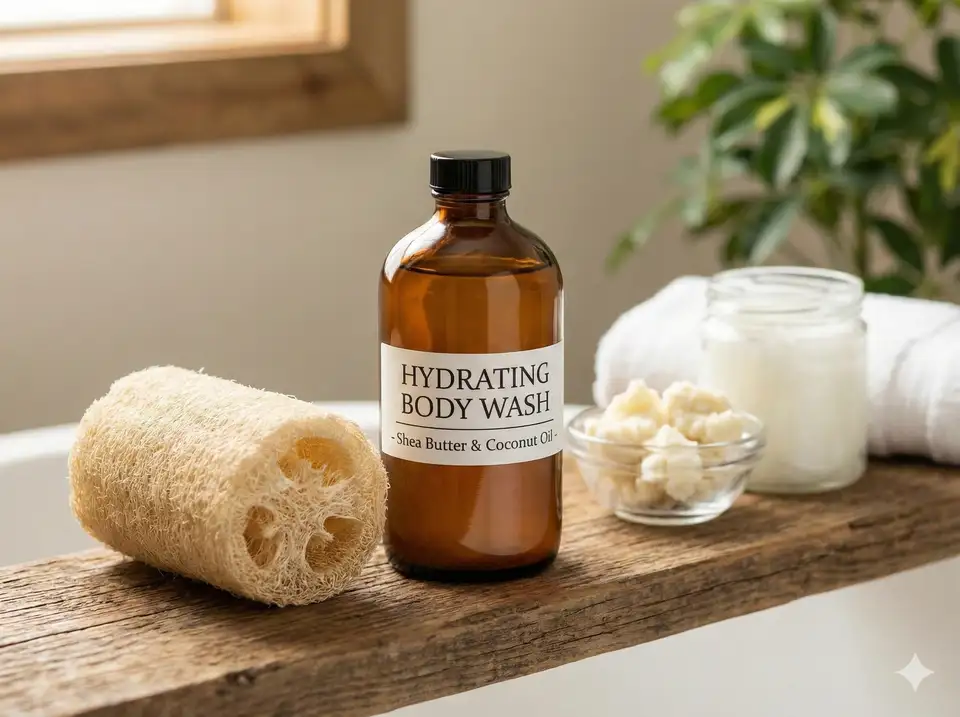
What you use with your loofah is almost as important as the loofah itself. For dry skin, look for body washes that are sulfate-free and fragrance-free—sulfates (like sodium lauryl sulfate) strip natural oils, and fragrances can irritate sensitized skin. Consider moisturizing loofah soap combinations—ingredients like glycerin, hyaluronic acid, and natural oils in your cleanser give you a head start on hydration before you even step out of the shower. I switched to a cream-based cleanser specifically designed for dry skin, and it made a noticeable difference in how tight my skin felt after showering.
For very dry skin, layer products from thinnest to thickest: hydrating toner → serum → moisturizer → oil or balm. This locks in maximum hydration. On my driest days, I'll do all four steps and my skin stays comfortable for a full 24 hours.
Caring for Your Loofah
A clean loofah is essential, especially for dry skin which is more prone to irritation. Here's why this matters more for you than for someone with oily or normal skin: your compromised moisture barrier means bacteria can penetrate more easily and cause problems. A dirty loofah introduces bacteria directly onto freshly exfoliated skin—skin that's temporarily more vulnerable than usual. I learned this lesson when I developed a stubborn rash on my arms that I couldn't explain until I realized my loofah had been sitting damp in the shower for weeks.
Proper care extends loofah life and prevents bacterial growth. The key practices:
- Rinse thoroughly after each use - Squeeze out all soap residue and dead skin cells
- Hang to dry in a well-ventilated area outside the shower - Moisture breeds bacteria, and the humid shower environment is the worst place for storage
- Sanitize weekly by soaking in diluted vinegar (1 part vinegar to 4 parts water) or 3% hydrogen peroxide for 5-10 minutes
- Replace every 3-4 weeks or sooner if it develops any odor, discoloration, or the fibers start breaking down
One thing I've started doing is keeping a small hook outside my bathroom—in the hallway where there's more air circulation—specifically for my loofah. It dries much faster there than anywhere in the bathroom, and I've noticed it lasts longer and never develops that musty smell. If you don't have space outside the bathroom, at minimum hang it near a window or vent, not right next to the shower where steam constantly hits it.
For dry skin specifically, consider having two loofahs in rotation. While one is drying completely (which can take 24-48 hours in humid environments), you use the other. This ensures you're never using a damp loofah, which is both more abrasive and more likely to harbor bacteria.
Learn more in our complete loofah cleaning and care guide.
Additional Tips for Dry Skin
Loofah exfoliation is just one part of managing dry skin. For best results, you'll want to take a holistic approach to your skincare routine. Start by using lukewarm water instead of hot—I know, a steaming hot shower feels amazing, especially in winter, but it's one of the worst things for dry skin. Hot water strips away your skin's natural oils much faster than warm water. I've compromised by starting with warmer water, then turning it down for the last few minutes before I exfoliate. Keep showers under 10 minutes total if you can.
Environmental factors matter more than most people realize. Using a humidifier in your home—especially during winter when indoor heating creates desert-like conditions—can make a significant difference in how your skin feels. I run one in my bedroom during the heating season and noticed my skin stopped flaking on my shins almost immediately. Don't forget the basics: staying well-hydrated by drinking plenty of water throughout the day supports skin health from the inside out. And always protect your skin from UV damage, which can worsen dryness and accelerate aging.
Seasonal Adjustments
Your loofah routine should change with the seasons. Here's what I've learned through trial and error:
Winter: This is when dry skin really flares up, thanks to cold outdoor air and dry indoor heating. I cut back to once-a-week exfoliation during December through February and switch to a richer, cream-based moisturizer. The air is already stripping moisture from your skin constantly, so aggressive exfoliation can push things over the edge. I also run a humidifier in my bedroom and keep my shower water lukewarm at most—no matter how tempting a hot shower sounds when it's freezing outside.
Summer: You can typically exfoliate a bit more frequently in humid summer months—maybe 2-3 times per week instead of once. The humidity helps your skin retain moisture, so you have more margin for error. But watch out for air conditioning, which can be just as drying as winter heating. If you spend most of your day in AC, treat your skin more like it's winter.
Spring/Fall transition: These are the trickiest times because conditions change rapidly. Pay attention to how your skin feels rather than following a strict schedule. If you notice increased tightness or flaking, back off on exfoliation and increase moisturizer richness.
Problem Areas Need Extra Attention
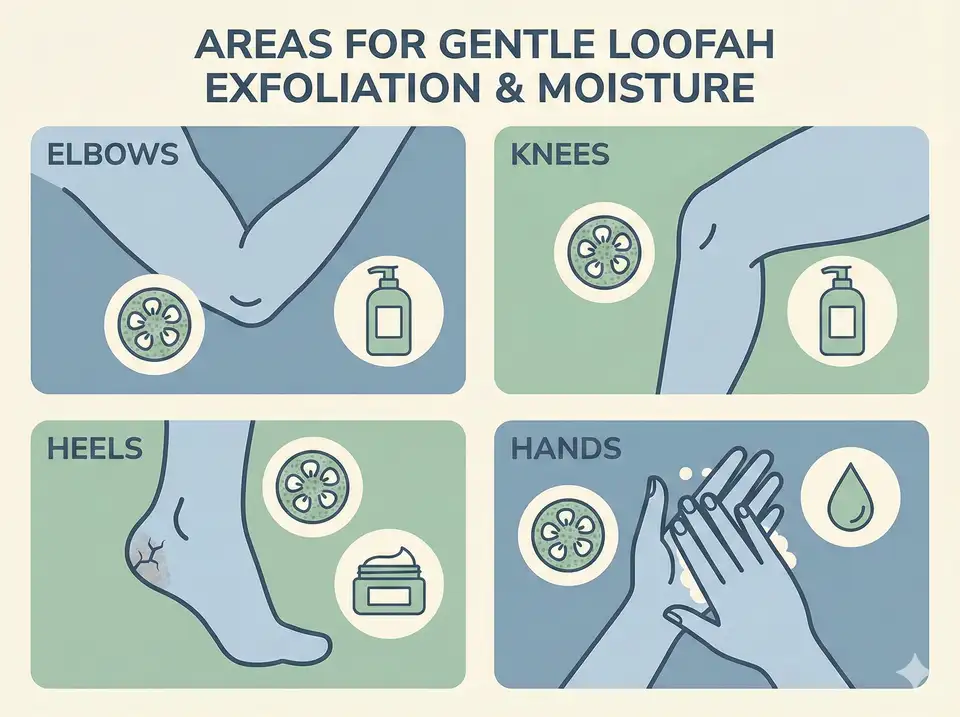
Not all body parts need the same treatment. Elbows, knees, and heels are typically the driest areas because they have thicker skin with fewer oil glands. These areas can handle—and often need—more frequent attention than your arms and legs. I'll sometimes do a targeted exfoliation of just my elbows and heels mid-week, followed by a thick layer of shea butter, even if I'm not doing a full-body exfoliation.
Conversely, areas like your inner arms, chest, and neck have thinner, more delicate skin. Go lighter here—barely any pressure—and skip these areas entirely if they're feeling sensitive.
When to Skip the Loofah
Even with proper technique, there are times when you should put your loofah aside entirely. Your skin will thank you for knowing when to hold back. I've pushed through when I shouldn't have, and it always set my skin back by a week or more. Here's when to skip:
Active eczema or psoriasis flares: When these conditions are active, your skin barrier is already severely compromised. Exfoliating inflamed, broken skin will make things significantly worse—you'll spread irritation and potentially create open wounds. Wait until the flare has completely calmed down and the skin looks and feels normal again before reintroducing exfoliation, and even then, start very gently.
Sunburned skin: Sunburn is essentially a burn injury to your skin. Exfoliating sunburned skin is like using sandpaper on a wound—don't do it. Wait until the burn has fully healed and any peeling has stopped naturally. This usually takes about a week for mild burns, longer for more severe ones.
Open cuts or wounds: This seems obvious, but also applies to small cuts you might not think about, like a shaving nick or a hangnail. Any break in the skin is an entry point for bacteria, and a loofah (which itself harbors some bacteria even when clean) shouldn't go near it.
After chemical peels or retinol use: These treatments already exfoliate your skin chemically. Layering physical exfoliation on top is a recipe for serious irritation. If you use retinol regularly, time your loofah sessions for days when you're not applying it—I do retinol on Sunday and Wednesday nights, so I use my loofah on Tuesday and Saturday mornings, giving my skin at least 36 hours between treatments.
During severe dryness episodes: Sometimes dry skin gets so bad that any exfoliation is too much. If your skin is cracking, extremely tight, or visibly flaking in sheets rather than small particles, you need to focus entirely on repair. Skip the loofah, use your gentlest cleanser (or even just water), and layer on thick moisturizers and occlusives until your skin barrier has recovered. This might take a week or two of pure focus on hydration.
During all of these situations, focus on gentle cleansing and intensive moisturizing. Think of it as giving your skin a rest period to heal and rebuild. Your loofah will still be there when your skin is ready for it again.
Recommended Products
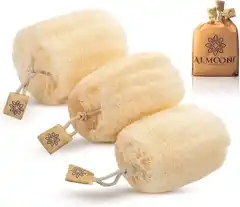
Almooni Egyptian Loofah Bath Sponges (3-Pack)
Premium thick-fiber natural loofahs - gentle exfoliation for all skin types - lasts 3-4 weeks each
Buy on Amazon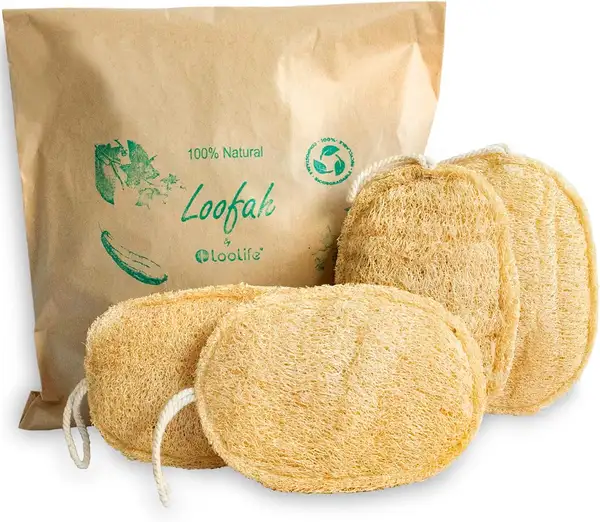
Natural Loofah Exfoliating Sponges (4-Pack)
100% organic biodegradable bath sponges - plastic-free alternative that's gentle on skin and planet
Buy on AmazonAs an Amazon Associate, we earn from qualifying purchases.