
The humble kitchen sponge might seem like a small decision, but with the average household using 6-12 sponges per year, your choice adds up. Traditional plastic sponges are convenient, but they contribute to plastic pollution from sponges and end up in landfills.
Natural loofah offers a sustainable alternative that's been used for centuries. For a deeper dive, see our natural vs synthetic comparison. But is loofah actually as effective? Let's compare these options across every factor that matters.
Head-to-Head Comparison
| Factor | Natural Loofah | Plastic Sponge | Winner |
|---|---|---|---|
| Environmental Impact | 100% biodegradable, compostable | Petroleum-based, not recyclable | Loofah |
| Microplastics | Zero microplastic shedding | Sheds microplastics constantly | Loofah |
| Cleaning Power | Good for most dishes | Better for heavy grime | Plastic |
| Non-Stick Safe | Yes, won't scratch | Abrasive side damages coatings | Loofah |
| Durability | 3-4 weeks with care | 2-4 weeks typical | Tie |
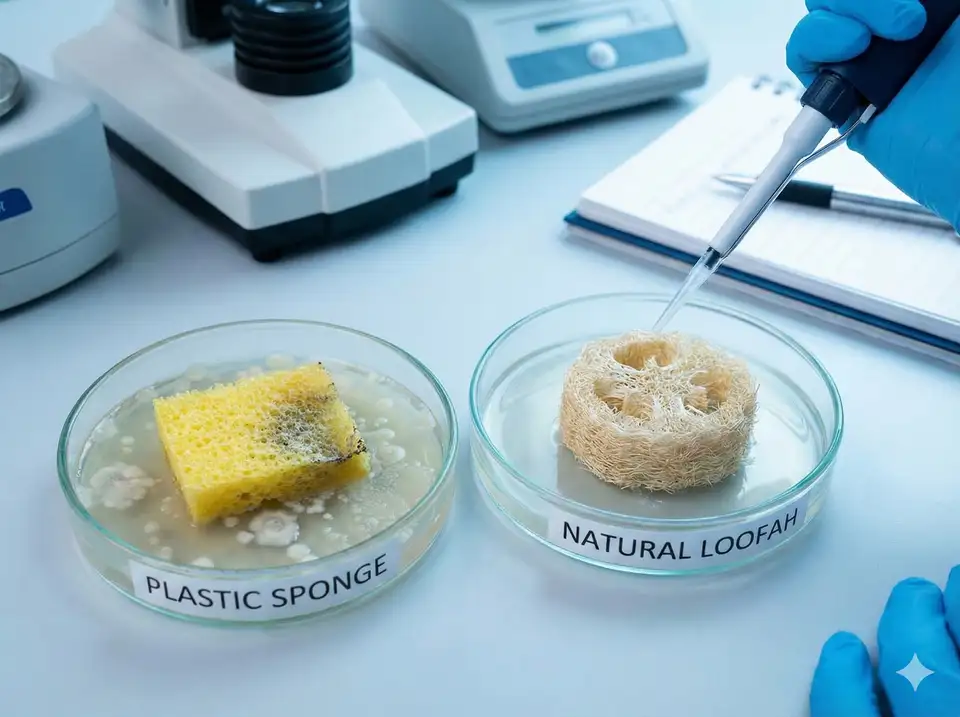
| Bacteria Resistance | Dries faster, less bacterial growth | Holds moisture, bacteria haven | Loofah |
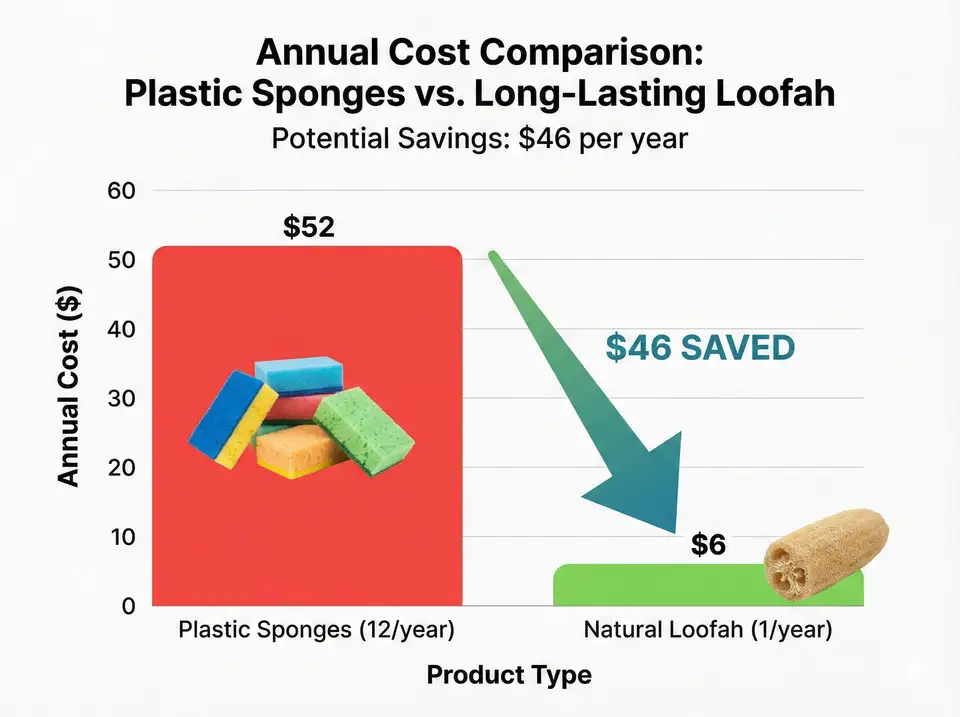
| Cost per Year | $15-25 (or free if homegrown) | $20-40 | Loofah |
| End of Life | Compost bin | Landfill (500+ years) | Loofah |
Loofah wins 6 out of 8 categories. For everyday dish washing, loofah is the smarter, more sustainable choice. Reserve plastic sponges (if you must use them) only for occasional heavy-duty scrubbing tasks.
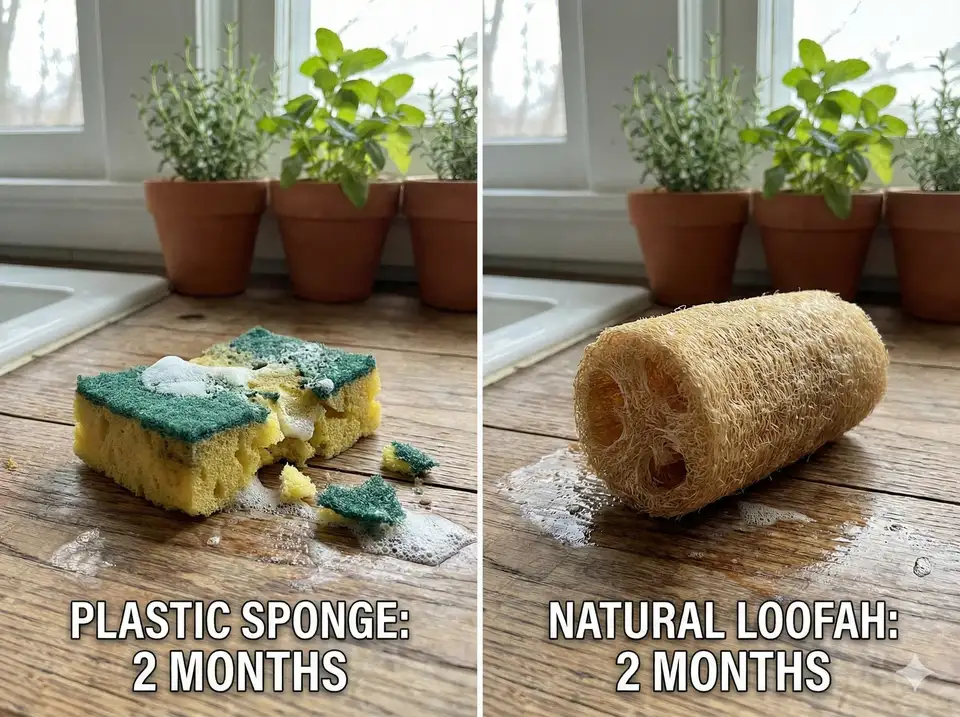
Environmental Impact Deep Dive
This is where loofah absolutely dominates the comparison. The environmental case for switching from plastic to natural loofah is overwhelming.
Plastic Sponge Problems
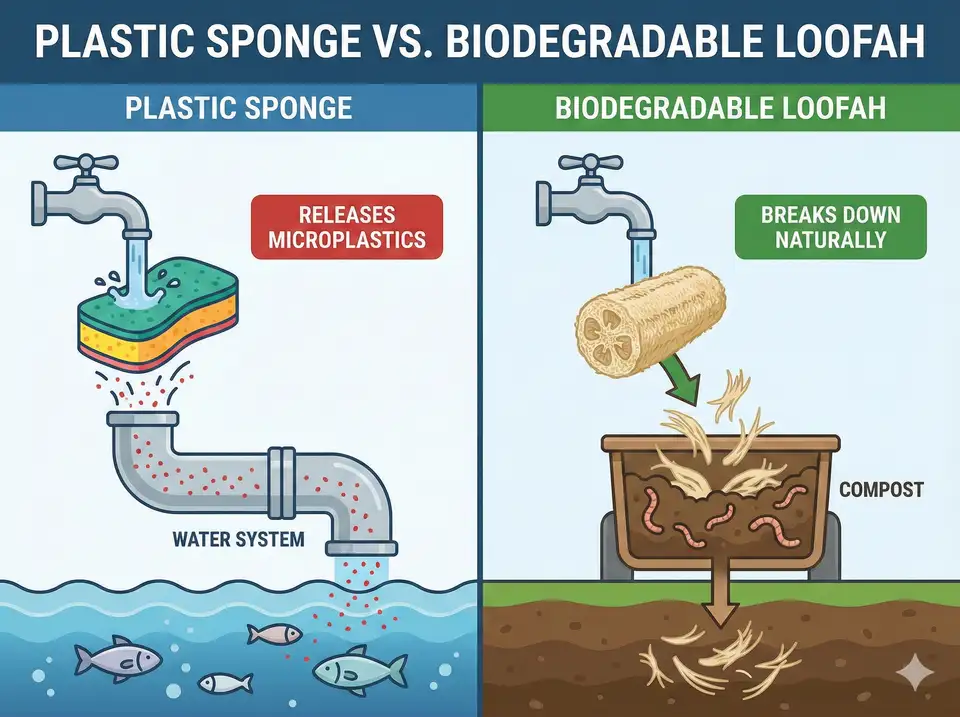
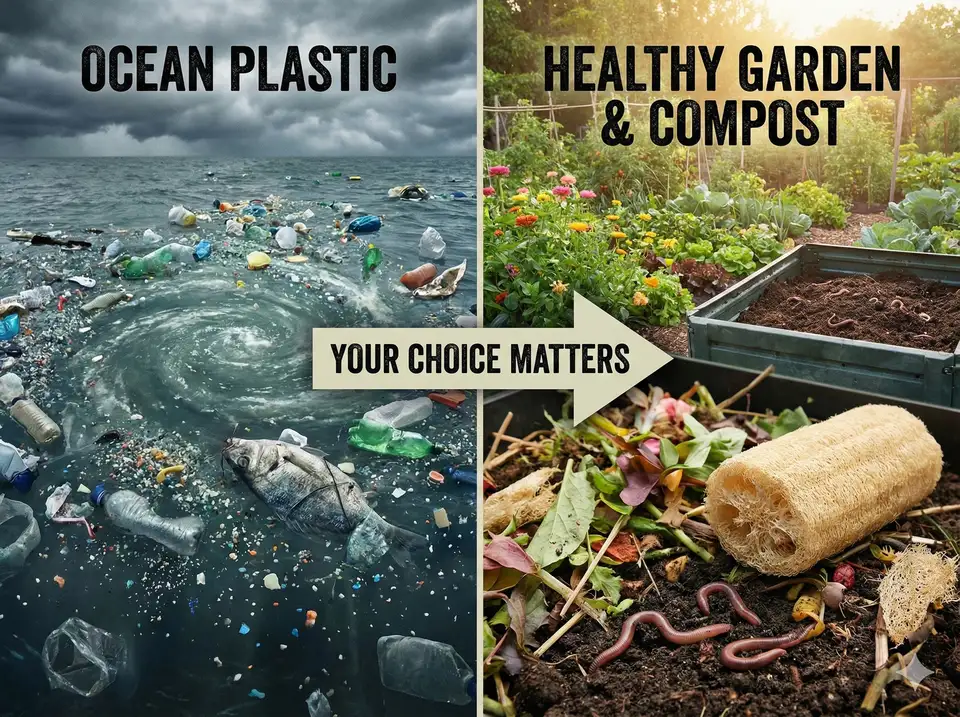
Plastic sponges are made from petroleum-based polyurethane foam, requiring fossil fuels to produce. Every time you use one, it sheds microplastics that enter waterways and eventually the food chain through fish. These sponges can't be recycled due to their mixed materials, and they take 500+ years to decompose in landfills.
Loofah Benefits
Natural loofah is grown, not manufactured—making it carbon-negative when homegrown. It's 100% compostable and biodegradable at end of life, breaking down completely in weeks. There's zero plastic pollution of any kind, and the processing required is minimal: just drying and cutting. Best of all, you can close the loop by composting old loofahs to grow more.
Cleaning Performance
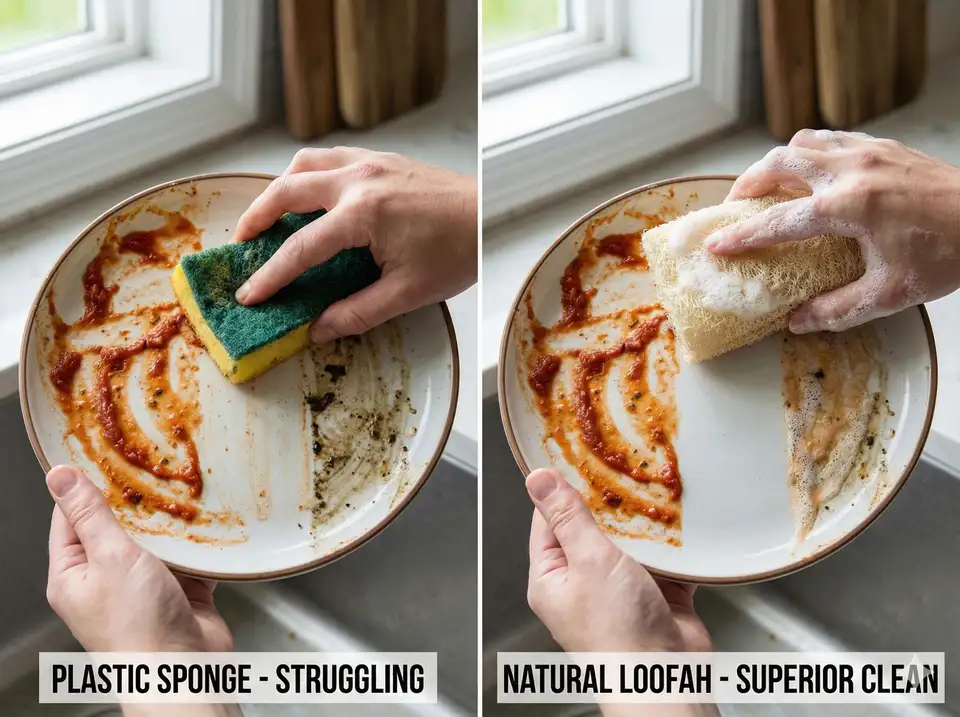
Let's be honest: this is where plastic sponges have traditionally had an edge. But loofah delivers effective cleaning power for most kitchen tasks, and the difference is smaller than you might think.
What Loofah Handles Well
- Daily dishes and glasses
- Pots and pans (non-burned)
- Non-stick cookware (safely!)
- Countertops and surfaces
- Fruits and vegetables
Where Plastic May Be Better
- Heavily burned-on food
- Cast iron restoration
- Grout scrubbing
For tough jobs, try soaking dishes first or using a copper or coconut scrubber alongside your loofah in the kitchen instead of reaching for plastic.
Hygiene & Bacteria
Contrary to popular belief, loofah can actually be more hygienic than plastic sponges. The key differences come down to drying time and bacterial resistance.
- Dries much faster due to fiber structure
- Can be sanitized in dishwasher or boiling water
- Natural antimicrobial properties
- Doesn't trap food particles as easily
- Visual inspection easier (see when it's dirty)
- Foam holds moisture for hours
- Can harbor 362 different bacteria species
- Microwaving doesn't kill all bacteria
- Food particles get trapped in pores
- Often smells bad within days
Cost Analysis
Loofah wins on long-term value, especially if you grow your own.
| Scenario | Annual Cost |
|---|---|
| Plastic sponges (replace every 2 weeks) | $26-52/year |
| Store-bought loofah (replace every 3-4 weeks) | $15-30/year |
| Homegrown loofah (one plant produces 10-15) | ~$5/year (seeds only) |
One loofah plant can supply your kitchen for an entire year - and you can save seeds to grow more. Grow free sponges from your garden with our complete guide.
Making the Switch
Ready to ditch plastic sponges? Here's how to transition smoothly. Check out the best loofahs for dishwashing to get started right.
- Start with high-quality loofah - Dense, well-processed loofahs perform better
- Cut to size - Cut loofah into manageable pieces that fit your hand
- Keep it dry - Store outside the sink; let it dry between uses
- Adjust technique - You may need slightly more pressure initially
- Soak tough dishes - Pre-soaking eliminates need for heavy scrubbing
Frequently Asked Questions
Do loofahs scratch dishes?
No. Natural loofah fibers are softer than plastic scrubbers and won't scratch glass, ceramic, or non-stick coatings.
How long does a kitchen loofah last?
With proper care (drying between uses, weekly sanitizing), 3-4 weeks is typical. Some last up to 6 weeks.
Can I put loofah in the dishwasher?
Yes! Running it through the dishwasher is an excellent way to sanitize. Top rack recommended.
What do I do with old loofah?
Compost it! Loofah breaks down within weeks. You can also use worn kitchen loofahs for bathroom cleaning before composting.
Recommended Products
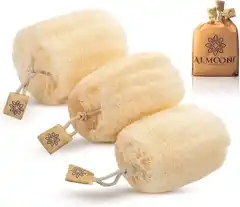
Almooni Egyptian Loofah Bath Sponges (3-Pack)
Premium thick-fiber natural loofahs - gentle exfoliation for all skin types - lasts 3-4 weeks each
Buy on Amazon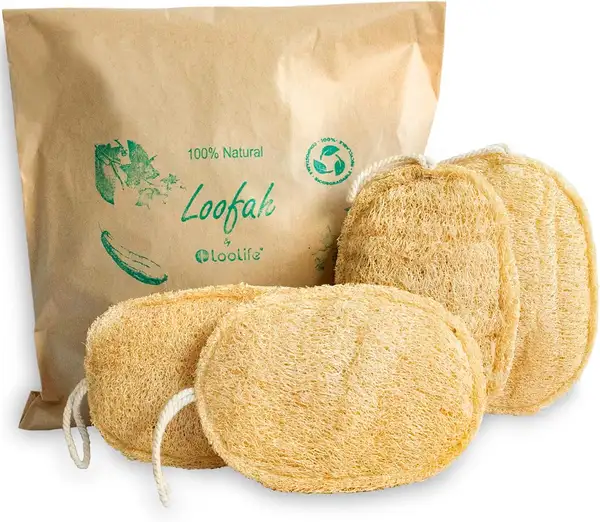
Natural Loofah Exfoliating Sponges (4-Pack)
100% organic biodegradable bath sponges - plastic-free alternative that's gentle on skin and planet
Buy on AmazonAs an Amazon Associate, we earn from qualifying purchases.