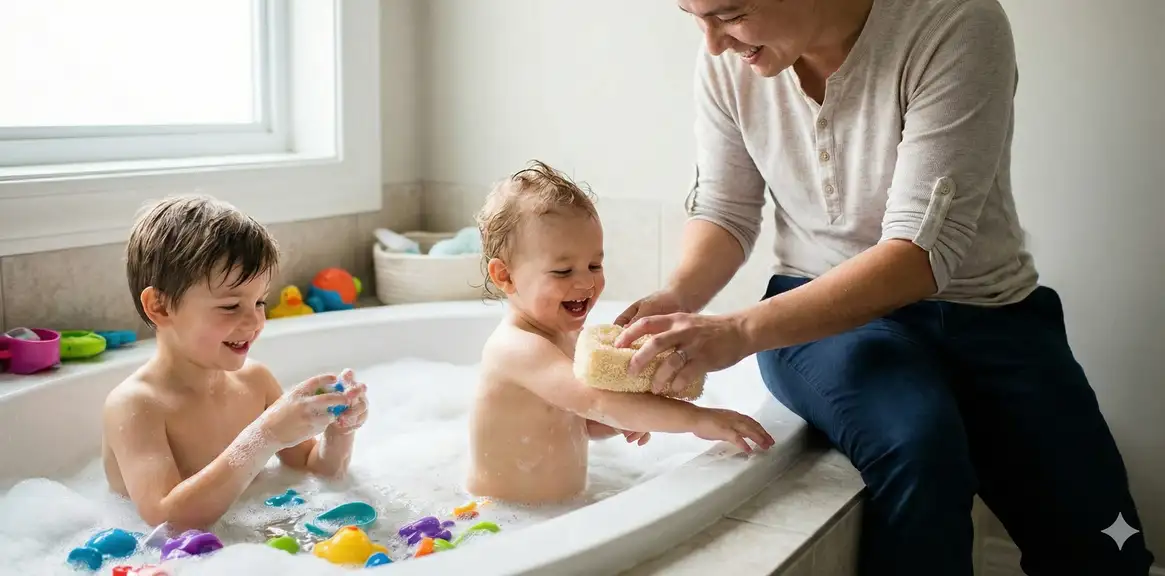
Growing and using loofahs offers a unique opportunity to teach children valuable lessons through hands-on experience. Unlike abstract concepts that can be hard for kids to grasp, a loofah project gives them something tangible to observe, care for, and eventually use. They witness the complete life cycle of a plant that becomes a useful household product.
What makes loofahs particularly special for education is the surprise factor. Most kids (and many adults!) have no idea that their bath sponge grows on a vine like a cucumber. This "wow" moment opens doors to deeper conversations about where everyday products come from and why natural alternatives matter.
This guide provides age-appropriate activities, discussion topics, and practical tips for parents and educators looking to incorporate loofah learning into their curriculum or family activities.
Why Teach Kids About Loofahs?
Growing and using loofahs offers a unique opportunity to teach children multiple valuable lessons in one engaging project. The learning opportunities span science, environmental education, life skills, and creativity — all wrapped in a single activity that produces something useful.
- Plant science: Seeds, germination, pollination, plant life cycles
- Sustainability: Natural vs plastic, composting, eco-friendly choices
- Responsibility: Caring for living things, patience, delayed gratification
- Creativity: Crafts, DIY projects, problem-solving
- Geography: Where loofahs grow, climate requirements, global trade
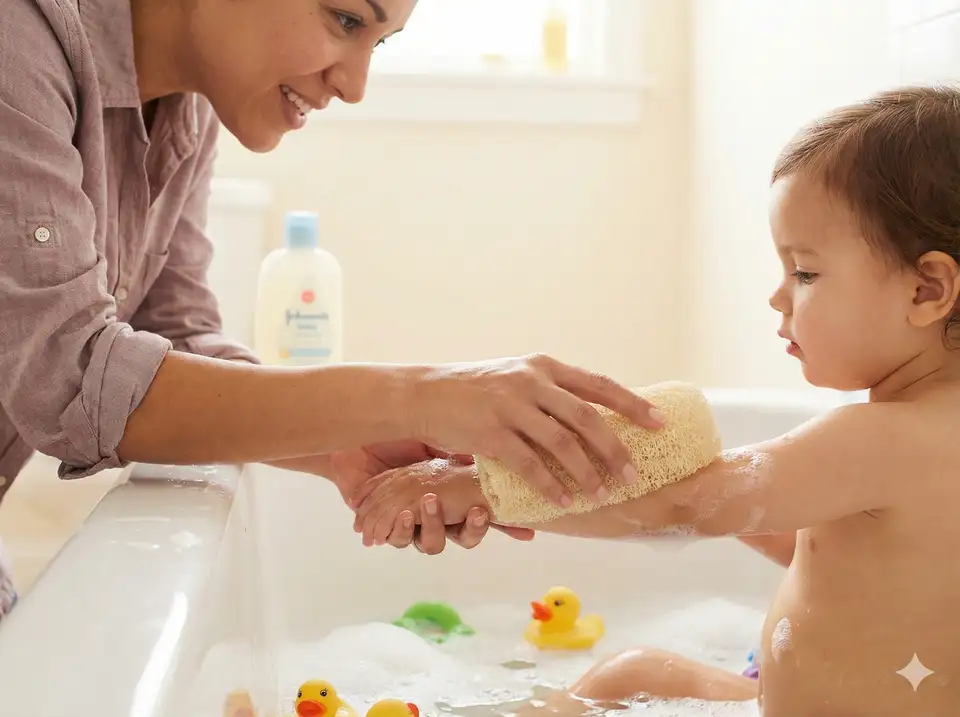
Most kids (and adults!) don't know that loofah sponges come from a plant! They're often surprised to learn their bath sponge grows on a vine like a cucumber. This surprise makes loofahs an excellent teaching tool.
Kids' Starter Supplies
Almooni Egyptian Loofah Bath Sponges (3-Pack)
Premium thick-fiber natural loofahs - gentle exfoliation for all skin types - lasts 3-4 weeks each
Buy on Amazon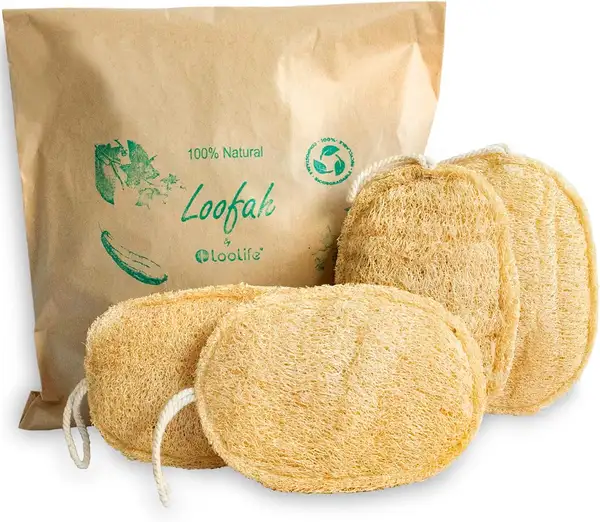
Natural Loofah Exfoliating Sponges (4-Pack)
100% organic biodegradable bath sponges - plastic-free alternative that's gentle on skin and planet
Buy on AmazonAs an Amazon Associate, we earn from qualifying purchases.
Age-Appropriate Activities
These activities are organized by appropriate age range, though many can be adapted up or down depending on the child's interest and abilities. Adult supervision is recommended for all activities, especially those involving cutting or heat.
Start with the basics — planting seeds! This hands-on gardening project teaches kids where things come from and introduces the concept of patience (loofahs take 150+ days to mature). Have children plant 2-3 seeds in small pots, water them regularly, and keep a growth journal with drawings and measurements.
Materials needed: Loofah seeds, small pots or cups, potting soil, spray bottle for watering, notebook for growth journal
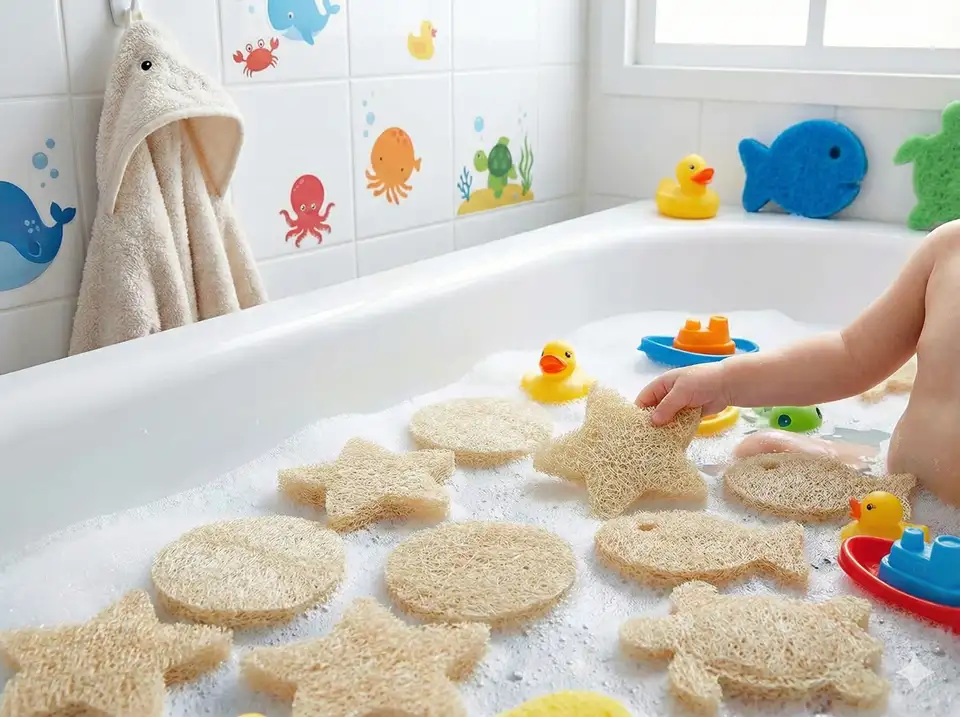
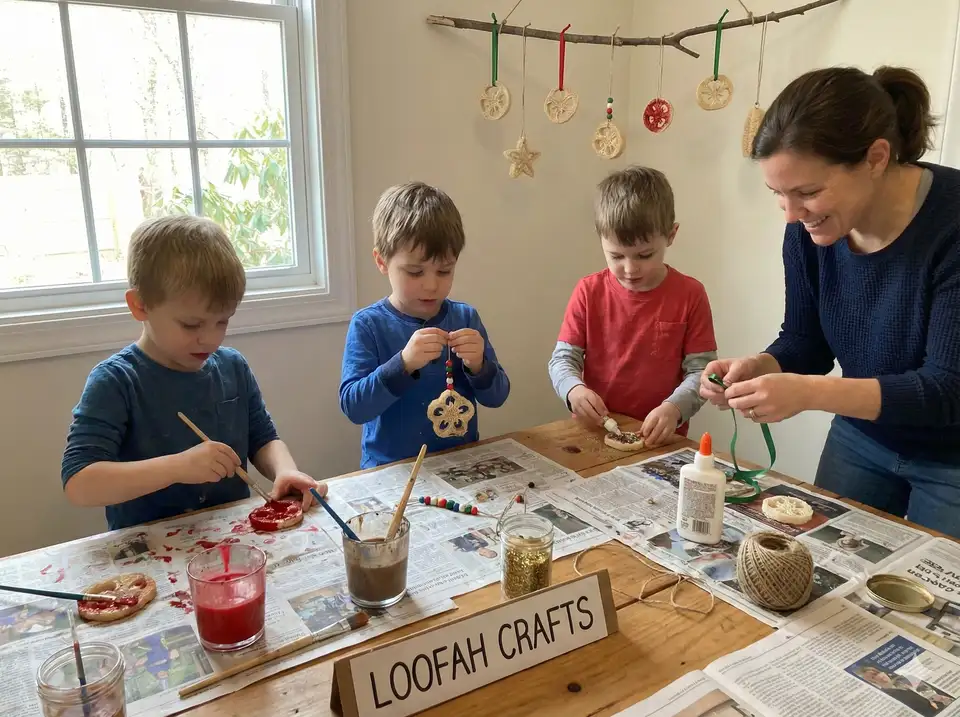
Cut loofahs into different shapes and use them as stamps! The fibrous texture creates beautiful, unique patterns perfect for wrapping paper, greeting cards, or fabric printing. Dip loofah shapes in non-toxic paint and press onto paper. Experiment with different colors and patterns.
Materials needed: Loofah slices (various shapes), non-toxic washable paint, paper or fabric, paper plates for paint, newspaper to protect surfaces
Teach responsibility by giving kids their own loofah dish scrubber. They can help wash vegetables, scrub fruit, or do dishes with their "special" natural sponge. Discuss why natural loofahs are better than plastic sponges and what happens when each is thrown away.
Materials needed: Child-sized loofah pieces, natural dish soap, apron, step stool if needed
Create loofah soap bars together! This project teaches kids about the soap-making process and creates a useful product they made themselves. Use melt-and-pour soap base for safety. Kids can choose colors and scents while learning about following instructions and measuring.
Materials needed: Loofah slices, melt-and-pour soap base, kid-safe essential oils, soap molds, natural colorants (optional)
Compare how different materials decompose by burying a loofah piece, a plastic sponge, and other items. Check weekly to observe changes. This powerfully demonstrates why natural materials are better for the planet — a great way to start teaching the compost cycle.
Materials needed: Old loofah piece, plastic sponge piece, garden area or large container, notebook for observations, markers for labeling
Discussion Topics & Lessons
Beyond hands-on activities, loofahs provide excellent conversation starters for important topics. Use these discussion prompts to extend learning and help children connect their loofah experience to broader concepts.
Where Does Our Stuff Come From?
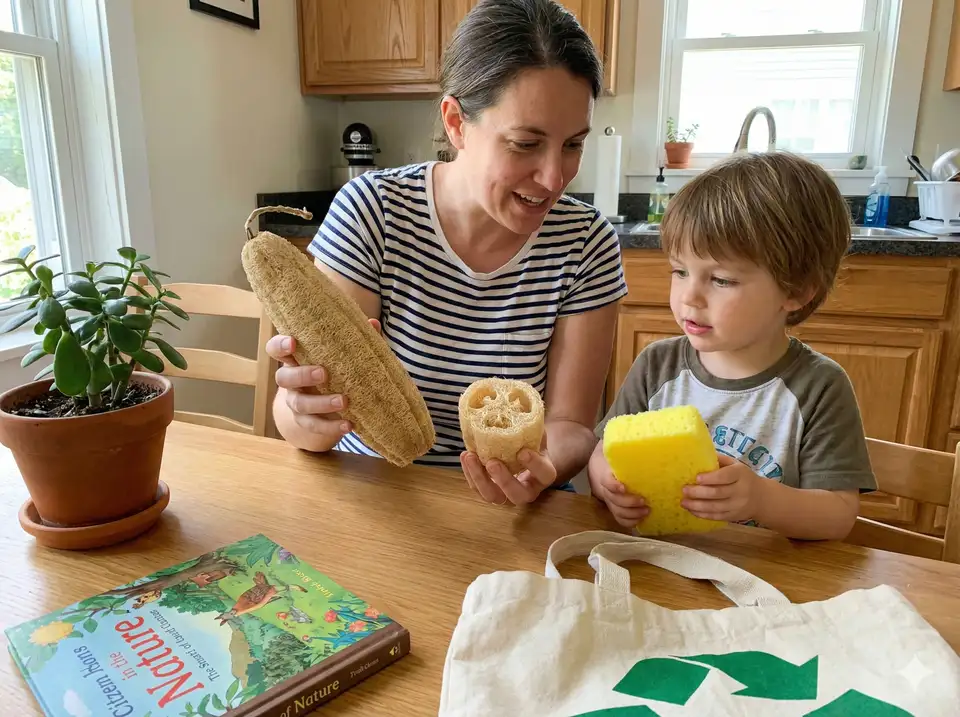
Use loofahs to start conversations about where everyday products originate. The disconnect between products and their sources is a powerful teaching moment — perfect for introducing environmental lessons. Questions to explore with kids:
- Where do you think bath sponges come from?
- How do you think this grew?
- What's the difference between natural and manufactured products?
- Why might someone choose to grow their own?
Taking Care of the Earth
Introduce environmental concepts in age-appropriate ways. The key is meeting children where they are and building understanding gradually. This is a great opportunity to help them develop sustainable habits early.
- For younger kids (ages 3-6): "When this loofah gets old, we can put it in the garden and it turns back into dirt that helps new plants grow!"
- For older kids (ages 7+): Discuss microplastics, ocean pollution, and how small choices add up to big impacts over time
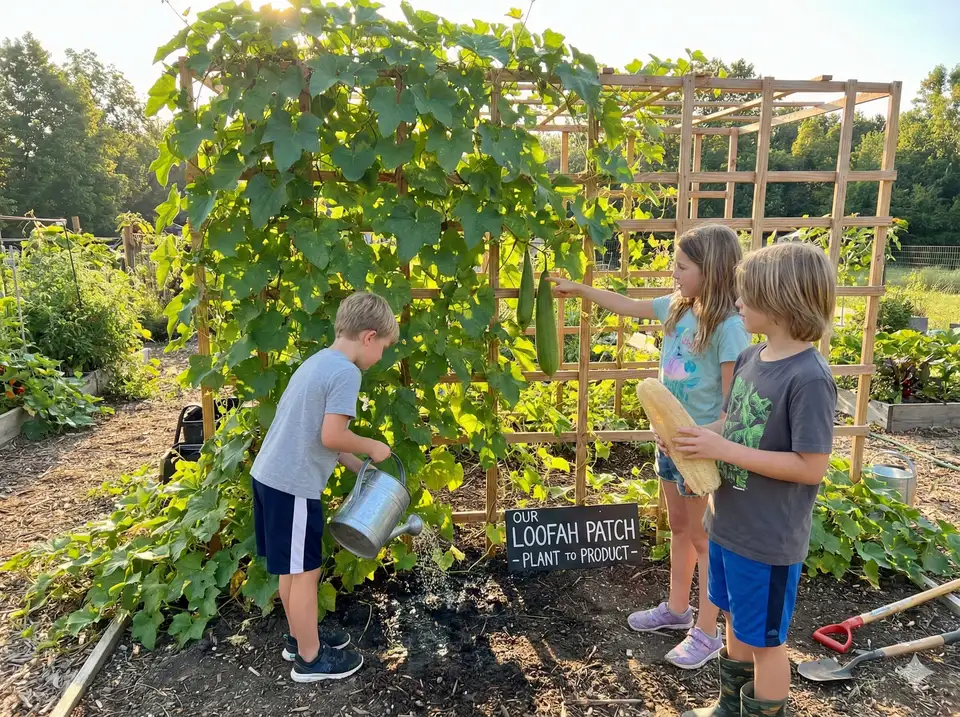
In some Asian countries, young loofah gourds are eaten as vegetables! They taste similar to zucchini. You can only eat them when they're young and tender — once they mature into sponges, they're too fibrous to eat. This is a great way to teach kids about harvesting at different stages.
Tips for Parents & Educators
Successfully teaching kids about loofahs requires patience and flexibility. These tips will help you create positive learning experiences that stick.
- Start simple: Don't overwhelm kids with too much information. Let curiosity guide learning and answer questions as they come up naturally.
- Be patient: Loofahs take a long time to grow (150+ days). Use this to teach patience and delayed gratification — valuable life skills.
- Get hands-on: Kids learn best by doing. Let them get dirty and make mistakes. The mess is part of the learning.
- Connect to their interests: Like bath time? Focus on soap-making. Like science? Do the composting experiment. Like art? Try the stamp project.
- Celebrate milestones: First sprout, first flower, first harvest — make each step exciting with photos, drawings, or small celebrations.